Gentle table lighting without dark place settings
Keep the table readable while allowing the rest of the room to feel softer.
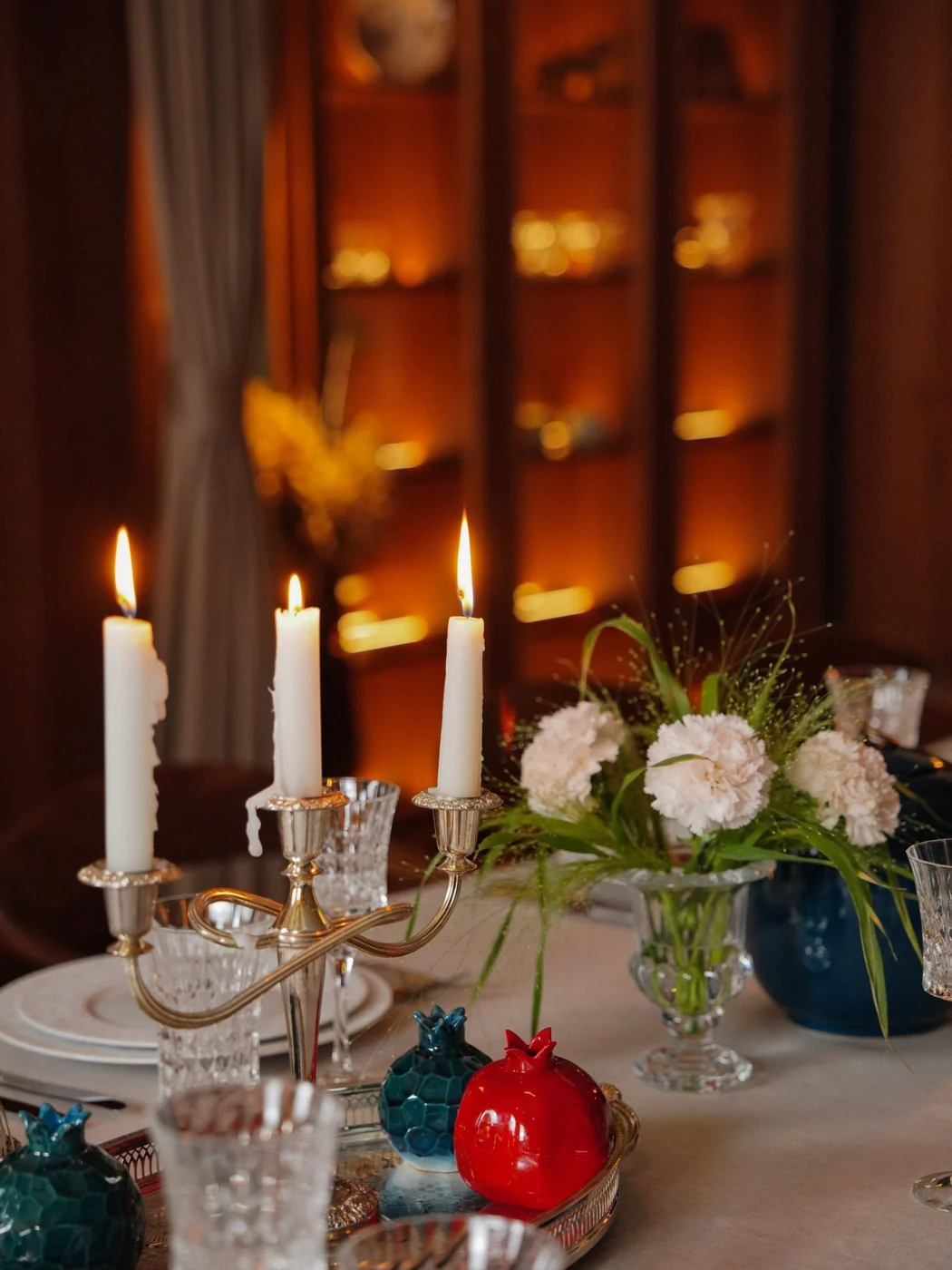
There is a difference between a softly lit dinner and a table where people cannot see their food. The room can feel atmospheric from the doorway while the person seated beneath a shade is struggling to read a label or find the edge of a glass. Judge the lighting from a chair, not only from the light switch.
Turn on the lights you already have and switch them off one at a time. Notice what each contributes. An overhead pendant may light the dishes well but leave the surrounding room abrupt and dark. A nearby lamp may soften that contrast. You do not need to dim every source equally; a useful combination can include a brighter table and a gentler background.
Look for glare before adding decoration
A bare bulb or exposed filament can be uncomfortable at eye level. The position of the shade, the chair and the reflective surfaces all matter. A glossy tabletop or a mirror may send a bright spot toward one seat. Move a portable lamp within its safe, intended arrangement if that solves the problem, keeping the cable clear of walking routes. Do not improvise wiring or alter a fixture to suit a table setting.
Use compatible bulbs and controls according to the fixture manufacturer's instructions. A dimmer is not automatically compatible with every bulb, and a lower setting is not a substitute for a suitable shade. If a fixture needs adjustment or electrical work, use a qualified professional rather than treating it as part of decorating for dinner.
Color matters as well as brightness. Several nearby lamps with noticeably different light colors can make the cloth and food look inconsistent. Choose an intentional combination and see it in the room. Product descriptions help, but the wall color, shade material and daylight remaining at the window affect the result.
Candles are optional
Candlelight can add small points of warmth, but it should not be responsible for all the usable light. If real candles are used, follow their safety instructions, keep them well clear of flammable decorations and never leave them unattended. A crowded table with linen, flowers and passing dishes may be better served by flameless alternatives.
Even flameless lights should be stable and should not block the space required for serving. Put them where they add something to the seated view rather than arranging a line through the center simply because it looks balanced from above. An ordinary lamp on the sideboard may achieve the same sense of warmth with fewer objects on the table.
Set the final scene before bringing out the meal. Place a plate, a glass and a napkin at the darkest seat, then sit there. Can you distinguish the objects comfortably? Can you see the person opposite without staring into a light source? Those two questions are more useful than trying to recreate a restaurant photograph. A home table has to work for the people who are actually sharing it.