Set a coherent table with mismatched plates
A shared scale or quiet background can connect plates from different sets.
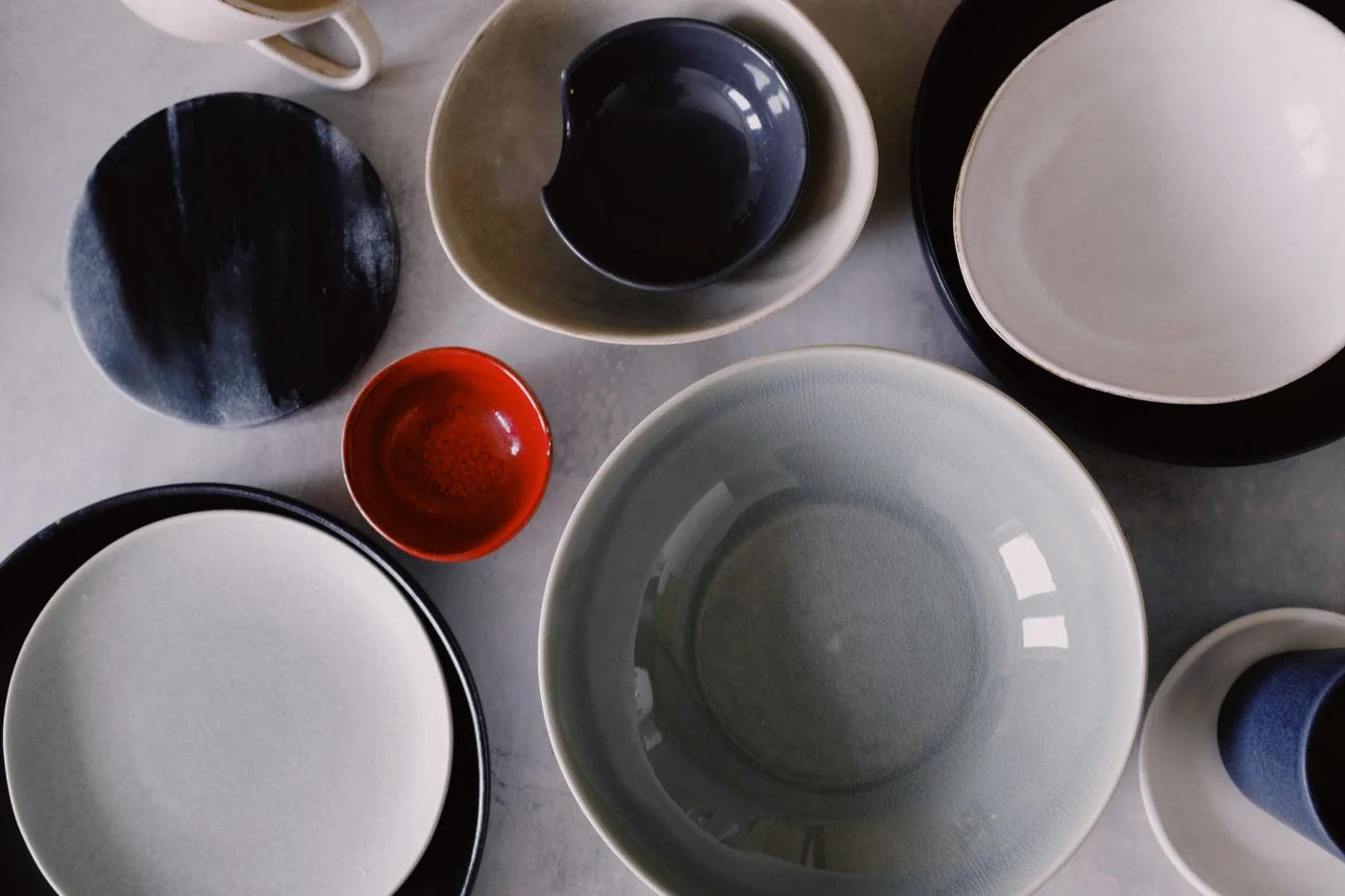
Not owning a complete dinner service is a useful reason to look closely at the pieces you do have. A blue-rimmed plate, a plain cream plate and a small floral design may feel comfortable together even though they were never sold as a set. Their relationship is easier to see on the table than in a stack inside the cupboard.
Lay out the dinner plates before adding chargers, napkins or extra dishes. Compare their diameter and usable eating area. A very small plate next to a much larger one can make the settings feel unequal, particularly if the same meal is being served to everyone. Similar sizes give you more freedom with pattern.
Choose one element to remain steady. It might be plain glasses, natural-colored napkins or the same style of cutlery at every seat. This repeating element acts as a quiet background. When everything varies at once, the table can look assembled in a hurry even if every individual object is attractive.
Let patterns take turns
Alternate patterned and plain plates rather than concentrating every decorated piece at one end. If there are only two unusual plates, give them space instead of trying to create a false alternating sequence. A deliberate arrangement does not require perfect symmetry.
A plate with a detailed border often looks better against a simple cloth than another busy pattern. Conversely, plain plates can settle a colorful tablecloth. Try the combination in daylight before buying anything new. Objects that look unrelated on a store shelf often belong together once a fabric color connects them.
Check that each piece is suitable for food use and in sound condition. An antique or decorative plate with an unknown glaze is not automatically appropriate for serving dinner. It can be displayed elsewhere while modern food-safe dishes do the work. Keep chipped pieces out of the place settings, even if their pattern is particularly appealing.
Once the table feels balanced, stop adjusting it. You do not need a story for every mismatch, and guests do not need an explanation of which set ran short. The shared meal is what makes the pieces belong together. A plain bowl placed in the center may be enough to finish the arrangement.