Wood finishes that belong together without matching
A room can hold pale oak, a darker cabinet and a well-used table. The connections matter more than identical stain.
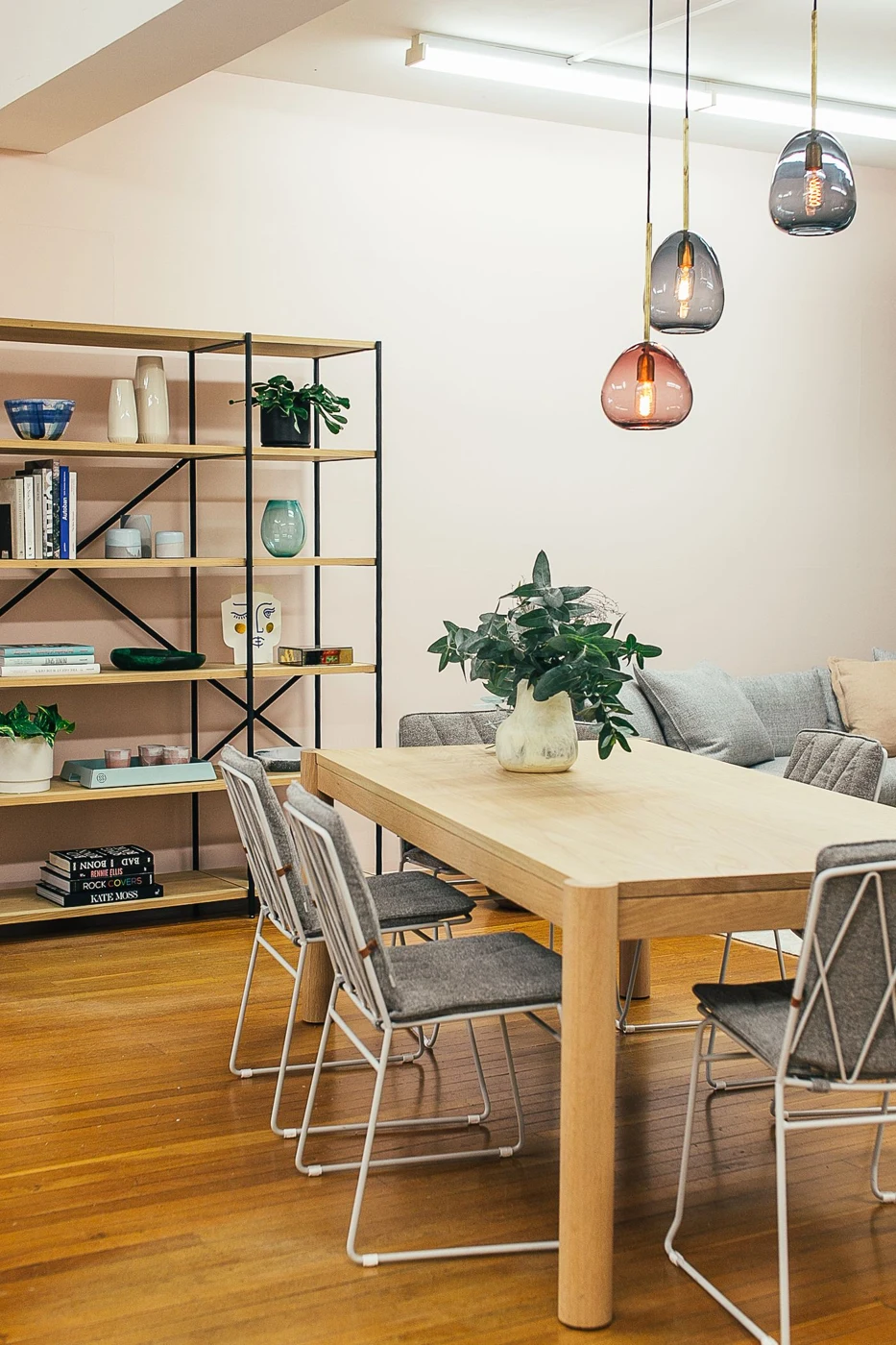
A table inherited from another room rarely arrives in the same finish as the floor. That mismatch can be useful. A collection of identical wood tones sometimes makes the furniture read as a single large block; a lighter or darker piece gives the eye somewhere to pause. The question is whether the differences have a purpose.
Start with the wood surface you cannot easily change. In many living rooms that is the floor, although a wall of built-in shelving can be more prominent. Look at it in daylight and again with the lamps switched on. Is the overall impression honey-colored, reddish, gray or fairly neutral? This observation is more useful than a stain name on a sample card.
Give one finish the larger role
If the floor is golden oak, there is no need to distribute equal quantities of gray, espresso and red-brown furniture around it. Let the floor establish the warm base. A darker table can add contrast, while a painted cabinet offers a break from wood altogether. The room does not need a quota of finishes; it needs enough repetition for a new piece to feel intentional.
Repeat a darker tone in a small, separate place, such as a picture frame or a bowl on a shelf. The second appearance should connect the room without turning every accessory into a matching set. Texture also makes a difference. A heavily grained, rustic chest and a smooth polished table can work together, but putting both beside patterned upholstery may create more visual activity than you wanted.
Separate similar tones that almost match
Two medium-brown surfaces can be more awkward than an obvious light-and-dark pairing. If a table looks slightly wrong against the floor, place an appropriately sized rug beneath the seating group. It introduces a different material between the woods. A fabric runner can make a similar separation on a console, provided it leaves enough room for objects to sit securely.
Before buying a new piece, bring a sample or a clear photograph into the room. Phone screens and showroom lights can alter color, so use photographs to compare broad relationships rather than exact shades. Check the retailer's finish description and return conditions if you cannot see the item in person.
A useful final check is to remove small decorative objects temporarily. If the main furniture and floor still make sense together, accessories can remain optional. If the whole arrangement depends on a dozen matching trinkets, simplify the palette or move one piece elsewhere. A comfortable room should accommodate furniture with different histories, without requiring every surface to tell the same story.