Art Above a Sofa: Start With the Whole Wall
Judge the art with the sofa, side tables, and surrounding wall in view. The picture is part of a larger arrangement.
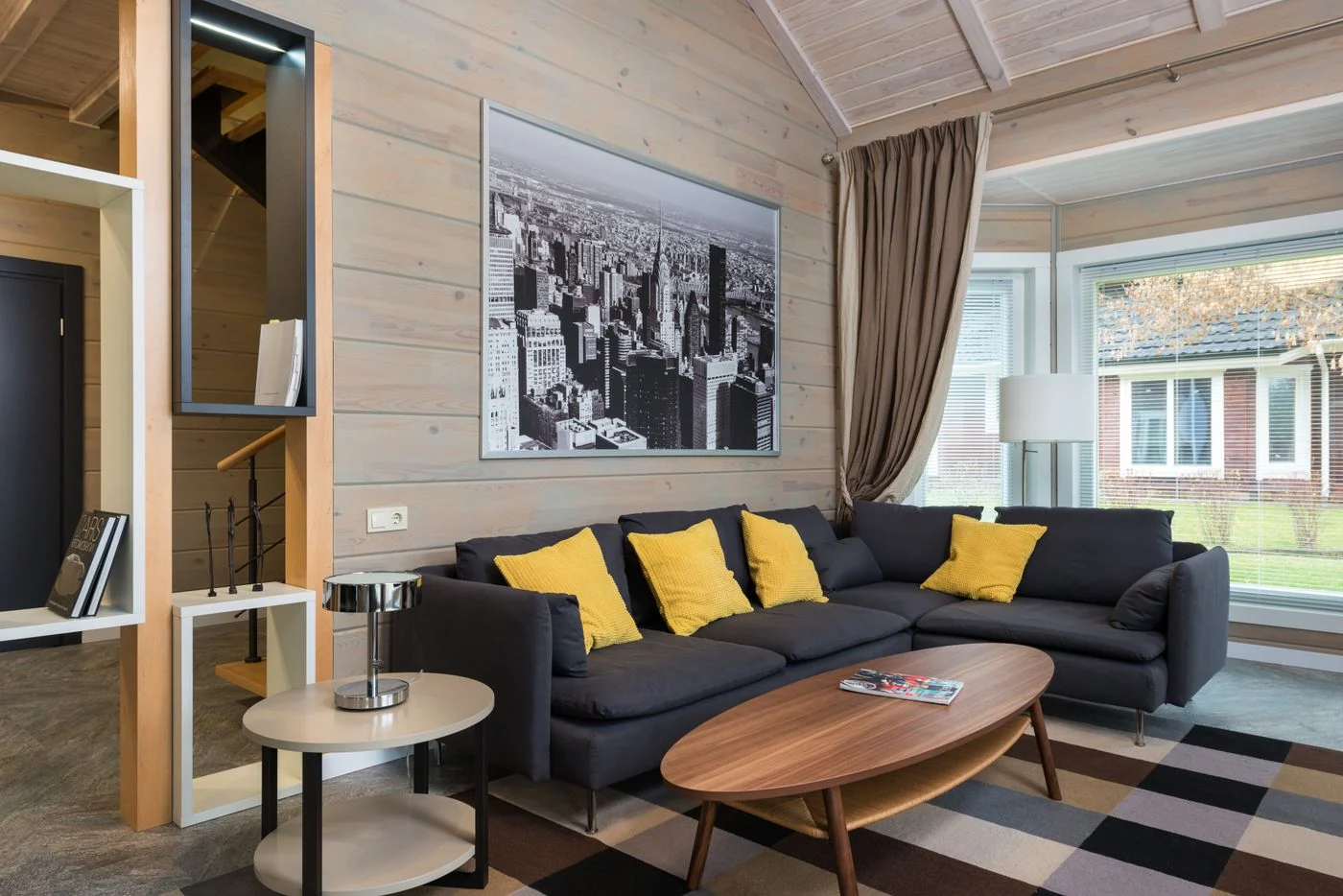
The wall above a sofa attracts a surprising amount of decorating anxiety. A small picture can seem lonely, while a large one can feel as though it is pressing down on the furniture. The answer is rarely a single universal measurement. It begins with seeing the sofa wall as a whole.
Stand where you usually enter the room. Include the side tables, lamps, doorway, and nearby windows in your view. The sofa may be centered within the seating arrangement without being centered on the entire wall. Hanging a picture at the mathematical center of the wall can therefore make the room look less balanced, not more.
Before making holes, outline a possible artwork or grouping with paper templates suitable for the wall finish. Include the frame, not just the image dimensions. A broad frame adds real visual weight, and a narrow dark frame can define the edge more strongly than a pale one.
Choose the scale of the whole arrangement
If the art is a single piece, look at its relationship to the sofa rather than its size in isolation. A modest image with a generous mat may have enough presence. A large pale abstract work may read more quietly than a smaller, densely detailed painting. Width matters, but so do contrast and the amount of visual activity.
A pair or group can solve a different problem. Treat the outside edges of the group as one overall shape, then decide how the individual works relate inside it. Do not spread small pictures widely just to make the group cover more wall. The spaces between them can become more noticeable than the art itself.
Check the proposed height while seated as well as standing. Art that looks reasonable from the doorway may feel detached when you sit beneath it. At the same time, furniture use, children's reach, and secure installation matter more than forcing a favored aesthetic rule. Use appropriate hardware and follow its instructions for the wall and weight involved.
Let neighboring objects contribute
A tall lamp on one side can already give the composition height. A doorway on the other side introduces an interruption that does not need to be disguised. Sometimes shifting the art slightly within the sofa's visual area produces a calmer relationship than insisting that every object share one center line.
Try removing the pillows and throws you have added solely to match the picture. Art does not have to function as a palette chart for the entire room. A small repeated color can be pleasant, but matching every accent may make a personal work look like a decorating accessory.
Leave the paper arrangement in place through a normal day before committing. Walk past it, sit with it, and view it with the lamps on. If it feels right only from the position used for a photograph, reconsider. The wall belongs to a room with several viewpoints, and the art should have a comfortable relationship with more than one of them.
There is also no deadline for filling the space. A blank wall while you look for something meaningful is preferable to a large generic print bought only to satisfy a size rule. You can settle the furniture and lighting first. Good art placement becomes easier when the rest of the room has stopped moving.