Collecting Ceramics Into a Quiet Display
Let the shapes of a few vessels remain visible. A collection becomes easier to appreciate when it is not packed edge to edge.
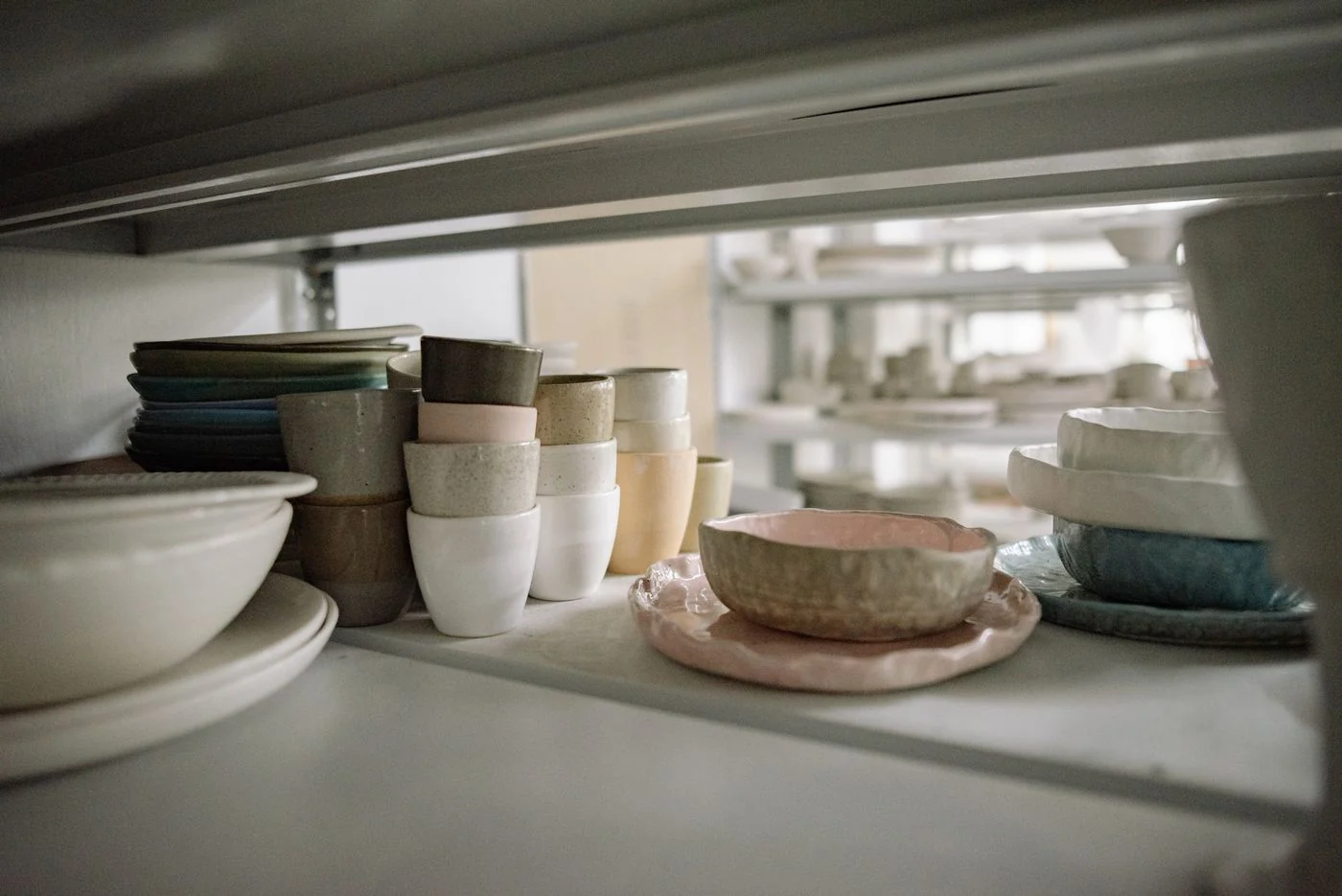
Ceramic pieces often accumulate one at a time: a bowl that feels good in the hand, a small pitcher, a vase in an unusual glaze. Displaying them together can reveal relationships that were never planned. The arrangement does not need to pretend that they came from the same maker or era.
Lay the pieces out and compare their silhouettes. A round bowl, a tall narrow vessel, and a broad pitcher bring different shapes. Several nearly identical vases can work as a collection, but they may need more space between them to avoid reading as one crowded mass.
Choose a connection that is actually present. It might be a matte surface, a shared earth tone, or a similar curve. Do not force an exact color scheme by adding unrelated pieces. The collection can remain varied while one modest relationship gives it coherence.
A shelf is not obliged to hold the entire collection at once. Try a small group where the outline of each object can be seen. Store or use the remaining pieces elsewhere if appropriate. Rotating a few objects occasionally can make a familiar collection noticeable again without acquiring anything new.
Keep the background in mind. A pale vessel may disappear against a pale wall but show beautifully beside a darker book or on a wooden surface. A highly patterned backdrop can compete with a detailed glaze. Moving the object may solve the problem more effectively than adding flowers or another accessory.
Leave useful ceramics accessible. A pitcher used regularly should not be trapped behind a delicate vase. Decorative objects of unknown suitability should not automatically be pressed into food service; use pieces according to their intended purpose and care guidance. Their appearance alone does not establish what they are made to hold.
Look at the arrangement from the normal viewing distance. Tiny variations in glaze may be enjoyable up close but invisible from across a room. In that case, give the pieces a place where someone can approach them rather than trying to make them perform as a distant focal point. A modest collection on a side table can have more presence than a crowded display high on a shelf.