Give a Christmas Tree Visual Balance
Distribute size, color, and empty space across the tree before deciding that it needs more ornaments.
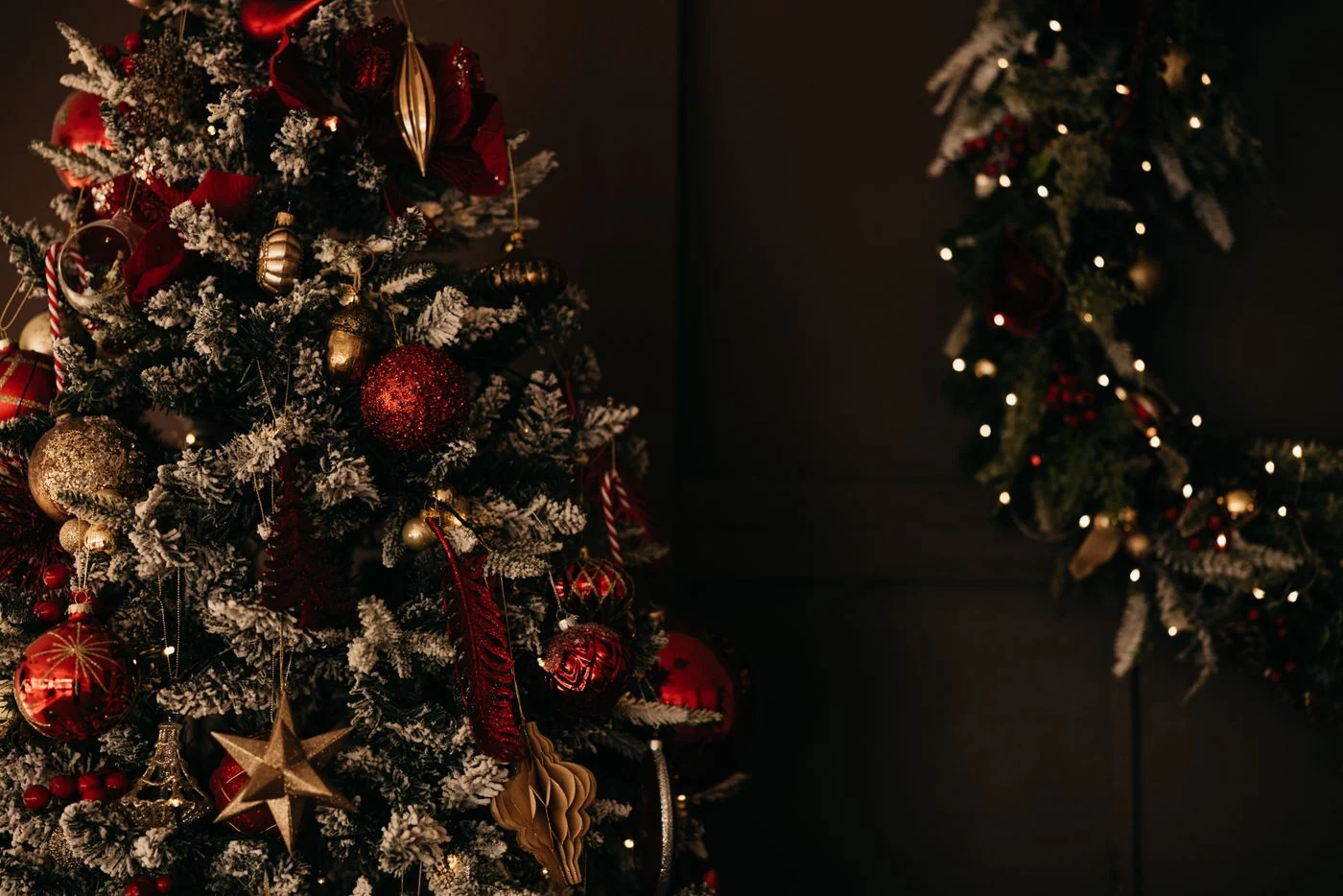
A tree can feel uneven even when every ornament is beautiful. One side may carry all the dark pieces, the largest shapes may sit together, or the upper section may look crowded while the lower branches remain quiet. Those are placement problems, not necessarily signs that the collection is too small.
Set up the tree securely in an appropriate location before decorating. Follow the tree, stand, and light manufacturers' instructions. For a natural tree, follow suitable care guidance and keep it watered; keep all trees and decorations away from heat sources. The CPSC's holiday decoration guidance is a useful starting point for those practical checks.
Place the strongest shapes first
Choose the ornaments that are largest, darkest, brightest, or most reflective. These will have the most influence on the overall picture. Distribute them across the areas that are actually visible from the room rather than concentrating only on a single straight-on view.
The distribution does not need to be mathematically even. A natural-looking arrangement can vary, but one large bright cluster will draw the eye strongly. If that is not intentional, move a few pieces apart before adding smaller ornaments around them.
Check the product and branch suitability for the weight of each decoration. Do not ask a delicate branch to hold a heavy ornament simply because that position improves the visual balance. Fragile or sharp objects should be placed with children and pets in mind, or omitted where appropriate.
Let the colors travel
If the collection has a main color, repeat it in several visible areas so the eye can move through the tree. Supporting colors can occupy smaller intervals. A single unusual ornament can remain distinctive without needing several matching companions.
For a mixed collection, look for relationships beyond exact color. Several pale objects may form a quiet group even when their shapes differ. Transparent ornaments can create a different kind of pause from solid ones. A range of finishes often helps prevent the tree from looking flat.
Avoid judging balance from too close. At arm's length, each gap seems important. From the sofa or doorway, the larger patches of color and shine are what you notice. Step back after a few additions rather than filling every branch before assessing the whole.
Leave some structure visible
The branches are part of the tree's appearance. You do not have to conceal every empty area. A little space can make favorite ornaments easier to appreciate and prevent a smaller tree from looking burdened.
If you use ribbon, treat it as another strong visual element. It may occupy more attention than several ornaments combined. Try a limited amount first and follow appropriate placement guidance around any lights or other equipment. Do not use ribbon to hide damaged wiring or solve a practical lighting problem.
The top should relate to the rest of the tree in scale and weight. A dramatic topper can work, but it should not make the lower decorations seem incidental or create an unstable arrangement. Follow the tree and topper instructions rather than improvising support for an unsuitable item.
Finish by viewing the tree from the places where it will be enjoyed. You may need only one or two adjustments. A balanced tree is not a perfectly filled surface; it is a collection whose larger shapes, colors, and quieter spaces allow each other to be seen.