Country or Cottage? Choose the Qualities You Want
Use these style words to identify what appeals to you, rather than to decide whether your room belongs in one category.
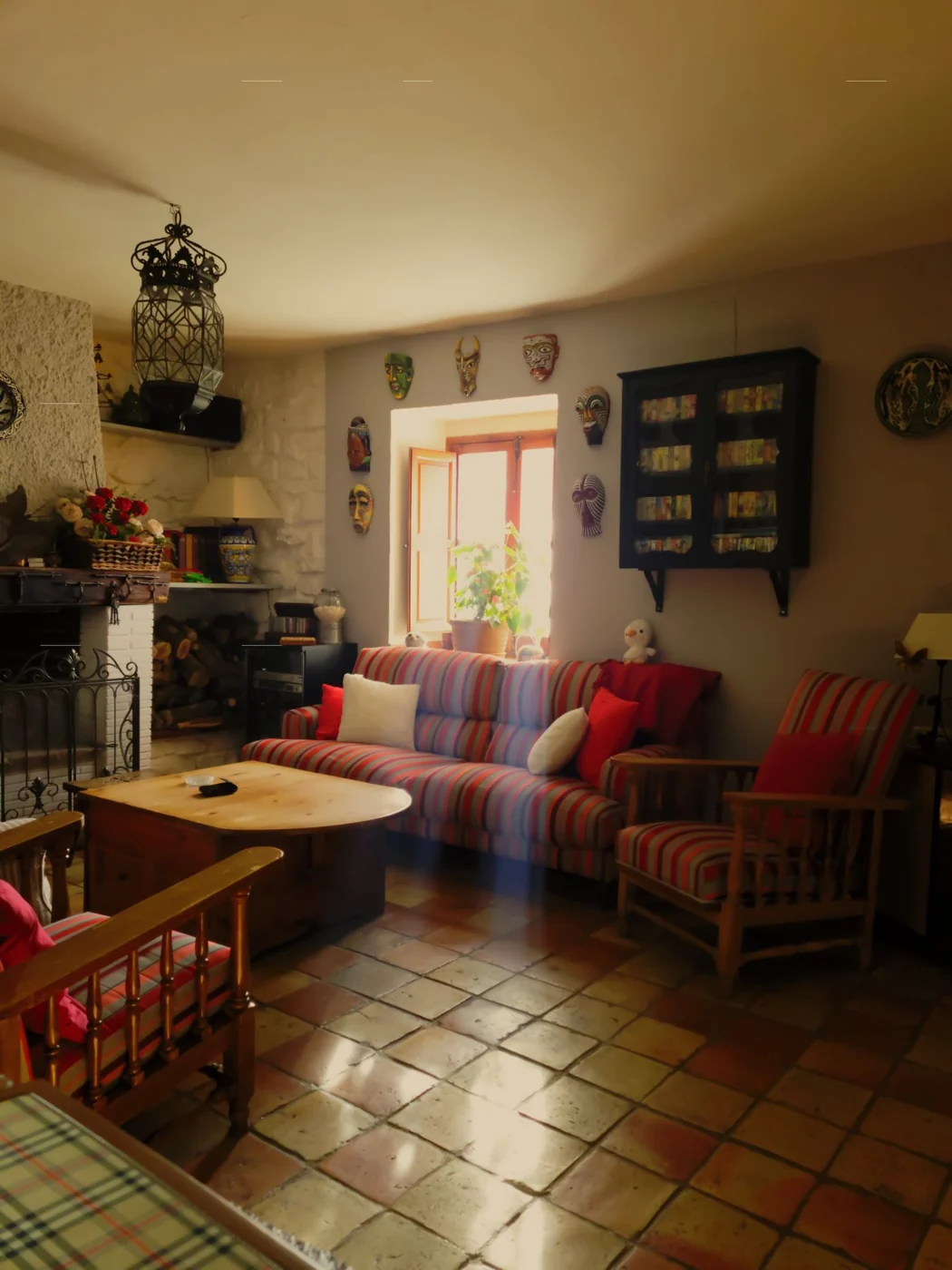
Country and cottage are often used for the same room, yet the pictures people imagine can be quite different. One person means substantial wood furniture and open space. Another means little floral prints, soft edges, and a room full of personal objects. Before buying anything under either label, describe the actual qualities you want.
These are flexible decorating terms, not a reliable historical classification. A modern apartment can borrow from both. So can a house whose architecture has little connection to either word. The helpful question is whether you want more simplicity, more intimacy, more visible texture, or more decorative detail.
Compare the scale of the objects
A broad dining table, a large plain cabinet, and generous stretches of wall tend to create a different rhythm from several small tables and tightly grouped pictures. Neither arrangement is inherently better. The first gives individual shapes more authority; the second invites the eye to travel between small discoveries.
If you love cottage pictures but dislike the feeling of clutter, borrow their softer textiles and smaller patterns without copying the number of objects. If a spare country room seems too stern, introduce one more personal layer: a favorite print, a patterned cushion, or an object with a shape you enjoy.
Decide how much ornament feels comfortable
A scalloped edge or a little floral pattern can be charming on its own. Repeat it on the lamp, chair, curtain, and shelf, and it becomes the room's main subject. That may be welcome in a small, intimate corner but tiring across a large open living area.
Think about transitions between rooms, too. You do not need to keep every room in a single style, but neighboring spaces benefit from a shared quality. A particular wood tone, an uncomplicated curtain treatment, or similar levels of contrast can connect a decorated bedroom to a quieter hall.
Make a short description that avoids style labels altogether. For example: pale backgrounds, substantial furniture, small floral accents, and enough empty surface for everyday use. That sentence is more useful in a store than a rule that everything must be country or cottage.
The most convincing rooms usually contain some exceptions. A plain modern lamp can keep a collection of old-looking furniture from feeling staged. A small patterned chair can soften an otherwise spare arrangement. Keep the exception when it improves the room you live in, even if it makes the label less tidy.