The Useful Tension Between Rustic and Refined
A rough surface and an elegant outline can make each other more interesting. The balance depends on how much attention each one asks for.
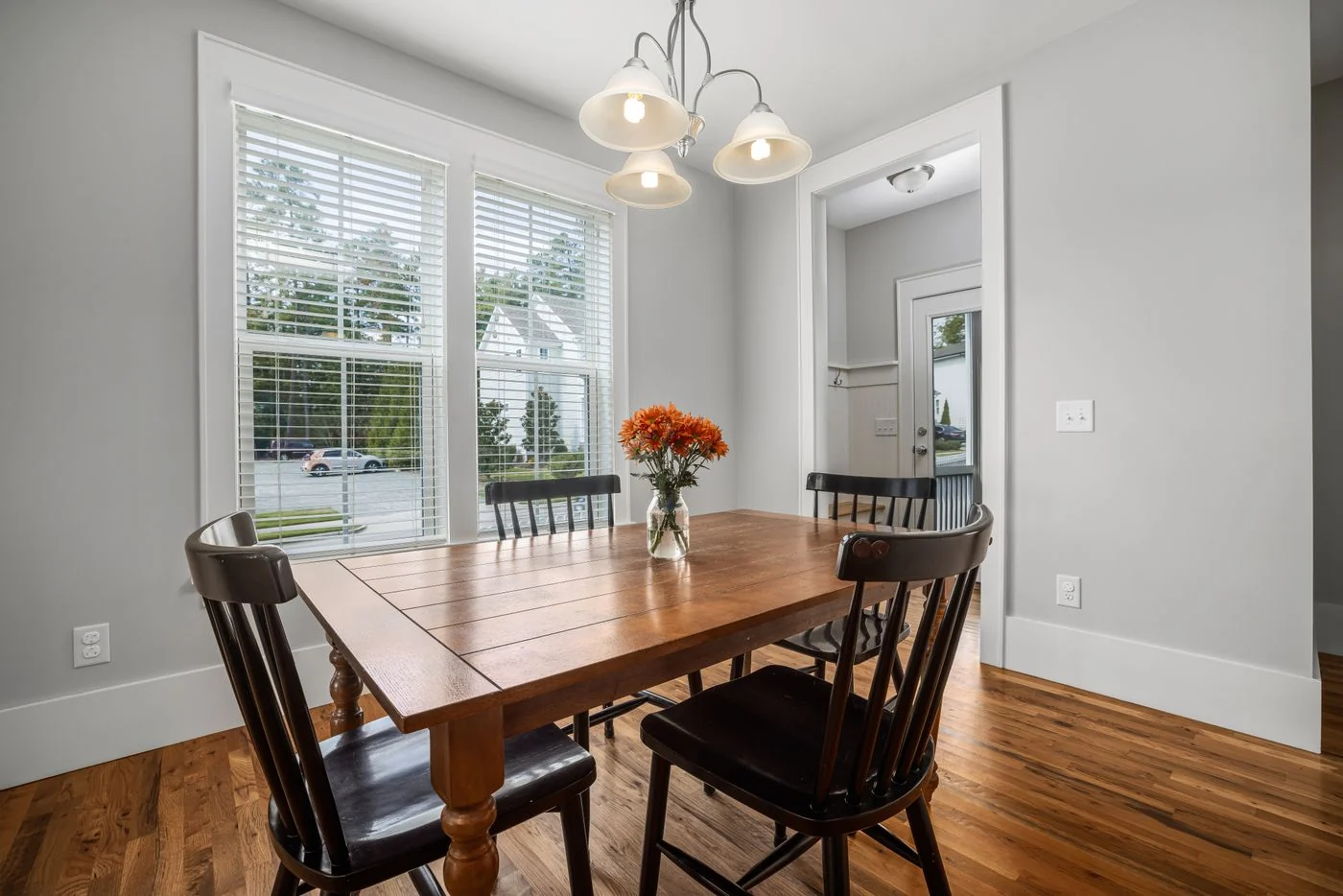
A room with a heavy timber table does not automatically need heavy timber chairs. That is often the moment when a country-inspired interior becomes more interesting: the next piece offers a different kind of presence. A chair with a curved back, a plain fabric seat, and slender legs can make the table look deliberate rather than bulky.
Rustic and refined are useful descriptions of appearance, not judgments about price. A rough woven basket may be new and expensive; a graceful secondhand chair may cost very little. Look at the surface, outline, and visual weight instead of treating either word as a shopping category.
Find the strongest rough element
Start with what the room already has. An exposed brick wall, broad floorboards, or a substantial unpainted cabinet may provide all the roughness the space needs. Adding weathered signs, distressed frames, and more chunky wood can flatten the contrast. Everything starts speaking in the same gravelly voice.
If the room has smooth walls and plain flooring, one substantial textured piece may be enough to change its character. Place it where its edges can be seen. A rough table concealed beneath a long cloth cannot contribute much of its surface to the room, although the cloth might be exactly what you want for a particular occasion.
Let the quieter details be more precise
Refinement can come from a clean outline rather than ornament. Consider an uncomplicated oval frame against a rough wall, a neatly finished lampshade beside a weathered cabinet, or plain glasses on a visibly textured table. None needs to be elaborate. Their precision makes the irregular surface easier to appreciate.
There is also a difference between contrast and competition. A deeply carved cabinet paired with a highly patterned chair creates two strong statements, even if one looks rustic and the other elegant. Give one a quieter companion before adding a third expressive piece.
Try the balance with objects you already own. Move a smooth ceramic bowl onto a rough side table and remove the other small decorations. Then look from the doorway. If the table's texture and the bowl's shape both become easier to see, the pairing is doing useful work. If the bowl disappears, it may need a simpler background or more generous scale.
A room does not require an equal division between the two qualities. It might remain mostly polished, with one worn bench that makes it approachable. Another might be mostly plain and sturdy, with a single graceful chair. The contrast should give the room depth without making ordinary use feel like a carefully supervised display.