Curtains That Meet the Room Gracefully
The right curtain hem depends on the room below it as much as the window above it.
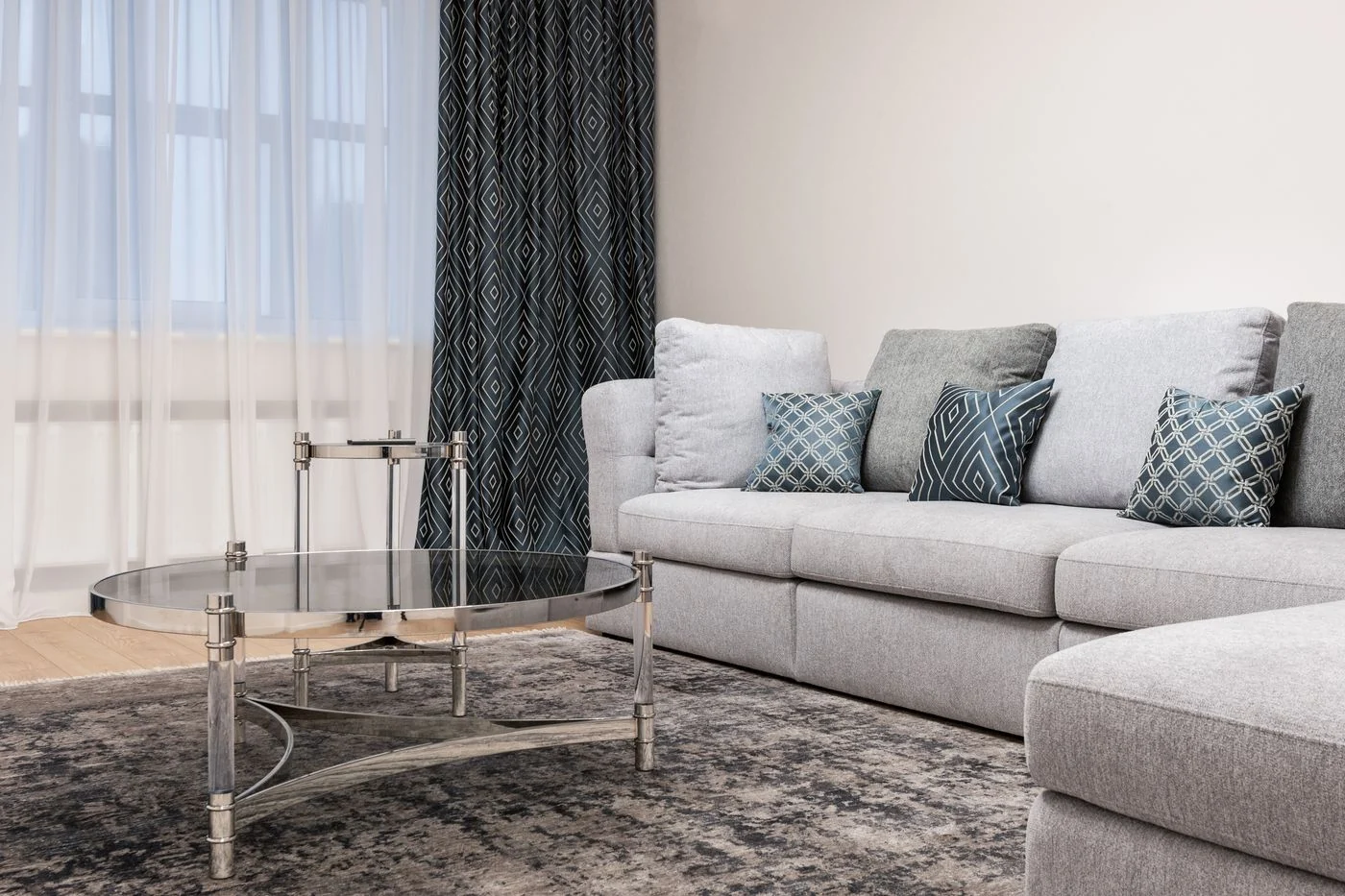
Curtain length looks like a small finishing choice until the panels arrive. A few unexpected inches can make the fabric collect along the floor, interfere with cleaning, or appear stranded above the baseboard. The useful measurement begins with the intended hanging position, not with the window opening alone.
Decide where the curtain hardware will sit and what the fabric needs to do. A purely decorative panel at the side of a window has different demands from curtains opened and closed twice a day. Follow the hardware and curtain maker's instructions, and account for the way rings, tabs, or hooks change the final hanging length.
Measure more than one point along the floor. Floors and ceilings are not always perfectly level, and a hem that just touches at one end may drag at the other. If you are ordering finished panels, compare the stated dimensions with your measurements before deciding that a standard size is close enough.
Touching, floating, or pooling
Fabric that meets the floor with little excess can look calm and tailored. A small clearance may be more convenient where curtains move often or where cleaning access matters. Pooling fabric is a deliberate decorative choice that takes floor space and attention; it is not an automatic sign of a more luxurious room.
Picture the curtain closed. Long panels that look graceful gathered at the sides may spread across a vent, sit against a radiator, or obstruct an area that needs clearance. The room's equipment and product safety guidance take priority over the preferred photograph. Do not place fabric where it interferes with heat sources or normal window operation.
The hem is also influenced by the fabric itself. A stiff material holds a different outline from a soft one. Heavy-looking folds at the bottom can make a small window feel more crowded. If you are uncertain, a fabric sample and a temporary paper marker at the intended hem can help you imagine the overall proportion.
What to record before ordering
Write down the intended hardware position, the attachment method, the drop at several points, and the finished panel dimensions offered by the seller. If alterations are likely, confirm what the fabric and heading allow with an appropriate professional. A panel cannot always be adjusted in the same way at both ends without changing its appearance.
Also record where the panels will gather when open. A long curtain with generous fabric can occupy a substantial area beside the window, and its hem may behave differently there than when fully closed. Furniture placed under that gathered fabric can create an awkward overlap even when the central window area looks clear.
For a rental, separate the curtain decision from permission to install or change hardware. Existing hardware may determine the practical choices. A well-measured panel on an appropriate existing rail can look more settled than an ambitious arrangement that depends on unauthorized alterations.
Once the panels are hung, give them the care and settling time recommended for the product before arranging any final alteration. Check both sides in daylight and in the evening. A curtain should frame the room comfortably, but it should also let you vacuum, open the window, and walk past without thinking about it.