Make the Room Pleasant After Sunset
Walk through the room after sunset and notice where you sit, read, and pass through. Those activities should guide the lamps.
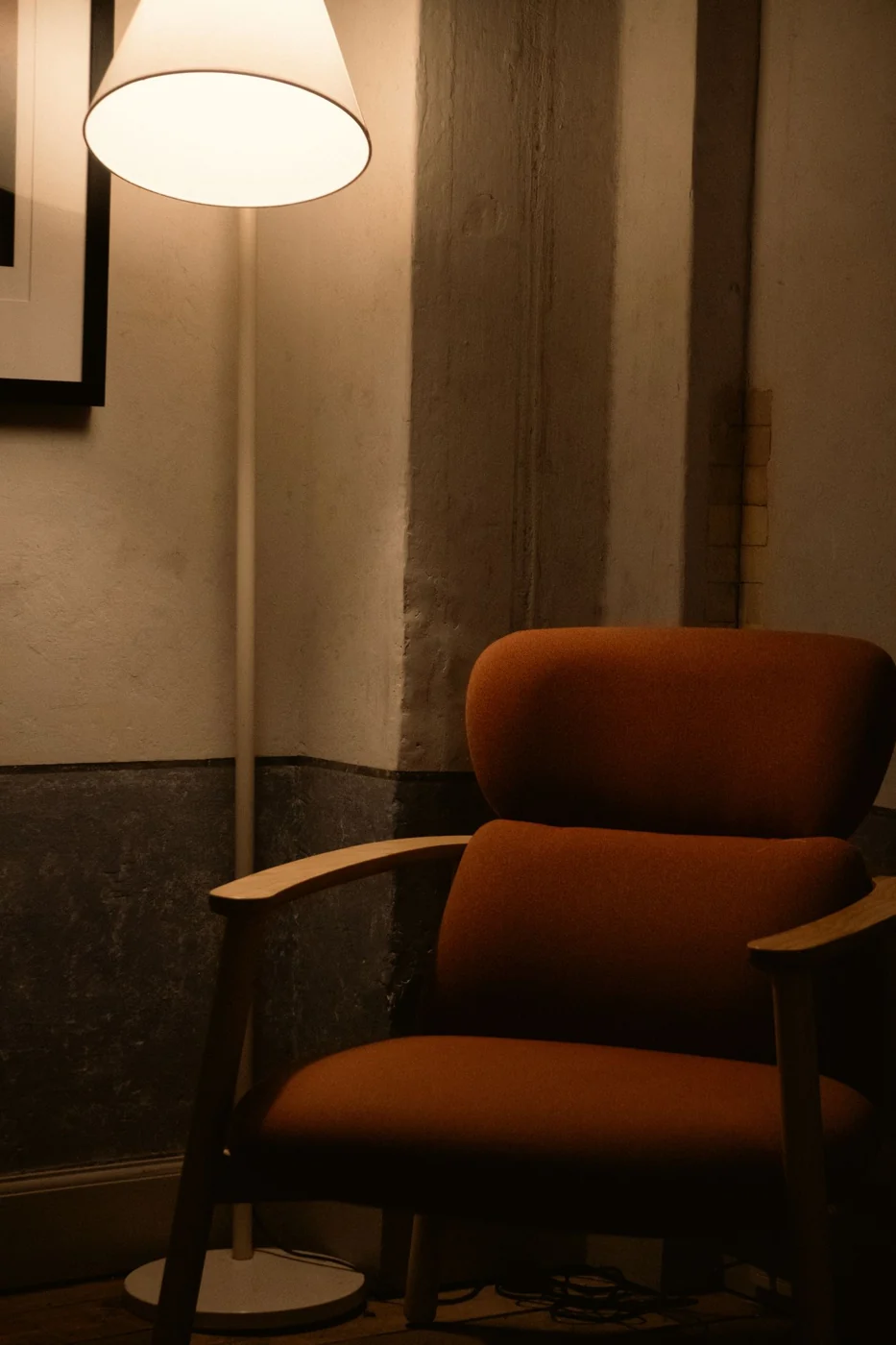
A room can look complete at noon and feel oddly unwelcoming after dinner. Furniture outlines disappear, one bright overhead fixture dominates, and a comfortable chair sits in a dark corner. Adding more decorative objects will not address that change. The evening arrangement needs its own look.
Turn on the lights you normally use and sit in the usual places. Notice whether you can comfortably do what happens there: read, talk, find something on a side table, or move through the room. These observations are more useful than deciding that every corner needs an identical lamp.
Give light a nearby purpose
An existing table lamp may be more helpful beside a seat than on a distant decorative console. A suitable floor lamp may free a small side table for a drink. Move only within safe, appropriate locations with compatible products and clear cord routes. If the room requires new electrical work, that is a separate task for a qualified professional.
Avoid placing all the visual brightness at one end of the room if the other end is regularly used. The answer does not have to be perfect symmetry. One light near the sofa and another near a reading chair can establish two useful areas while leaving less active corners quieter.
Look for uncomfortable glare from seated positions. A visible light source or a reflection in a television can matter more than the lamp's appearance during the day. Sometimes a slight change in the lamp's location helps; sometimes the product is simply unsuitable for that spot. Follow its guidance rather than improvising covers or components.
Make the normal setup easy
A good arrangement should be easy to switch on without walking through clutter or moving furniture. If a lamp is inconvenient, it may rarely be used, however attractive it looks. Consider the household's actual habits when deciding where each piece belongs.
Then stop adjusting and spend an ordinary evening in the room. You may discover that one lamp does most of the work and another is only useful occasionally. That is fine. The goal is a room that supports different activities without demanding a special lighting ceremony every night. Once the useful lights are in place, the furniture and textures often become more legible on their own.