Add Fall Texture Without a Heavy Room
Add one useful layer with a distinct texture, then check whether the room needs anything more.
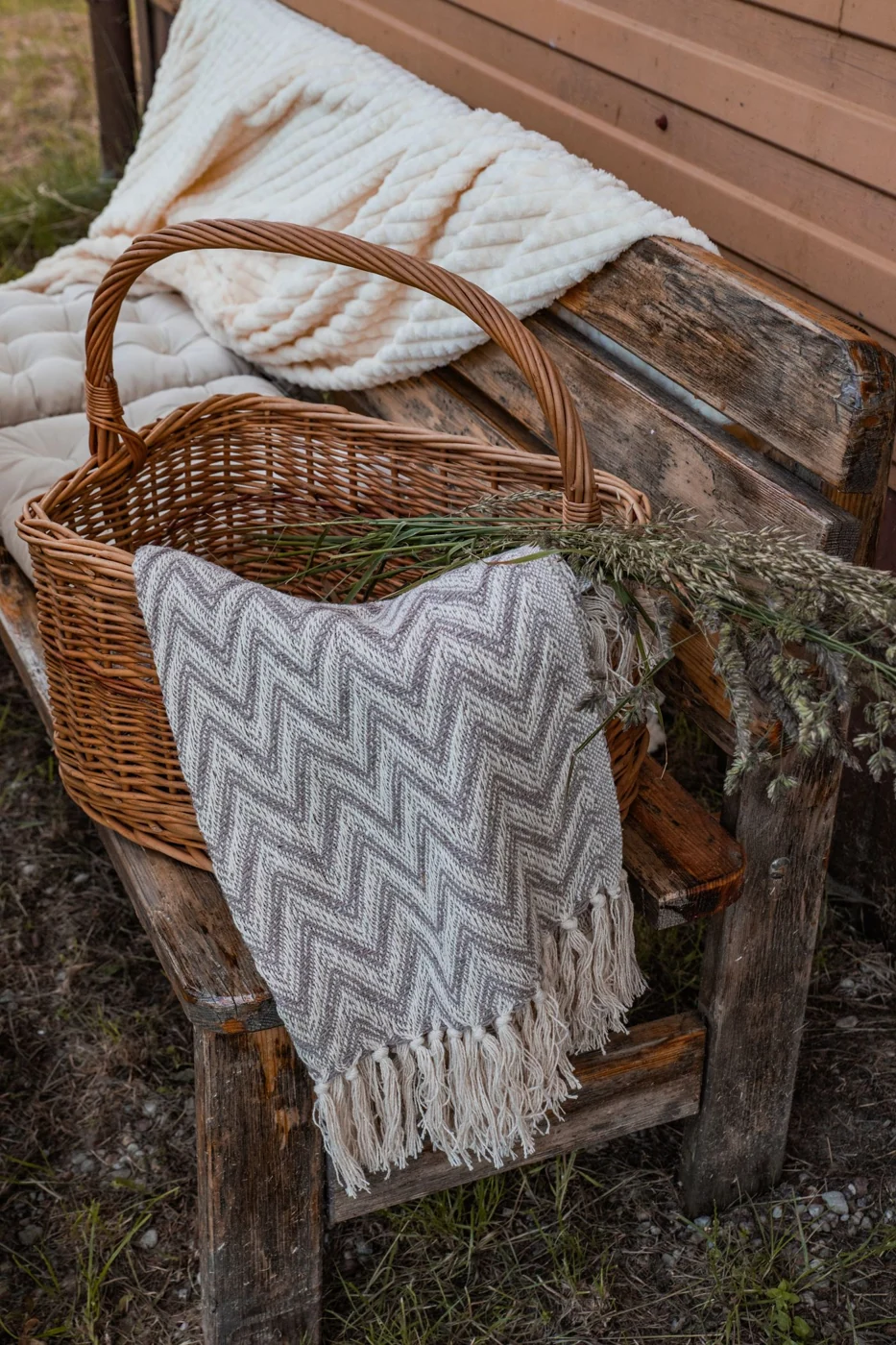
Fall textiles can make a room feel comfortable, but several new layers at once can obscure the furniture and make ordinary seating awkward. Begin with the actual need. Is a chair cool in the evening? Does the sofa need a softer cushion? Or do you simply want a deeper visual texture in one part of the room?
A single useful blanket can answer the first question. A changed cover may answer the second. The third may require no additional volume at all; replacing a smooth-looking textile with a more visibly woven one can alter the mood while keeping the arrangement equally simple.
Give the textures different scales
A large chunky texture beside another equally prominent one can become visually noisy. A broader weave often looks clearer with a smoother neighboring fabric. The contrast lets each surface show its character instead of merging into a dense pile.
Color can remain restrained. Similar tones with different surfaces may provide enough seasonal change. If you introduce a strong dark color as well as a strong texture, the new layer will carry more attention, which may be welcome on a plain sofa but excessive in an already patterned room.
Check how the textile behaves during use. A throw that slides constantly or a cushion that takes up too much of the seat is unlikely to remain where it was styled. Choose the actual material, size, and care requirements for the household rather than judging only the photograph.
Leave some furniture visible
The shape of a chair arm or the back of a sofa can be part of what makes the room attractive. Do not cover it automatically. A folded layer at one end may be more pleasing than fabric spread across the entire piece.
Avoid arranging blankets where their edges trail into walking routes or where they must be removed to reach a useful surface. Their softness should make the room easier to inhabit, not create small obstacles.
Keep the replaced textiles separate once you decide on the new arrangement. Seasonal layering is simpler when it does not become cumulative layering. The room can feel different without containing more things than before.
On a cool evening, notice which layers people actually reach for. That information is more valuable than a perfectly balanced photograph. Keep the texture that gets used and reconsider the decorative layer that repeatedly ends up on the floor.