A small landing place for keys and glasses
A landing place should hold the things that leave with you, not every small object that enters the house.
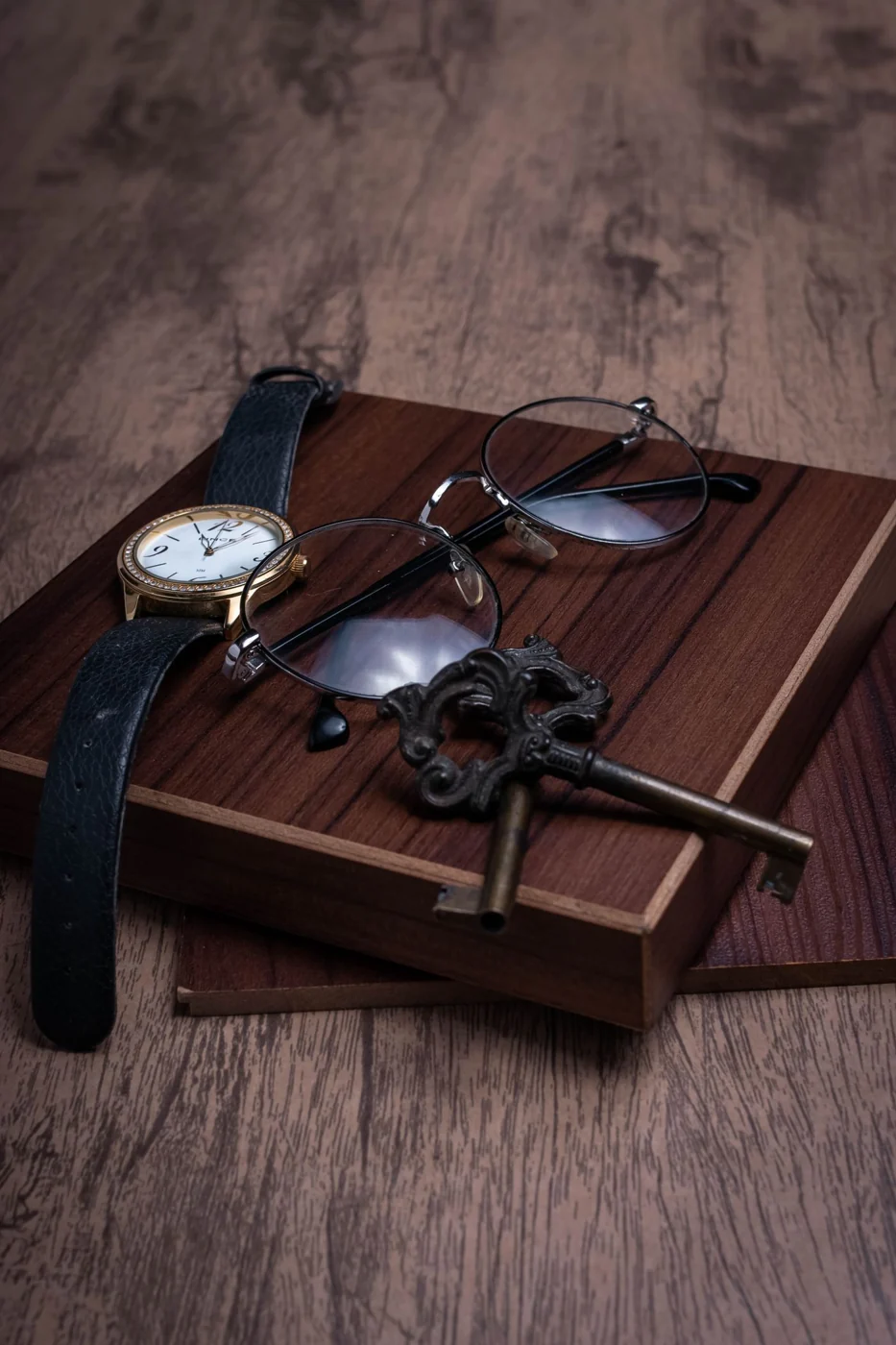
Keys are often easiest to find when their home is almost boring. A small dish, a shallow wooden tray, or a few hooks near the usual entrance can work. The important choice is where your hand naturally goes when you arrive, not which accessory looks best in a styled entry photograph.
Watch the landing pattern for a few days. If keys always end up on a kitchen counter, a beautiful tray beside the front door may be solving the wrong problem. Place the first trial container near the actual drop point. You can improve its appearance once the location works.
Keep the contents narrow. Everyday keys, glasses, and perhaps a transit card may belong together. Coins, receipts, tiny tools, and unfamiliar screws are different decisions. When these begin accumulating, the tray stops being a reliable departure point and becomes another sorting task.
A soft lining can reduce scratches and noise, but avoid a lining that catches on key teeth or disappears under a pile of objects. Glasses need enough space to sit safely without a heavy key ring resting across their lenses. If the tray cannot offer that, give the glasses a separate case or section.
Share the space without mixing everything
In a household with several sets of keys, assign obvious positions rather than depending on everyone to recognize a small decorative label. One hook per person or two distinct dishes can be clearer than several nearly identical compartments. Make the arrangement comfortable for the shortest person using it, too.
Keep car keys and access devices away from exposed windows and doors, and follow any security guidance supplied for keyless entry devices. A landing place does not have to be visible from outside to be convenient from inside. Avoid attaching a full home address to a key tag.
The tray can be moved when routines change. A new commute, a different entrance, or a child beginning to carry a key may alter what needs to live there. It is a tool for a current habit, not a permanent decorative commitment.
Once a week, remove anything that did not leave the house with someone. The occasional unfamiliar key deserves investigation instead of indefinite residence. A small clear place is more reassuring than a larger, prettier container full of things that might be important.