A linen cupboard you can use without unfolding everything
Fold for the cupboard and the person using it, rather than for a particular photograph.
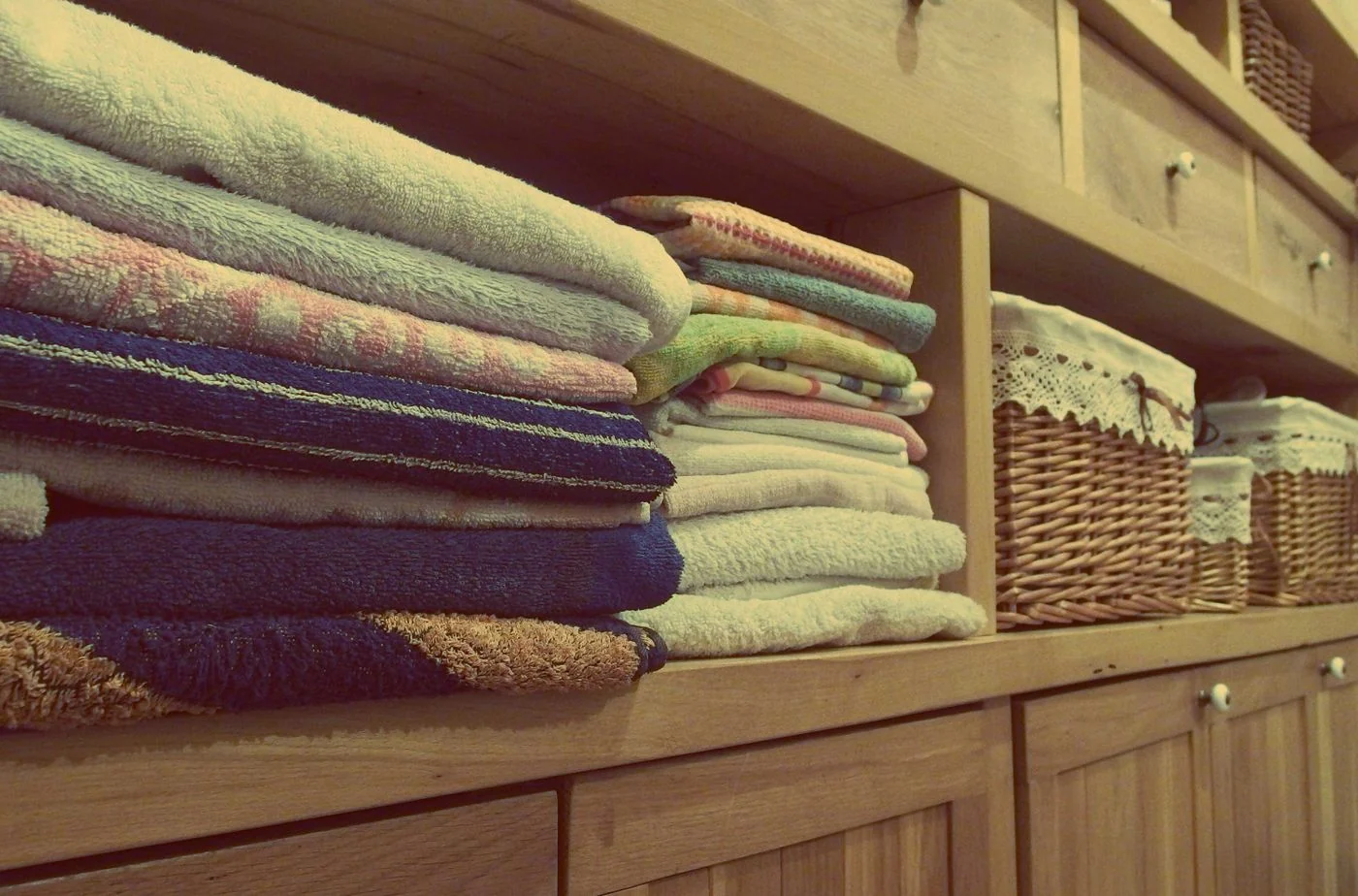
A linen cupboard works best when taking out one towel does not loosen the whole stack. Beautifully tight folding can make that harder if every piece is wedged against its neighbors. Start with the usable depth of the shelf and the space your hands need at the front.
For towels, make a few trial folds with the sizes you actually own. A deep fold may suit a broad shelf; a smaller rectangle might sit better in a shallow cabinet. Consistent dimensions within one stack are more useful than forcing bath towels, washcloths, and fitted sheets into the same shape.
Keep the stacks modest
A tall tower asks the bottom towel to support everything above it. Split it into two shorter stacks if space allows, or reserve the lower shelf for the larger pieces. Put everyday towels where they can be lifted out easily. Guest linens can live farther up or back, provided they are still reachable without unsafe climbing.
Sheet sets benefit from staying together, but the familiar trick of placing everything inside a pillowcase is not compulsory. It can hide the size and make a large bundle cumbersome. An open fabric bin, a shelf divider, or a simple stack with the pillowcases on top may be easier for your household. Mark the shelf with the bed size if similar white sets are hard to tell apart.
Keep spare blankets from flattening smaller pieces. A blanket needs its own section, and a loosely folded one may take less effort to put away than a compact roll. Check the care label before deciding how to store a special fiber or delicate piece. Linens should be completely dry before they go into a closed cupboard.
A cupboard that seems short on space may actually hold more linens than the household can use. Count complete sets rather than isolated pieces. A fitted sheet with no matching size of bed is occupying useful space even if the fabric is still lovely. Decide whether it has another real purpose, can be donated in suitable condition, or should be handled through a local textile collection option.
Put the freshly washed items behind or beneath the next set to be used when that is easy to do. This encourages a simple rotation without requiring a tracking system. The final test is ordinary laundry day: can a clean stack be returned while you are carrying a basket? If not, make the arrangement less exacting.