What a Lampshade Changes
A shade changes both the outline of a lamp and the impression it gives when illuminated. Compare both conditions.
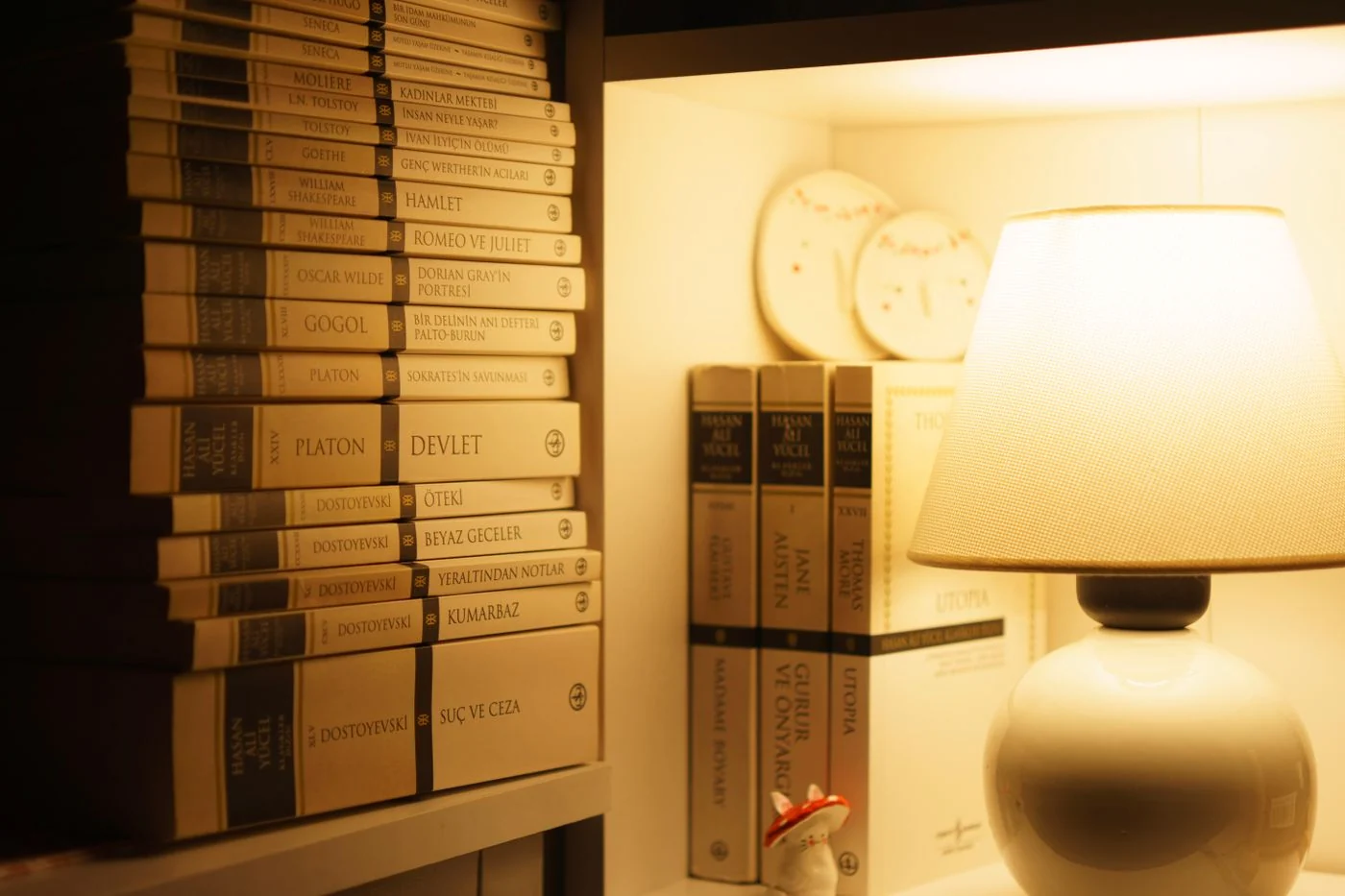
A lampshade that looks cream in daylight may have a much warmer appearance when the lamp is on. A dark shade can form a strong silhouette even before it is illuminated. Choosing by the unlit product photograph misses half of the decision.
If you are replacing a shade, first confirm compatibility with the lamp, fitting, bulb, and manufacturer's requirements. Shape and color choices come after the piece is suitable for the lamp. An improvised fit is not worth preserving a particular decorating idea.
Set the lamp where it will normally live and compare the shade with the wall and upholstery. A bright white shade can look sharp beside muted cream fabrics, while a textured neutral can seem quieter. Neither is inherently better. Decide whether the lamp needs to stand out as a shape or settle into the background.
Material affects how the shade looks, but appearance alone does not tell you exactly how much useful light it will provide. Read the product information and, where possible, view it illuminated. A shade that creates a pleasing mood may not suit a spot where someone regularly reads small print.
The inside surface also matters to the overall impression. Do not assume two shades with similar exteriors will look identical when lit. If shopping in person, ask to see the actual combination with a compatible bulb. If shopping online, check the return terms and any illuminated photographs provided by the seller.
Consider the rest of the room's lamps without demanding a perfect match. Several shades can feel related through a similar softness or simple shape while differing in size. A single strongly colored shade will attract attention, so give it space to do that rather than surrounding it with equally assertive accessories.
Before replacing the shade, try moving an object that is making the lamp feel awkward. A dark picture directly behind it or a crowded table may be the real source of the problem. If the shade does need changing, keep the old one until the new combination has been checked in ordinary evening use. The final choice should support the room you inhabit, not only the daylight photograph.