Separate daily supplies from spares under the sink
Work around the plumbing first, then give daily items and unopened supplies separate places.
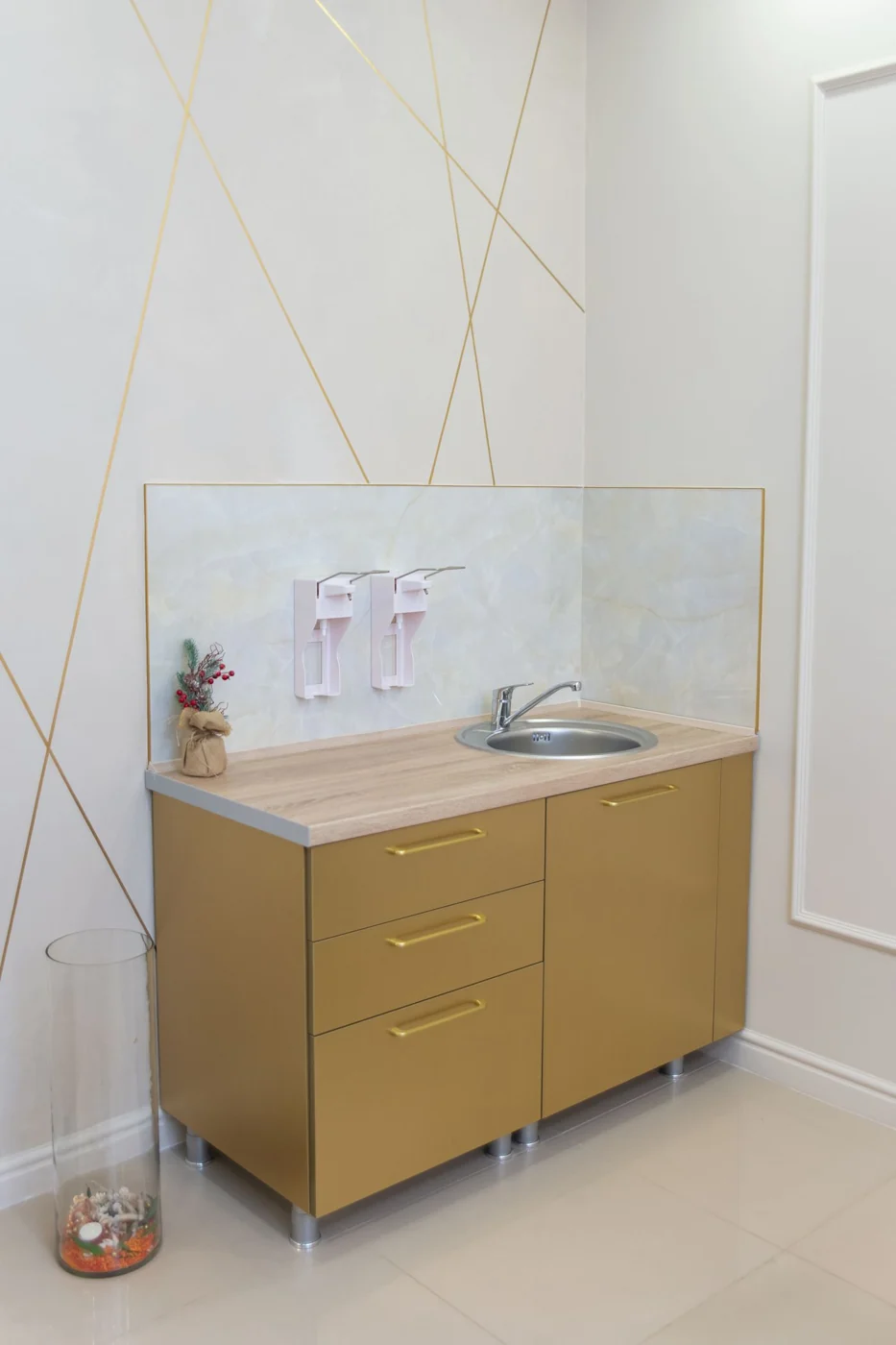
The cabinet below a sink is an awkward shape pretending to be a rectangular cupboard. Pipes, shutoff valves, and the underside of the bowl interrupt the space. Measure around those obstacles before considering any organizer; the outside cabinet width tells only part of the story.
Empty the cabinet carefully and check for dampness, staining, or a leak. Storage should not conceal a problem that needs attention. If you find active moisture, deal with the cause before returning supplies. Keep access to valves and plumbing clear rather than packing an attractive container tightly in front of them.
Separate what you reach for every day from what is waiting to replace it. In a bathroom, that might mean the current hand-soap refill near the front and unopened toiletries farther back. In a kitchen, dish-cleaning supplies might share a removable caddy while spare sponges have their own small container. Avoid placing everything in one large bin that has to come out for every minor task.
Containers should earn their space
A shallow, washable tray can make drips easier to notice and clean, but it does not fix a leak or make unsuitable products safe to store together. Keep chemicals in their original labeled containers, follow their storage instructions, and secure them from children or pets. Do not transfer an unfamiliar liquid into a decorative bottle simply to make the cupboard look coordinated.
Try the arrangement with the door fully closed. Hinges and door-mounted fittings can collide with a bottle that looked comfortably inside the cabinet. Pull out each proposed tray while holding it level; a pipe that catches the handle may make the organizer impractical.
Leave unopened extras visible enough to count. If six replacements are stacked behind the daily bottle, the cabinet has become a purchasing problem as well as a storage problem. A small, fixed space for backups creates a useful limit. When it is full, another purchase needs a reason.
Keep the floor of the cabinet easy to inspect. A complicated tower of baskets can hide moisture and make routine access difficult. Two clear zones often do more than a collection of specialized fittings: one for things in use and one for modest reserves. After a week, adjust the front section according to what you actually reached for, rather than what seemed most important while arranging it.