Choosing a Rug Around Your Seating
Measure the seating arrangement you use, not an empty rectangle in the middle of the floor.
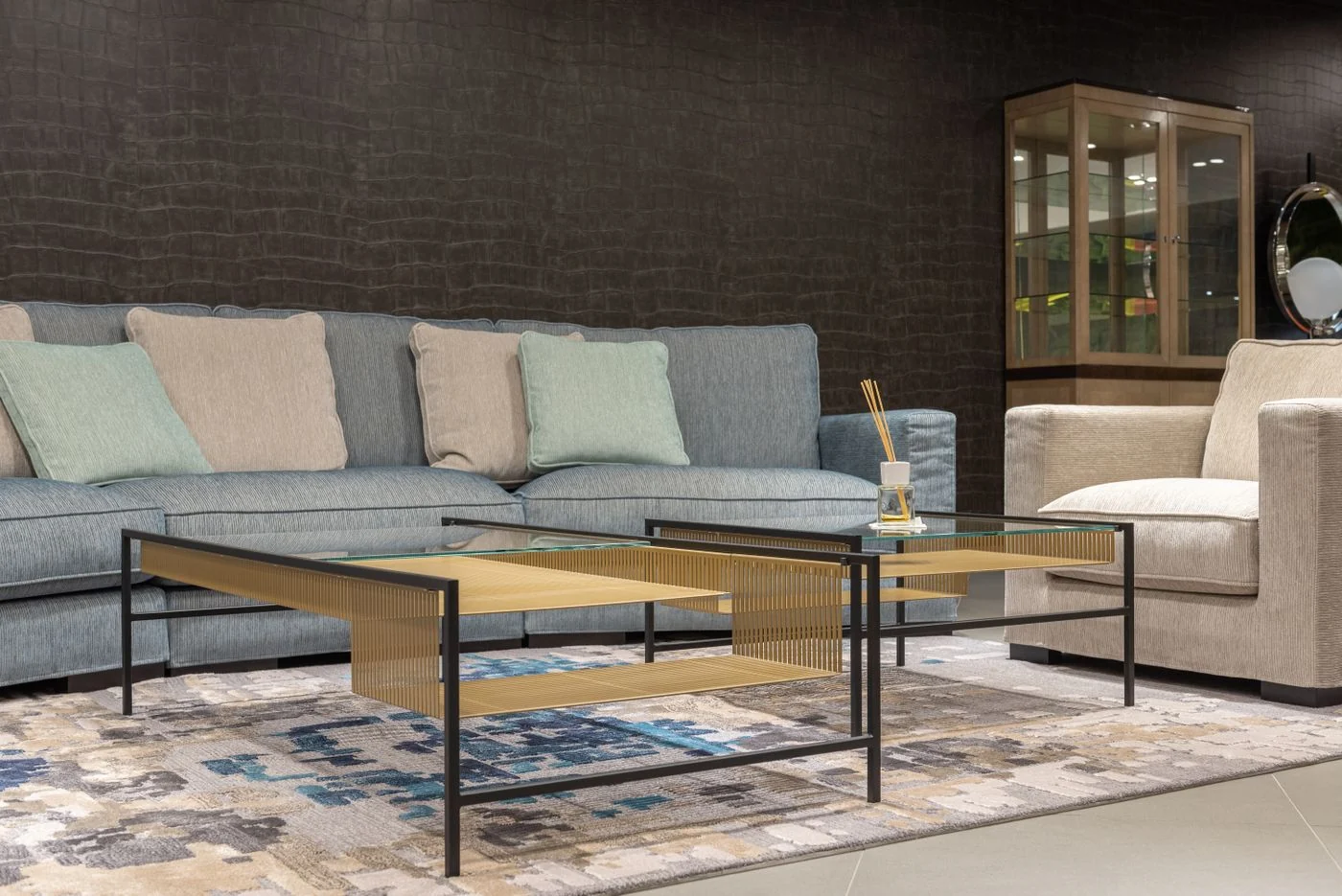
A rug is often chosen from the center of the room outward: find a pleasing rectangle, place a coffee table on it, and hope the furniture relates. It is more useful to begin with the seats. The rug should help the sofa and chairs feel like a group while leaving the room's routes understandable.
Arrange the furniture first, even if only approximately. Place the sofa where it works with the doors and main view. Move the chairs close enough for their intended use. Then mark possible rug boundaries with removable floor-safe markers or paper. You can assess the outline before making an expensive delivery part of the experiment.
Compare two believable sizes
Instead of considering every size in a catalog, compare two that could realistically fit. A larger outline may bring more of the furniture onto the rug and make the group feel connected. A smaller one may work if it still relates clearly to the front of the seats. The question is not whether a universal rule has been followed; it is whether the arrangement looks and feels coherent.
Check each chair independently. A chair that rocks between rug and floor or catches an edge when moved is telling you something the overhead plan missed. Consider the thickness of the rug and pad together. Product guidance matters, particularly with delicate floors or furniture that needs an even base.
Walk the routes you use every day. The path from the door to the kitchen may run beside the seating group rather than through it. A rug edge placed awkwardly along that route can make the room feel divided. You do not need an identical strip of exposed floor on every side when the furniture and room are not symmetrical.
Now inspect the coffee table. It should have a clear relationship to the seats, with comfortable reach and enough room to pass. Do not make a poorly sized table look correct by choosing an equally undersized rug. Those are separate decisions, and either object may be better used elsewhere.
Pattern changes the visual size
A strong border emphasizes the rug's exact perimeter. A quieter or more irregular pattern may let that edge recede. When comparing products, imagine the portions that furniture will cover. The attractive central motif in a product photograph may disappear beneath your table, leaving only the busiest part visible.
Take room measurements and furniture positions to the store or keep them beside you when shopping online. Check the actual listed dimensions, since a size name may be approximate. Read delivery and return terms before ordering; a large rolled rug is not an easy item to send back casually.
If the right size is beyond the current budget, waiting can be better than buying a smaller rug solely to fill the space. The bare floor may look more settled than a decorative rectangle that leaves every chair stranded. A rug earns its place by connecting daily life in the room, not simply by occupying its center.