Let One Older Piece Change a New Room
An older object can bring a room depth without requiring the rest of the furniture to pretend it is the same age.
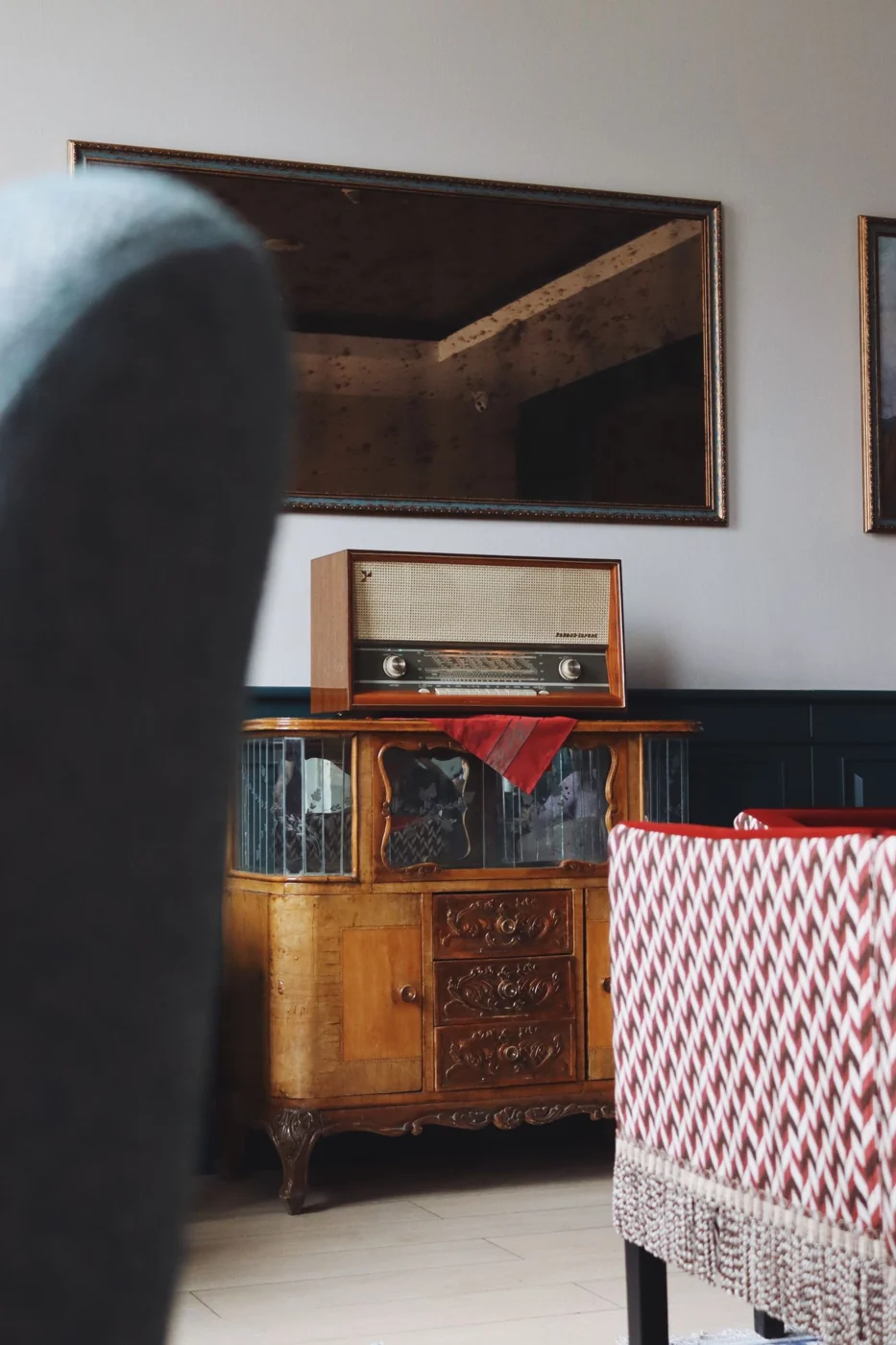
A room of new furniture can feel a little too consistent: similar finishes, crisp edges, and fabrics that have all arrived at once. One older piece can interrupt that uniformity. It does not need to be a valuable antique, and you do not need to invent a story about where it came from.
Choose the piece for a real reason. It might be a cabinet with useful storage, a frame you enjoy, or a chair whose shape differs from the rest of the room. An object selected only to supply age can become another decorative prop. Something you use has a better chance of feeling at home.
Inspect condition and suitability before making the visual decision. Older furniture can have wear that is harmless to its appearance and problems that affect its function. Do not treat structural damage, loose parts, or unknown finishes as proof of charming authenticity. Seek appropriate assessment when needed, and use the piece within its actual capabilities.
A darker old table can sit beside a pale new sofa without being refinished to match. The contrast may be what makes the arrangement interesting. Connect them through proportion or a small shared color elsewhere rather than making their surfaces identical.
Give the older object some space. Surrounding it immediately with vintage-style signs, distressed accessories, and ornate frames can make it disappear into a themed display. A plain lamp or a straightforward contemporary print may reveal its character more clearly.
If the object feels heavy in a light room, consider the surrounding area before changing the object. Removing a dense cluster of accessories, choosing a lighter textile nearby, or moving it away from another dark piece may be enough. The room can acknowledge its weight instead of trying to disguise it.
There is no need to balance every new item with an old one. A single piece can provide the variation you wanted. Let future additions arrive for their own reasons rather than setting a quota for age. A room begins to feel collected when its objects have distinct uses and shapes, not when every purchase has been selected to prove that the room was assembled slowly.