Give opened pantry packets a place to land
Make opened food easy to notice before another package is opened behind it.
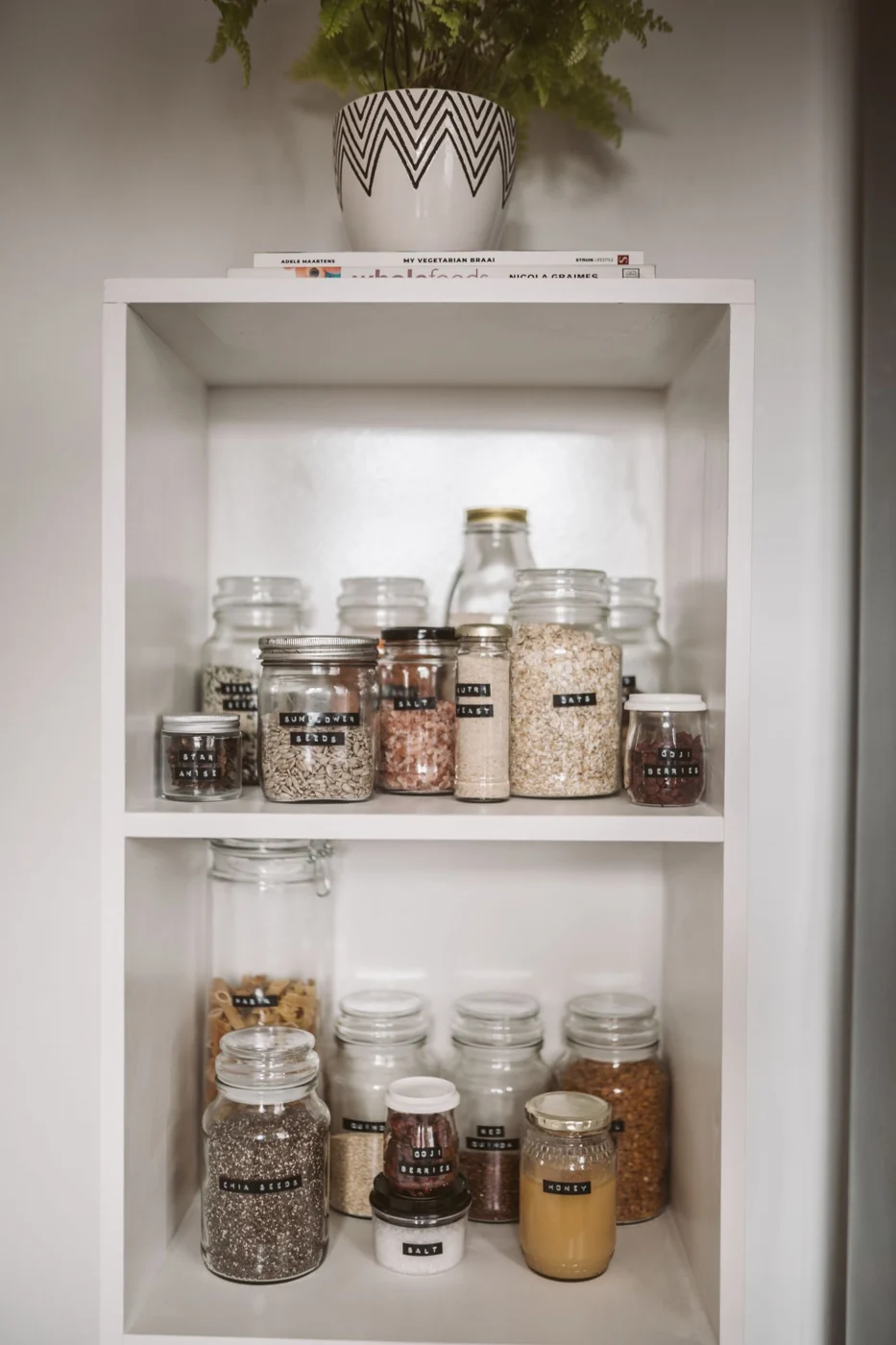
The troublesome part of a pantry is often not the unopened groceries. It is the half bag of rice, the cereal liner folded badly inside its box, and the crackers that have lost their original outer packaging. Each occupies an uncertain amount of space, and each can disappear behind something more orderly.
Create a small area for opened packets near the foods they belong with. A shallow bin can stop flexible bags from slumping across the shelf, but it should not become a mixed drawer of breakfast, baking, and dinner ingredients. Keep the grouping close enough to the way you cook that you can find things without unpacking it.
Close packages according to the food's storage needs and label instructions. A clip may be sufficient for some dry goods; other items need an appropriate airtight container or refrigeration after opening. A pantry arrangement cannot extend a food's safe storage life, so retain the relevant date and handling information.
Decant selectively
Matching jars can make a shelf clearer, but transferring everything creates extra washing and record-keeping. Consider whether a container will hold the entire package, including the last small amount from the previous purchase. Avoid continually topping up old contents with new; it makes dates and condition harder to follow.
If you do decant, keep the product name, allergen information, and relevant preparation instructions available. A discreet label on the back or bottom can help, provided it remains readable. Households managing allergies need more than a good guess based on color or texture.
Place the oldest suitable item toward the front, and check what is already open before making a shopping list. A small basket marked for use soon can be helpful if its contents are reviewed regularly and are still safe to eat. It should never turn questionable food into an obligation.
Leave room to take out a bag without lifting three containers. Tall packets may work better upright against a side wall, while a broad shallow shelf suits boxes laid in a single row. The shape of the packaging should inform the arrangement instead of being forced into the same container system.
At the next grocery delivery, spend a minute finding the opened equivalent of each new item. Put the new package behind it rather than opening it immediately. That small movement is what makes the storage useful: the shelf begins to support the order in which food is actually used.