Mixing Patterns That Leave Room to Breathe
Patterns can share a room without sharing a set. The useful distinction is how loudly each one speaks.
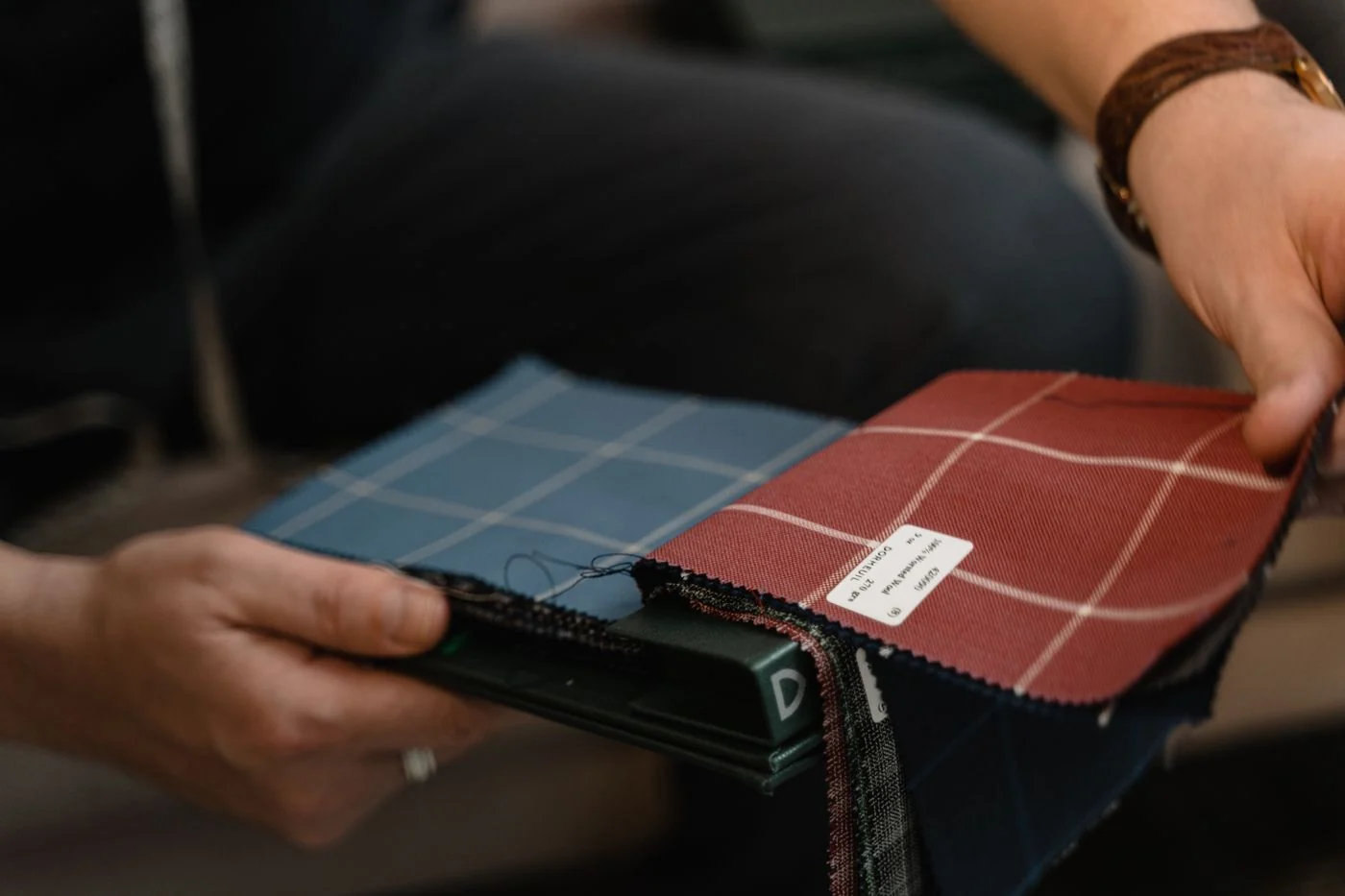
A room can contain several patterns and still feel quiet. Trouble usually begins when every pattern asks to be noticed in the same way: several medium-sized, high-contrast repeats spread evenly across the furniture. The eye keeps landing on another equally busy surface without finding a place to rest.
Choose one pattern to lead. It might be the rug that already fills the seating area, a floral curtain, or a favorite upholstered chair. You do not need to replace it simply because its colors are unusual. Use it as a reference for selecting companions, while allowing its own scale to remain distinctive.
Look at the pattern from across the room, not only at arm's length. A tiny check may read almost as a solid fabric at that distance. A broad stripe remains visible much farther away. A large floral may have enough open background to feel quieter than a dense, smaller design. The size of the repeat and the space between its marks both matter.
Give each surface a different role
Suppose the curtains carry a large botanical print. A small check on one cushion can provide a different rhythm, while the sofa stays plain. A textured throw can add interest without introducing another printed motif. The arrangement has variety because the surfaces perform different jobs, not because a formula demands three patterns.
Color can connect the patterns loosely. You might repeat the curtain's muted green in the check, but the two fabrics do not need every color in common. A shared background tone can be enough. When evaluating samples, put a generous amount of the main plain fabric between them; that is closer to how they will appear in the room.
Be careful with the number of patterned objects as well as the number of patterns. Six small cushions can make the sofa feel busier than one larger patterned cover, even when the print is identical. Remove a few pieces and judge the room again before changing the fabrics themselves.
Compare three samples in place
Suppose the sofa is plain cream, the rug has a large faded pattern, and you are choosing cushions. Put one small checked sample and one medium floral against the sofa, with the rug visible below. The check may read as a quiet texture, while the floral introduces a second obvious motif. You might prefer the check alone, or keep a single floral cushion and use plain fabric elsewhere. The samples answer a specific question about this room rather than proving that certain patterns always match.
Now move the same samples to a patterned chair. Their relationship may change completely because the plain cream area is gone. A combination that worked across several feet of neutral upholstery can feel crowded when the patterns touch. This is why the location of the fabric matters as much as its color and repeat.
Take a step back before deciding. Close inspection is useful for texture and quality; a room-distance view tells you whether the patterns remain distinct. Both views deserve a place in the choice.
There is also permission to keep only one pattern. A floral chair beside plain linen curtains, a smooth wooden table, and a woven rug already contains plenty of visual information. Pattern mixing is an option, not an achievement the room must demonstrate. The arrangement is successful when the objects remain clear and the space feels comfortable to use, whether it contains one print or several.