Edit a Room Before Buying Anything
Before adding another piece, find out whether the room needs more furniture, a different arrangement, or simply fewer competing objects.
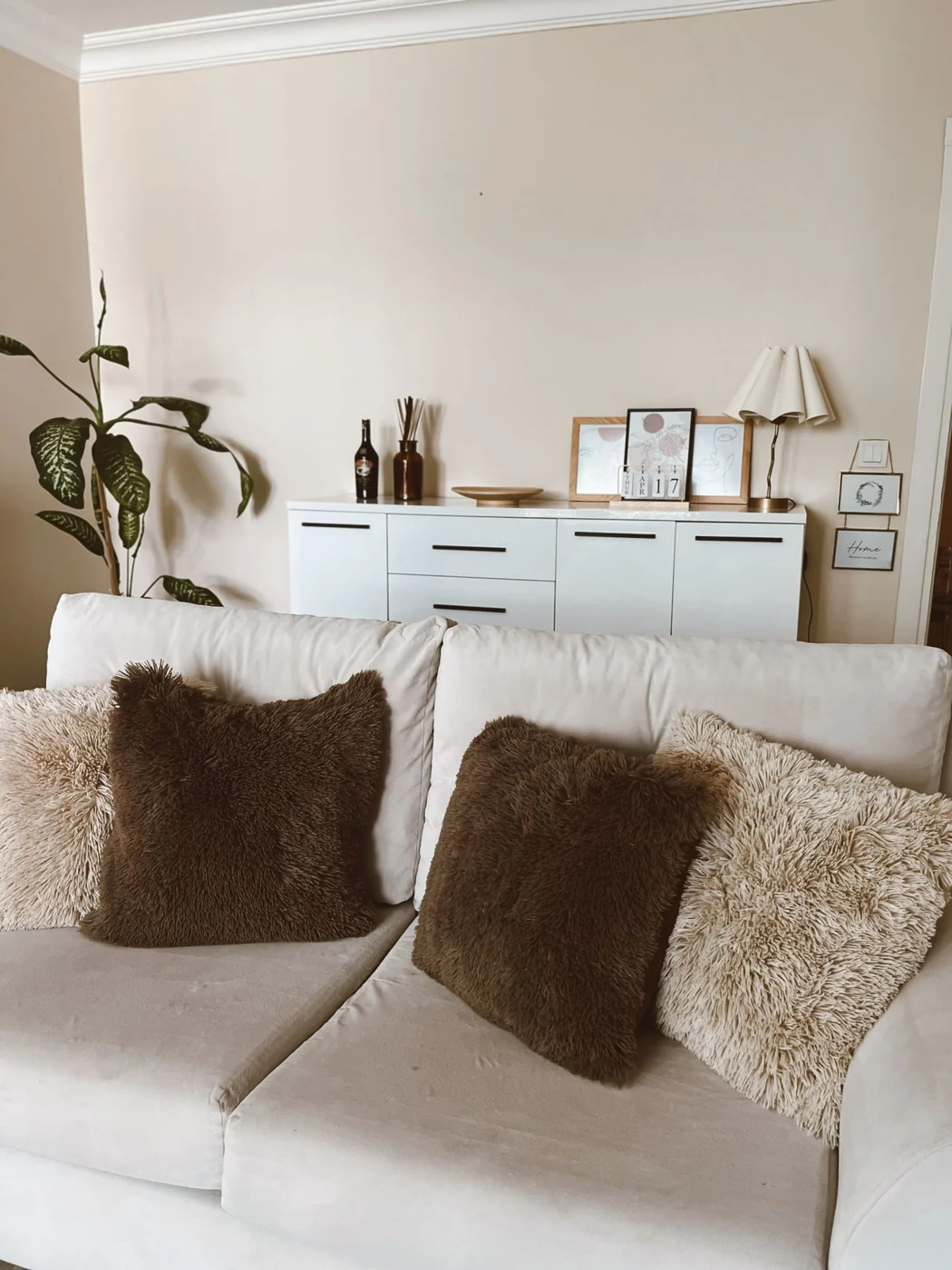
An unsettled room can create a strong urge to shop. A new cushion promises to connect the colors; a small table promises to fill the awkward corner. Sometimes a purchase is the right answer. Often the problem has not yet been identified clearly enough for buying anything to help.
Choose one area rather than emptying the entire house. The sofa corner, a console, or a shelf is enough for a useful experiment. Photograph it as a record, then remove the movable accessories. Leave the furniture and lighting in place initially so that you can see their relationship without the smaller distractions.
Describe what is wrong in ordinary language
Avoid starting with a style label such as too modern or not cozy. Be more specific: there is nowhere to put a drink, the lamp is behind the chair, the shelf looks crowded, or the table blocks the route. A concrete description points toward a concrete change.
If the issue is visual, notice where your eye stops. Perhaps several objects have similar heights, or a dark group is concentrated at one end of the room. Move one existing piece and look again. Change only a few things at a time so that you can tell what helped.
Bring back the useful objects first. Then add the decorative piece you most enjoy. Pause before returning the rest. Some items may have occupied the area simply because they had nowhere else to go. Set them aside temporarily rather than forcing them back into the arrangement immediately.
Test the room in use
Spend an ordinary evening there. Sit down, reach for a drink, open a drawer, and walk the usual path. A composition that looks calmer but makes daily life more awkward is not an improvement. The edit should serve both the room's appearance and its routine.
Keep a short list of genuine gaps. It might say a smaller lamp base, closed storage for remotes, or a rug that reaches the chairs. These are shopping criteria. A vague desire for more warmth is not yet specific enough to guide a useful purchase.
Measure any proposed item in the space before ordering it. Include the parts that move or project: drawers, chair backs, lampshades, and handles. A product that fits its allocated rectangle can still interfere with how the room works.
Give the quieter version a little time
An edited room can initially feel bare because you are accustomed to seeing more. That unfamiliarity does not necessarily mean something is missing. Leave the arrangement through several normal days before restoring every accessory.
If you still want one additional piece, you can now describe its job. That makes it easier to reject attractive objects that do not solve the problem. Shopping becomes a way to complete a decision rather than a substitute for making one.
The items removed also deserve a decision. Use them elsewhere if they genuinely fit, store a limited seasonal selection, or pass along things that no longer belong. Moving a pile from one surface to another is only an intermission. A successful edit leaves the room easier to use and the remaining objects easier to appreciate.