Repeat the Good Parts of Last Year’s Decorating
A few notes about what worked can help you reuse favorite arrangements without turning next year’s decorating into a rigid formula.
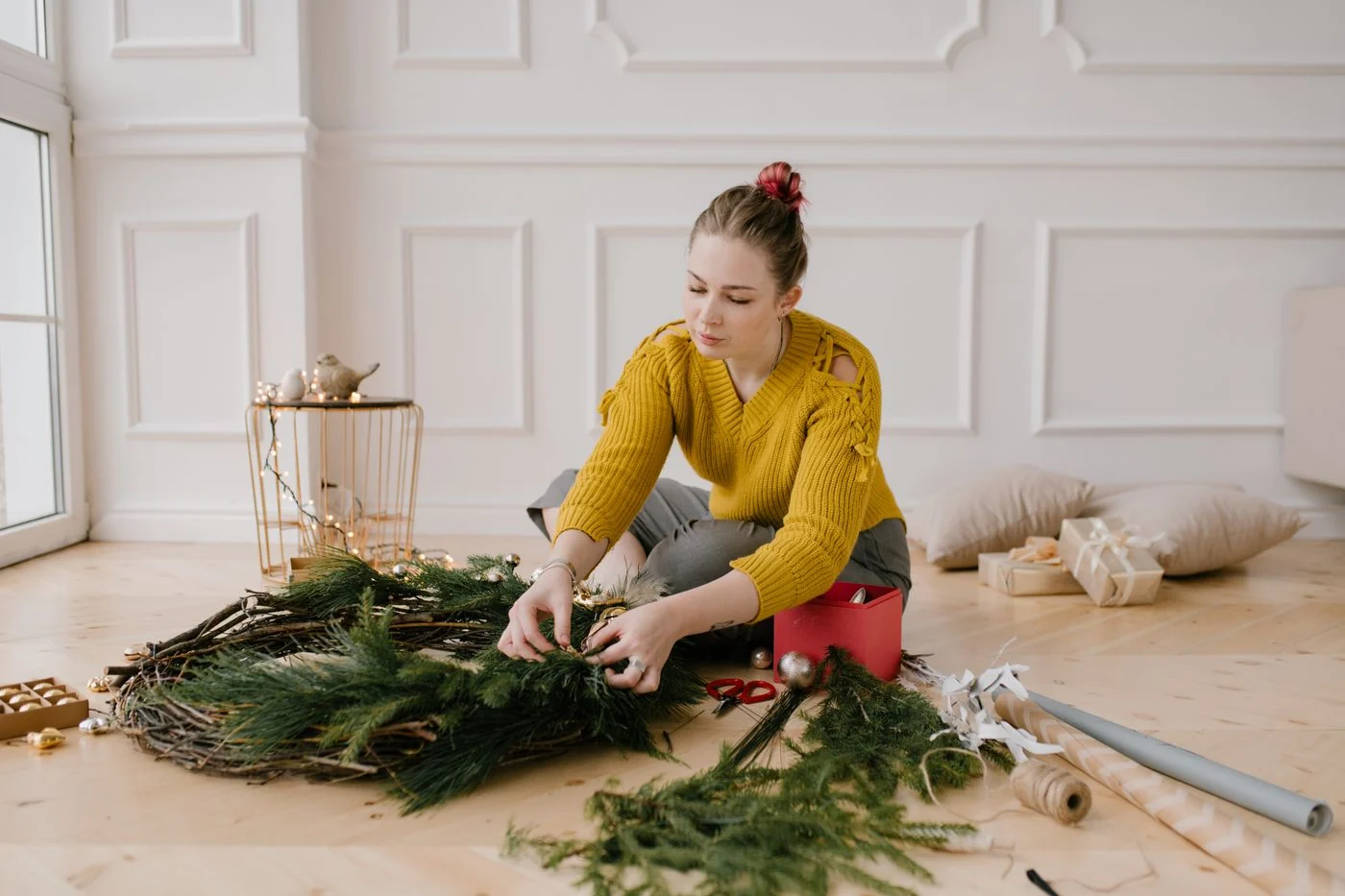
A good seasonal arrangement is easy to forget in useful detail. You may remember that the room looked pleasant but not which objects were removed, where the smaller vessel stood, or how little decoration was actually needed. A short record can preserve those decisions without turning decorating into an inventory project.
Take one photograph from the usual entrance and another from the main seat if the views differ. Close-up pictures can be attractive, but they often hide the furniture and clear space that made the arrangement work. The wider view is more useful when you want to repeat the result.
Record the reason, not just the object
A note such as pale cushion made the dark chair feel lighter is more helpful than a list that says blue cushion. The reason tells you what could replace that item if it is worn out or used elsewhere next year. You are keeping the idea, not locking yourself into an exact photograph.
Record practical successes too. Perhaps a low arrangement allowed conversation across the table, or a smaller wreath left the door easy to operate. Those details should survive even if the colors change. A seasonal display that worked smoothly is worth remembering for more than its appearance.
Note anything that was repeatedly moved aside. A decoration may have looked good but occupied the place where bags usually land. Another may have been too delicate for the household. Write that down while the inconvenience is still clear, so the same object does not return automatically to the same unsuitable position.
Keep the record close to the stored pieces
Include what you decided not to use. A note that the entry looked better without the second arrangement can be surprisingly useful when you unpack a full box later. Stored objects tend to create their own pressure to be displayed simply because they are available. Remembering that an omission improved the room gives you permission to make the same choice again. You can also mark an item as useful in another season rather than leaving it in a box where it is rarely considered.
A simple printed note or a clearly named digital album can be enough. You do not need a complicated catalog. If you store seasonal items in boxes, a brief list of their contents can help you find the useful pieces without opening everything at once.
Store and handle each item according to its materials and product guidance. The decorating record is not a substitute for suitable storage, especially for fragile, electrical, or moisture-sensitive objects. Set aside damaged items for an appropriate decision rather than hiding them in the middle of the collection.
Leave room for a different year
The room may change before the season returns. A new chair, a different use for the dining area, or a household change can make last year's exact arrangement less suitable. Use the record as a starting point, then check it against the current room.
You can repeat the successful proportion while changing the objects. One clear focal group and two quiet accents may have been the useful balance, not the specific three things you used. That distinction helps prevent the annual urge to buy a completely new collection.
Before shopping, review the photograph and the practical notes. Ask whether something is genuinely missing or whether the successful arrangement is already available. Repetition is not a failure of imagination when the result still suits the home. The freedom comes from knowing which parts worked well enough to keep and which parts can change without losing the whole.