Find room for serving pieces you use only sometimes
Keep occasional platters accessible without asking them to occupy the everyday dish shelf.
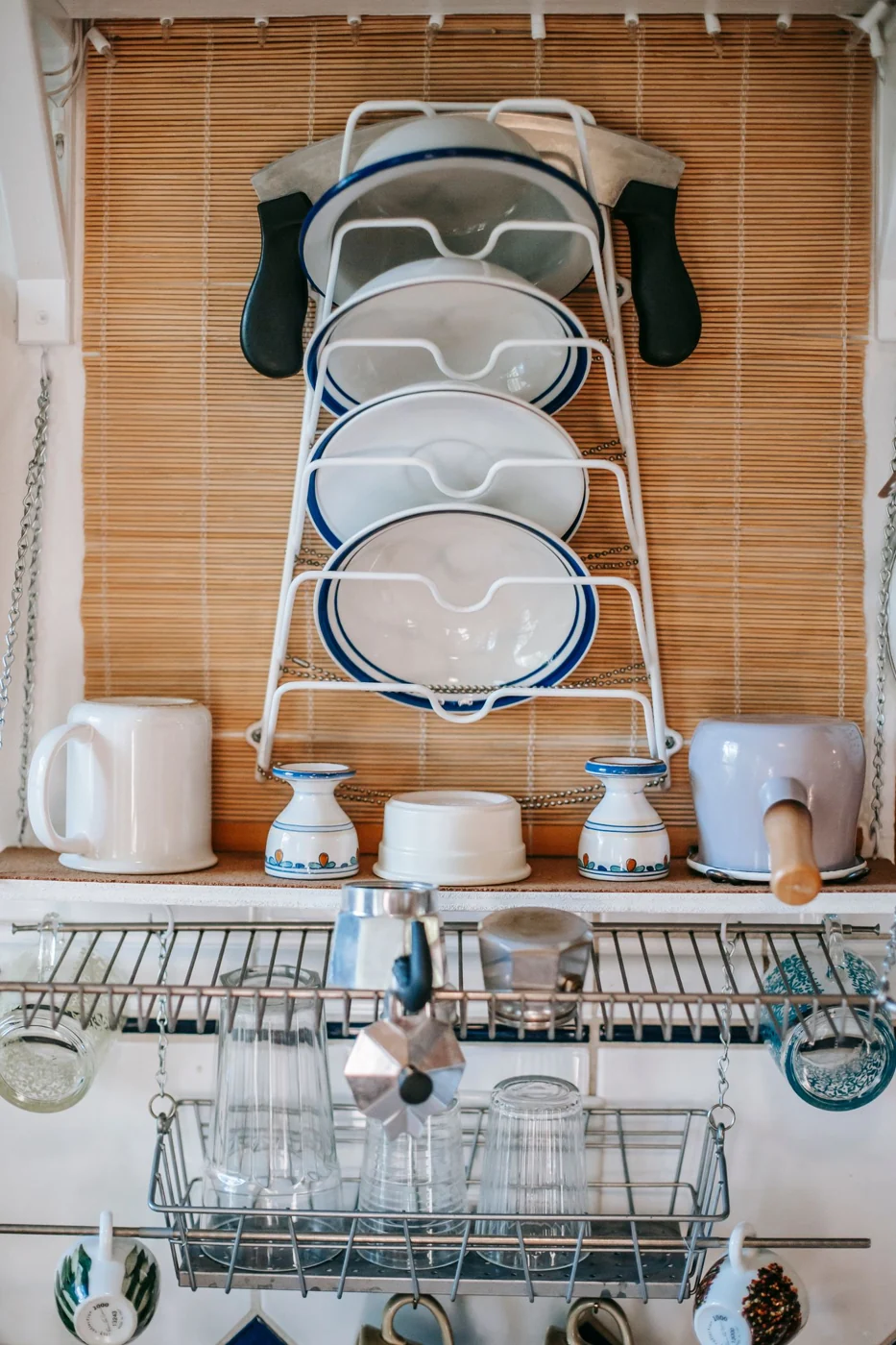
Serving pieces tend to arrive one occasion at a time. A large platter for a holiday, a deep bowl for a shared meal, and a cake stand from a gift can each be useful, yet their shapes rarely stack into a convenient cupboard. The first step is to count what you actually bring to the table, not what looks attractive as a collection.
Lay the pieces out by function. Several similar platters may serve different numbers of people, while two large bowls may do essentially the same job. Think through a gathering you host now, rather than a much larger dinner you imagine hosting someday. Keep enough choice to serve comfortably without letting the rarest occasion determine every shelf.
Store for safe lifting
A heavy platter is better at a comfortable lifting height than on the highest shelf. Check the shelf's load capacity, especially if several substantial ceramic pieces will share it. Vertical storage can help with broad flat pieces, but the dividers must be stable and suitable for the weight. Do not lean a heavy platter against glassware.
A shallow stack may be more practical than individual display stands. Use protection appropriate to the finish where needed, and keep a stack low enough that the bottom piece can be retrieved without a risky lift. A cake stand may occupy less usable space if its parts separate as designed; do not force apart a fixed stand.
The dining-room sideboard can be a sensible home for serving dishes if it is close to where they are used. The kitchen is not automatically the best place for everything associated with food. Just avoid moving pieces into a remote cupboard so inconvenient that they will never be taken out.
Give lids and detachable parts a clear relationship to their dishes. A lid stored on another shelf is easily forgotten, and an unprotected glass insert can be mistaken for an ordinary plate. A small label inside the cabinet is enough for pieces that other household members may not recognize.
When planning a meal, choose the serving dishes before cooking begins. This reveals a missing or unsuitable piece while there is still time to borrow something, change the presentation, or use an ordinary baking dish that is safe for the task. The storage arrangement is succeeding when the dishes can be found and returned without turning the sideboard upside down.