Find a side table that suits the seat beside it
Bring the table into a comfortable relationship with the seat rather than choosing it in isolation.
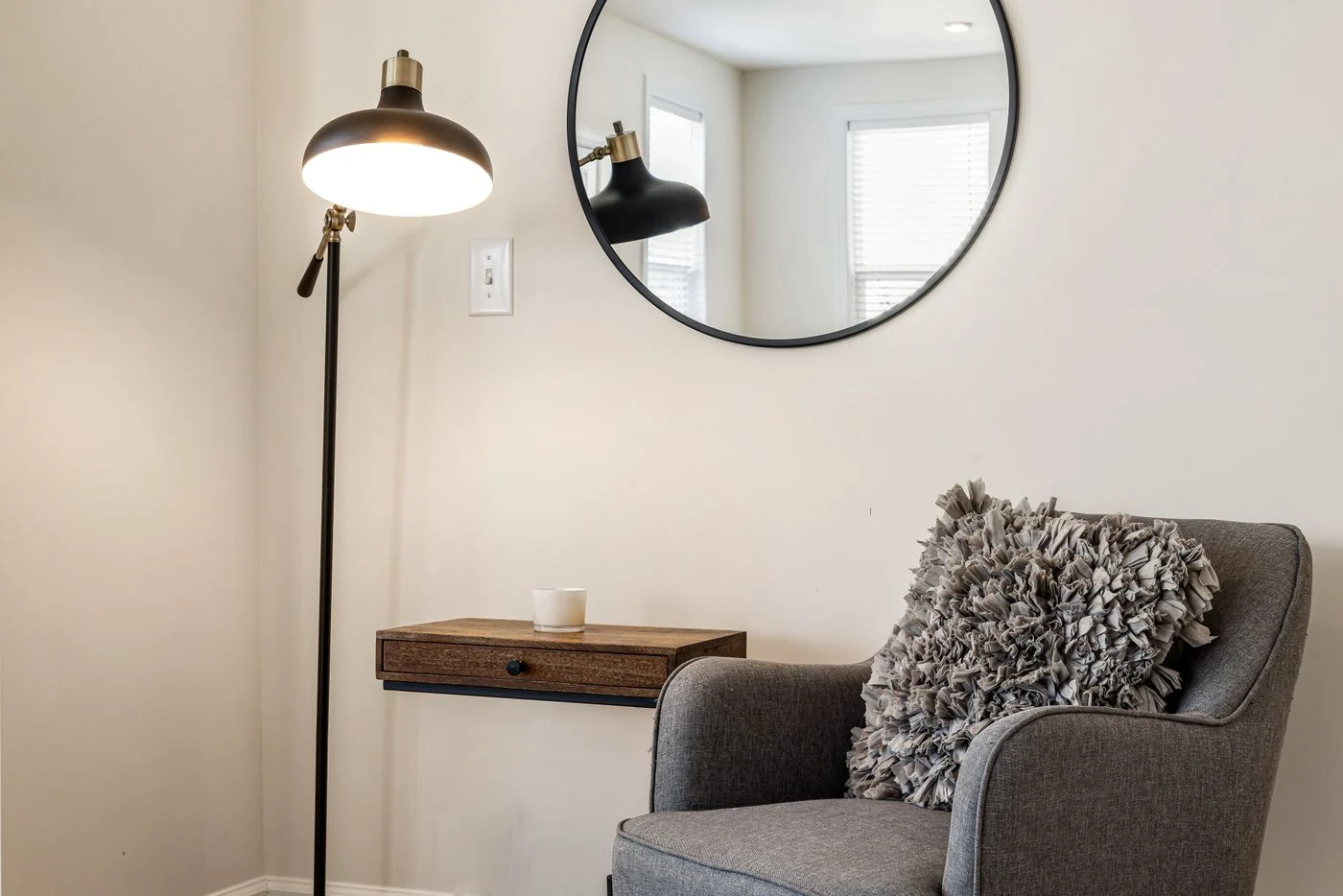
A side table is often bought because it fits a narrow gap. That is only half its job. It also needs to place a glass, book or lamp where someone in the adjacent seat can use it comfortably. A slim table at the wrong height can be less helpful than a slightly larger one positioned more thoughtfully.
Measure the seat and arm of the chair or sofa beside it. Then consider the task. Setting down a drink from an armchair is different from reaching for a lamp switch while reclining. There is no single height that suits every combination. Try a temporary stable surface at a similar height if you can do so safely, and observe the reach from the actual seat.
Check the table's depth as well as its width. A narrow but very deep top may project into the route behind a chair. A small round top may avoid a sharp-looking corner yet offer less usable space than you expect. Put the intended objects together on paper or a clear surface to see how much room they really need.
Leave room for the useful objects
A lamp can occupy most of a small table. Its base, cable and shade all matter, and the shade may extend beyond the tabletop. Position it according to the fixture's instructions and keep the cable clear of walking routes. If the lamp leaves no safe place for a cup, choose a larger surface or separate the two jobs.
Storage can be useful, but a drawer needs space to open from the seated position. A lower shelf may collect clutter if it is difficult to reach. Consider whether the feature solves a real need before accepting extra visual bulk. An open table may suit a compact room better than a cabinet that fills the same gap from floor to top.
Look at stability and the manufacturer's intended use. A delicate pedestal may be attractive, but the table should remain steady during ordinary use on the actual floor. Do not use it as a step or extra seat unless it is specifically designed for that purpose.
The final check is simple: sit down, pick up a book and put it back. If you have to twist, lean excessively or move a decorative object first, change the position or the arrangement. A good side table should make that small action almost unnoticeable.