Make daily clothes easier to reach in a small closet
Let the clothes for an ordinary week occupy the most convenient part of the closet.
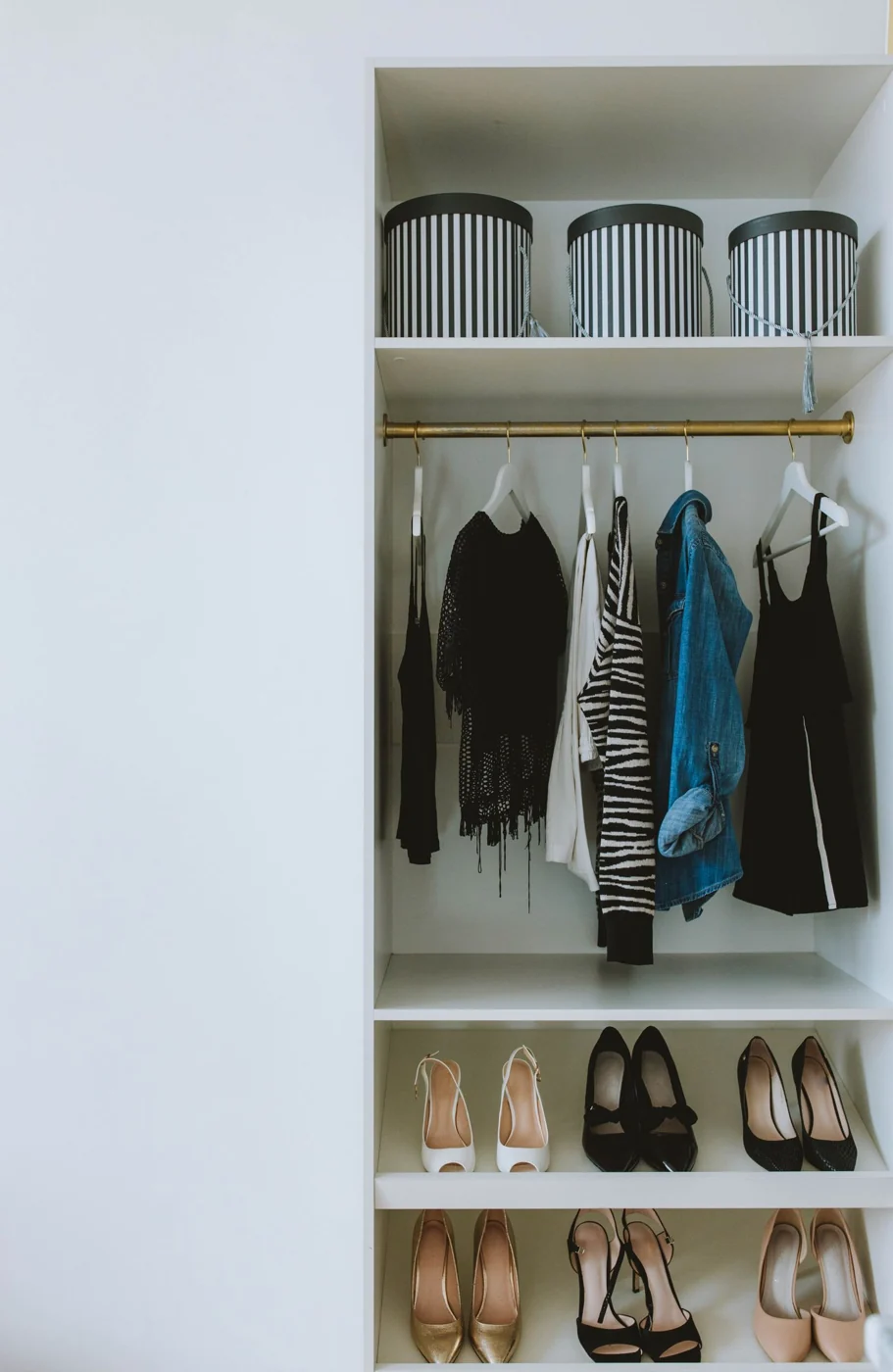
The best space in a small closet is often occupied by the least frequently worn clothing. A long formal coat hangs across everyday shirts, or a special-occasion dress requires the front section because it came with a large garment bag. There may be enough room overall, but it is assigned to the wrong routine.
Choose the clothes you would wear over a normal week and place them in the easiest section to reach. This is not a capsule-wardrobe exercise unless you want it to be. It is simply a way of distinguishing frequent use from occasional use before rearranging the rails and shelves.
Hang clothes with enough space to remove and return them without pulling several hangers along. A tightly packed rail encourages clothing to land on a chair instead. The useful capacity of the closet is lower than the maximum number of hangers it can physically hold.
Divide by the movement involved
Short hanging items may leave space beneath for shoes or a low shelf, while long items need a clear drop. Do not add a second rail until you have measured the actual garments and checked that the fittings can support the load. A short person should not need a precarious reach for everyday clothing.
Folded clothes benefit from small, understandable groups. Keep a stack low enough to take out a piece without collapsing it. Drawer-style bins can help on a deep shelf, but only if they can be pulled out comfortably and do not hide clothing that needs to be seen to be remembered.
Move off-season or occasional pieces only when there is a suitable destination. Storing wool or delicate fabrics in a damp or overly hot place creates a different problem. Follow care and storage guidance for the materials, and make sure items are clean and fully dry before longer storage.
Keep an honest place for clothes that have been worn but are not ready for washing. A hook or short separate section can be more useful than returning them invisibly among freshly cleaned pieces. Limit that area so it does not become another full wardrobe outside the closet.
Finally, leave a little room for laundry day. A closet that only works when several garments are in the wash has no margin for ordinary life. If clean clothes consistently have nowhere to go, remove the least-used items from the easiest section first. The daily routine should determine the arrangement, not the exception.