Divide a utility closet by the way you reach
Use the easiest reach for the things handled most often, and keep long tools from falling into the doorway.
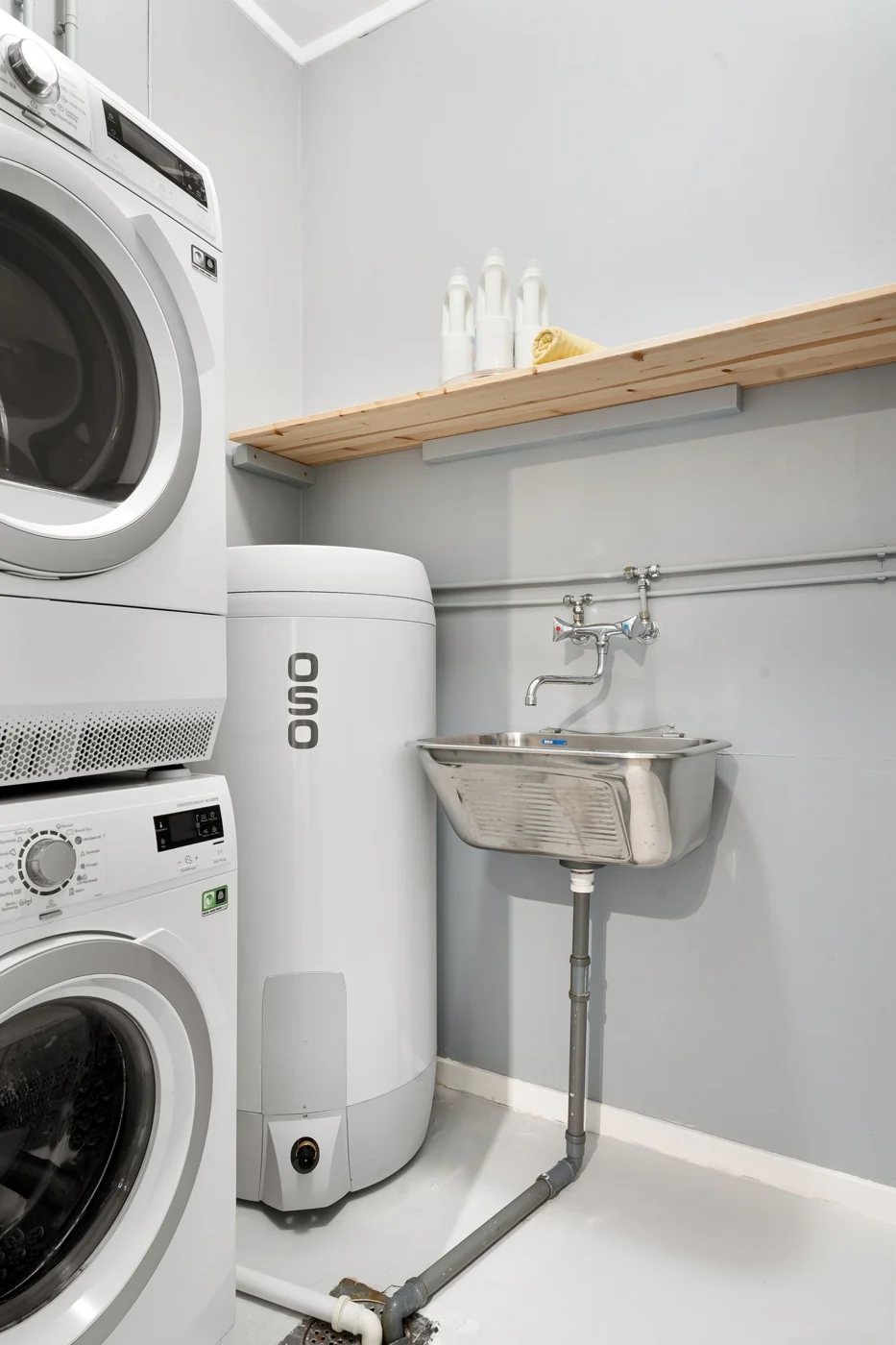
A utility closet is usually asked to store objects that disagree with one another: a tall broom, a bulky vacuum, small replacement parts, and bottles that need to stay upright. Trying to fit them into a row of matching bins often wastes the most useful space.
Begin at floor level with the largest item. Leave a clear way to take it out without moving several other things. A vacuum that catches its handle on a shelf will gradually move into the hallway, no matter how neatly the closet was arranged on the first day.
Long tools benefit from secure, suitable supports that hold them upright without blocking the door. Check the wall construction and the mounting instructions before installing hooks or clips. A storage fitting should be appropriate to the weight it carries; an adhesive hook chosen for its appearance may not be a reliable support for a heavy tool.
Put frequent supplies between comfortable hand and eye level. Less-used, lightweight items can sit higher, but avoid storing heavy containers where they must be lifted down awkwardly. Keep products in their original labeled packaging, follow their storage directions, and secure hazardous items from children and pets.
Keep access space honest
The floor area in front of shelves is not spare storage if you need to stand there to reach the contents. Avoid filling it with a box that must be moved every time the closet opens. Check door swings, hinges, and any equipment access requirements before adding storage behind the door.
If the closet contains a water heater, electrical panel, or other building equipment, maintain the clearances and access required for that equipment. Do not treat those spaces as available shelving simply because they appear empty. Consult the relevant equipment instructions or a qualified professional when the requirements are unclear.
Small replacement parts need labels that identify what they fit. A filter for the current vacuum belongs with that information; an unmarked bracket for a long-gone appliance does not deserve permanent space just in case. Keep installation instructions only where they are useful and readable.
Leave a little room to maneuver the large items back into place. The return movement matters as much as retrieval, especially when a tool is being put away at the end of a job. A utility closet has succeeded when it is uneventful to use: nothing falls forward, nothing must be unpacked first, and the required object comes out without a struggle.