Living With Dark Furniture in a Pale Room
Dark furniture can anchor a pale room. Give its outline space, and use surrounding materials to keep the room from feeling heavy.
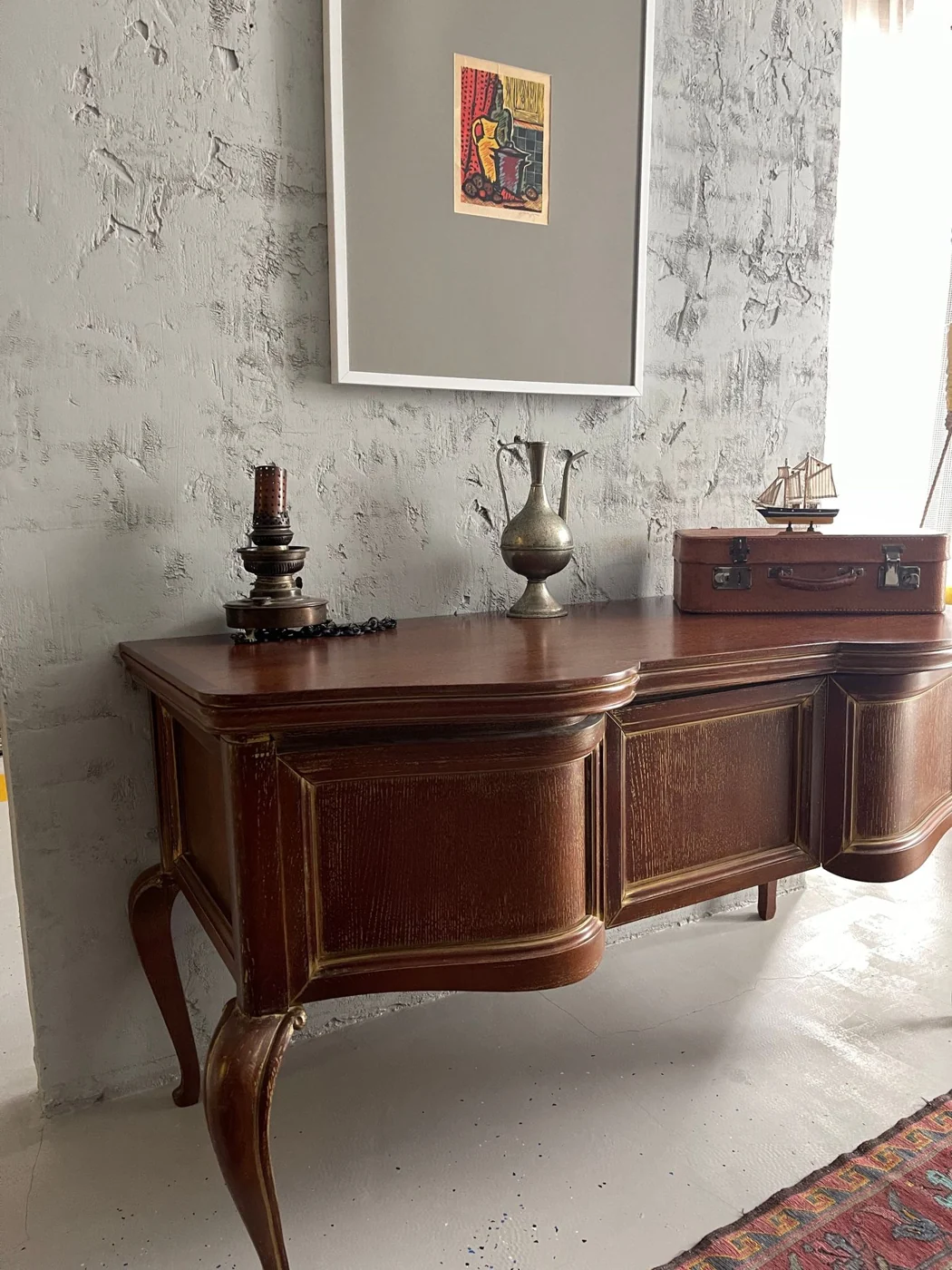
A dark cabinet does not automatically need paint because the rest of the room is light. Its depth may be exactly what gives pale walls and upholstery a clear shape. Before planning a transformation, look at how the cabinet is positioned and what has gathered around it.
Several dark pieces placed together can form one large visual block. If the layout allows, separate them so that each has some lighter space around it. A dark table near a dark chair may read as a single dense area, while the same table beside a pale sofa becomes a useful contrast.
Clear the top before adding anything new. A row of dark frames and heavy decorative objects can exaggerate the furniture's mass. One lighter ceramic piece or a simple lamp may be sufficient, but an empty surface can also work. The furniture does not need an accessory to apologize for its color.
Shape matters as much as darkness. A piece with visible legs and open space beneath it may feel lighter than a pale, solid block. Let that open area remain clear rather than filling it with storage baskets. If the piece is broad and grounded, balance it with something less dense nearby instead of trying to make it seem delicate.
Textiles can create a softer relationship. A light woven rug, a plain curtain, or a cushion with a small warm note may connect the furniture to the rest of the room. Avoid adding many pale accessories in a tight cluster; that can make the contrast look more deliberate and busy than intended.
Check the room after sunset. A dark piece in an unlit corner can lose its outline completely. Appropriate existing lighting nearby may make its shape easier to see, provided placement and cord routes remain safe. The aim is not to spotlight the furniture like a display, but to let it remain part of the room.
If the piece still feels wrong, its size or function may be the real issue. Painting it would not create drawer clearance or improve a blocked route. Try a different position or consider another use before committing to a finish change. Sometimes the most convincing update is allowing a well-made dark object to remain itself in a simpler setting.