The Slow Change from Summer to Fall
Keep the light parts of summer while introducing a little more depth. A seasonal transition does not need a single changeover day.
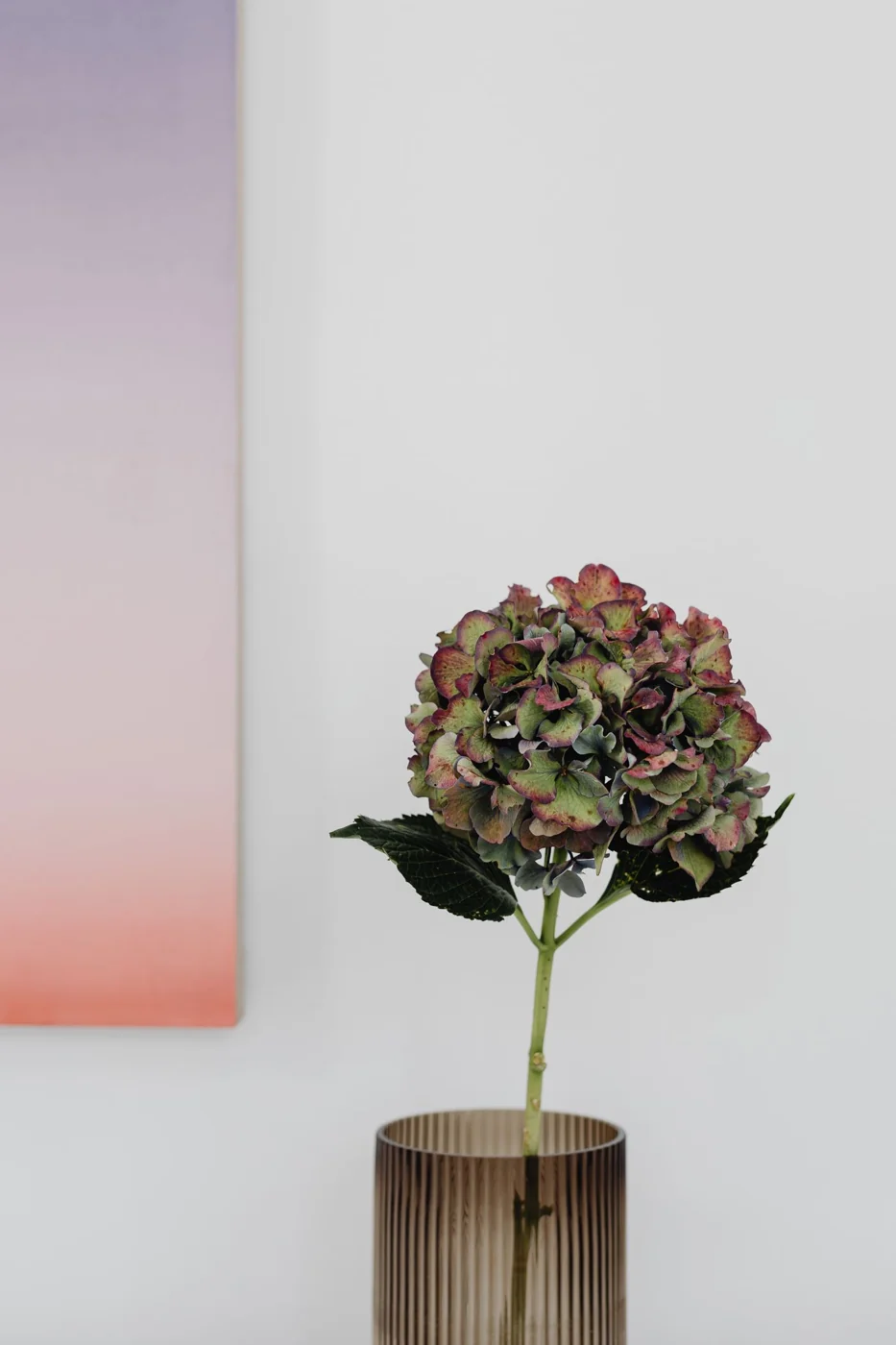
The shift from summer to fall rarely happens all at once outside, and it does not have to happen all at once in the house. A room can keep its pale background and open surfaces while a few deeper tones begin to appear. That gradual approach is often easier to live with than replacing one complete seasonal arrangement with another.
Choose what still feels right. A clear glass vessel, a simple light curtain, or a familiar pale cushion may continue to work well. The fact that it was used in summer is not a reason to put it away.
Then identify one place where more depth would be welcome. It could be a darker textile on a chair or a warm-toned object on an otherwise quiet shelf. The change will be more noticeable if it has a clear role rather than being scattered across many tiny accents.
Use a bridge color
A muted green, soft brown, or faded blue can sit between the bright lightness you may associate with summer and a richer fall palette. Choose a bridge that already relates to the room's furniture or art. That makes the transition feel connected instead of imported.
For example, a pale sofa with blue accents might keep one light blue cushion and replace another with a deeper blue or soft brown. The room does not need orange to acknowledge the season. The difference in depth can do the work.
Texture is another gradual route. You might introduce one more visibly woven layer while leaving the other fabrics smooth. Adding several thick or highly textured pieces at once can make the room feel heavier before the weather calls for it.
Delay the literal seasonal objects
There is no need to bring out pumpkins, leaves, or holiday motifs at the first hint of cooler weather. Let the room change through color and material first if that suits you. More specific decorations can arrive later, or not at all.
Use the room in its transitional state for a few days. You may discover that the small change is enough. If the space still feels too light for your taste, add one more considered accent rather than expanding the whole palette.
A gradual transition also makes it easier to reuse what you own. Objects are not locked into a single seasonal box by their color alone. The same plain vessel can feel different with an empty opening, a few stems, or simply a new position beside a darker textile.