A Table Lamp in the Right Proportion
Look at a lamp as a whole object: base, shade, light, and the surface it leaves available beside the chair.
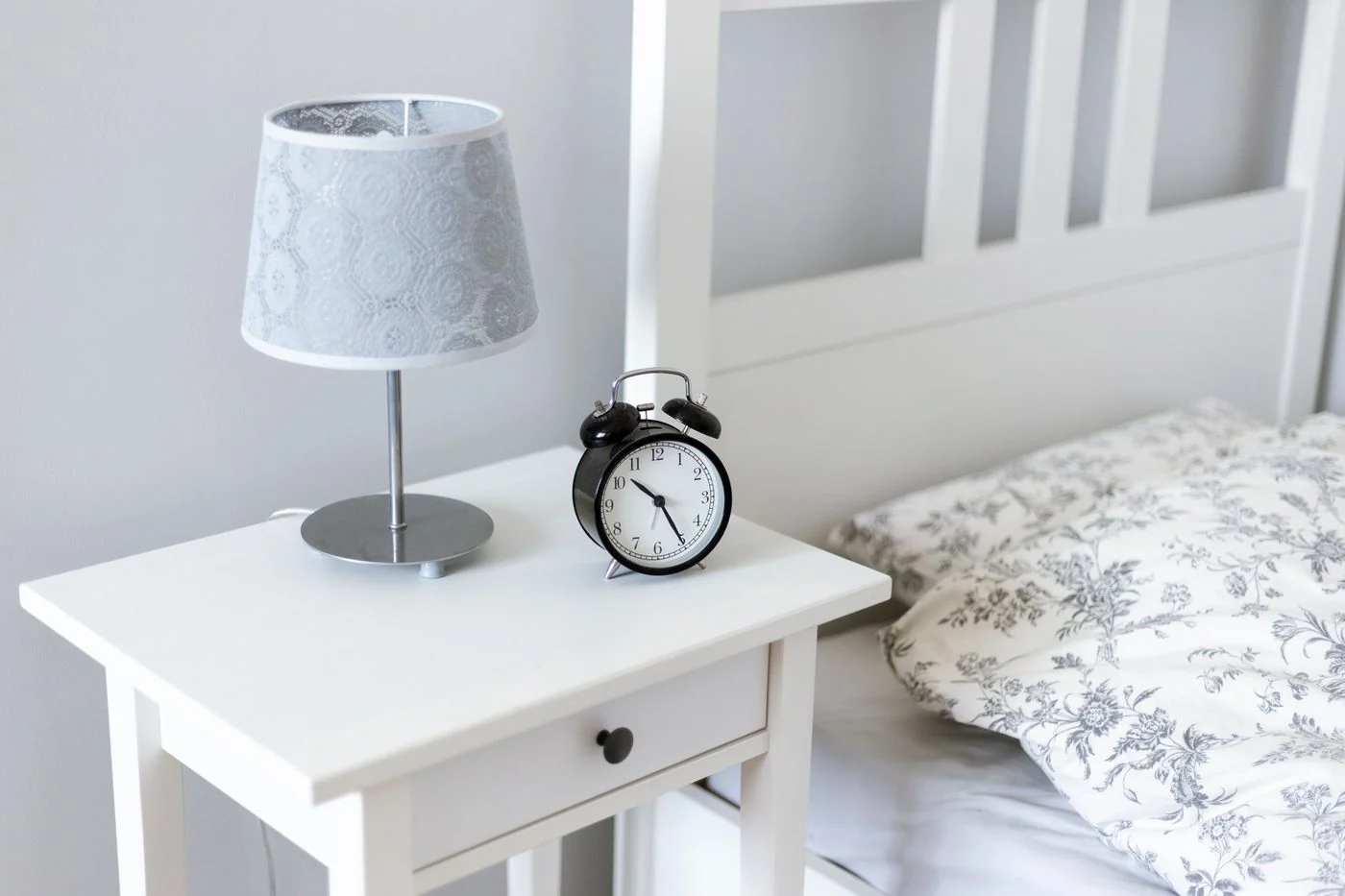
A table lamp can be the right color and still feel wrong beside a sofa. Its shade may extend into the seat, its base may consume the entire table, or its overall height may make the little arrangement seem top-heavy. Comparing the whole silhouette is more useful than judging the base on its own.
Begin with the place where the lamp will be used. Sit in the chair or on the sofa, and notice where the table falls beside you. A lamp chosen for reading has a different job from one used mainly to give a corner a gentle evening presence. The specific lamp and bulb need to be suitable for that use; an attractive shade alone does not establish adequate light.
Measure the shade's footprint
Product photographs often emphasize the base, but the shade may be the widest part of the lamp. Mark its approximate width over the table and consider the space it occupies above the surface. It should not project awkwardly into the walking route or force the user to lean around it.
Leave room for the other things the table needs to hold. If it is the only place to put a drink, a beautiful lamp with an enormous base may be the wrong choice. A narrower base or another lighting location could solve both problems without adding another small table to the room.
Look at the shade from the seated position. Check whether the light source is uncomfortably exposed and whether the lamp's height works with the seat. Use the product's recommended components and instructions; substituting an incompatible shade or bulb is not a proportion fix.
Compare with the furniture, not just the wall
A substantial sofa can make a tiny lamp look tentative, while a delicate side table may be overwhelmed by a heavy-looking one. These are visual relationships rather than fixed numerical ratios. A broad but pale shade may feel lighter than a smaller dark, solid base. Take a photograph of the whole corner as a memory aid when shopping, while keeping the actual measurements with it.
If there are two lamps in the room, they do not have to match. They can relate through similar shade shapes or a shared material while serving different seats. Matching pairs make sense when the furniture arrangement is genuinely paired; otherwise, forcing symmetry can make one side less useful.
Check the path of the cord before deciding on the location. A lamp is not successfully placed if its cord must cross a route where people walk. Use a suitable existing outlet arrangement and seek qualified help if the space needs electrical changes, rather than making the decorating choice depend on an improvised solution.
Finally, assess the lamp with the room lit as you normally use it. The object and the light it creates are both part of the decision. A lamp that looks restrained during the day may produce exactly the definition the corner needs at night. Leave room for that practical contribution before adding a vase or another decorative layer beside it.