Living-room toy baskets that are easy to put away
Choose containers that children can use and adults can reset without sorting every small piece by hand.
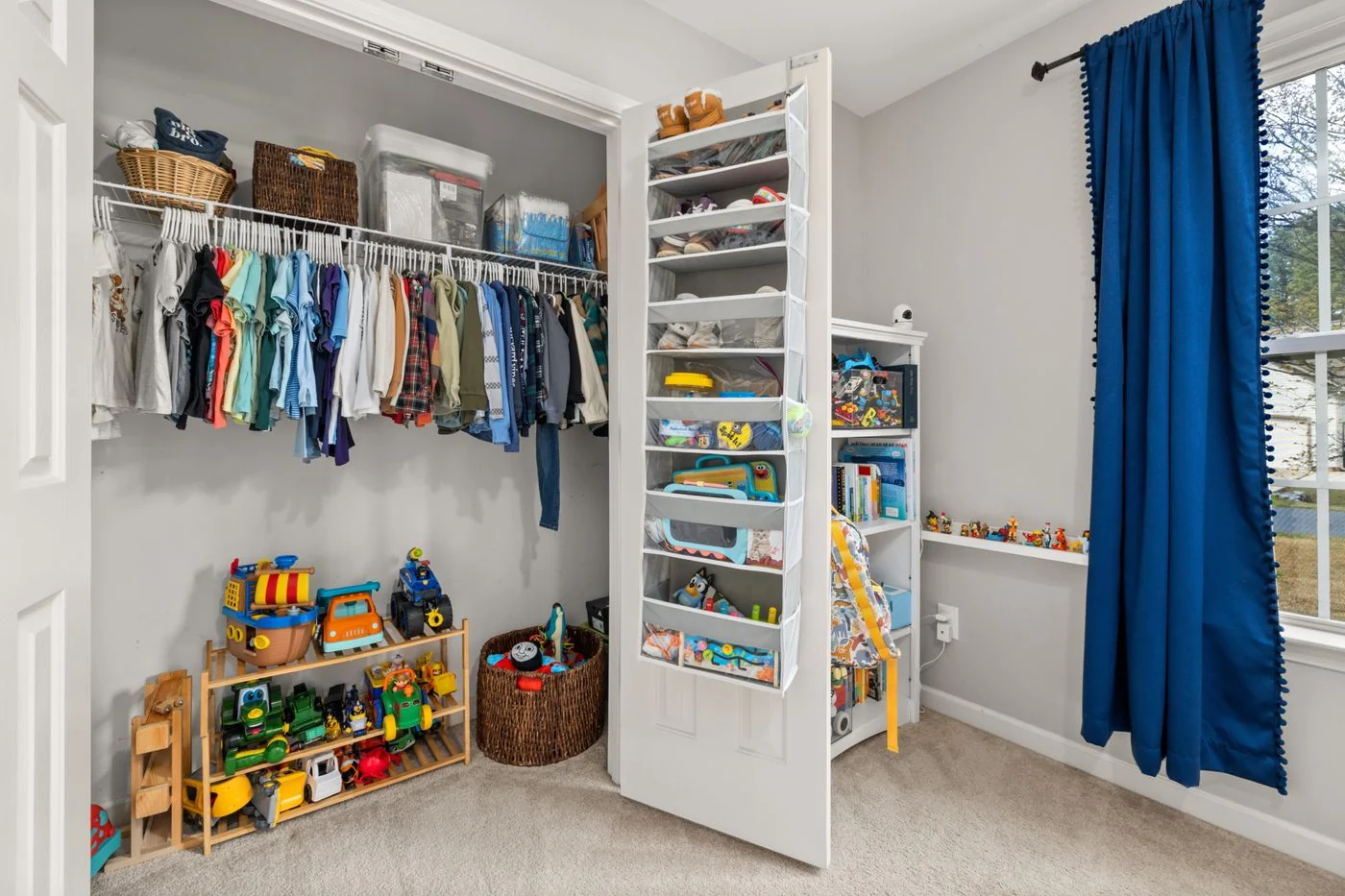
A living room can hold toys without becoming a playroom in disguise. The most useful starting point is a small selection of toys that are genuinely used there. Items that require a different surface, close supervision, or a larger setup may belong somewhere else even if they fit neatly in a basket.
Choose a container a child can open and reach into safely. A deep basket may look compact but leave small pieces buried at the bottom. Heavy lids, unstable stacks, and sharp edges are poor trade-offs for a tidy appearance. Check that the container is suitable for the child's age and does not introduce a trapping or tipping hazard.
Keep categories broad enough for a quick return. Blocks together, soft toys together, and a separate closed container for an age-appropriate small-piece set may be enough. An elaborate sorting system that only an adult understands will make the evening reset slower rather than easier.
Make the basket's limit useful
Leave enough room that toys can be put away without being arranged precisely. If the basket only closes after everything is packed in a particular sequence, it is holding too much. A smaller rotating selection can be easier to use than a large mixed supply, provided the rotation does not become another demanding household project.
Place the basket away from walking paths, doors, and heat sources. If toys live on shelving, secure the furniture as required and keep climbing temptations in mind. A favorite toy placed high above a low shelf may encourage a child to climb to reach it.
A basket can also establish a simple boundary for shared space. Toys may come out during play, then return before the room changes use. That routine is easier to understand when the destination is close and obvious. It need not mean interrupting every unfinished game; a small tray can preserve an age-appropriate project when there is a safe place for it.
Check the contents regularly for damaged toys, missing components, and items that are no longer suitable for the child using the room. Follow manufacturer age guidance, especially where younger children share the space. Storage should not hide small hazards in a container everyone is encouraged to explore.
The finished room does not have to conceal the fact that children live there. A sturdy basket, a clear floor route, and a manageable selection can make the room feel settled while still leaving space for ordinary play.