Compare upholstery samples in the room
A small swatch is useful evidence, but it cannot show every aspect of a finished sofa.
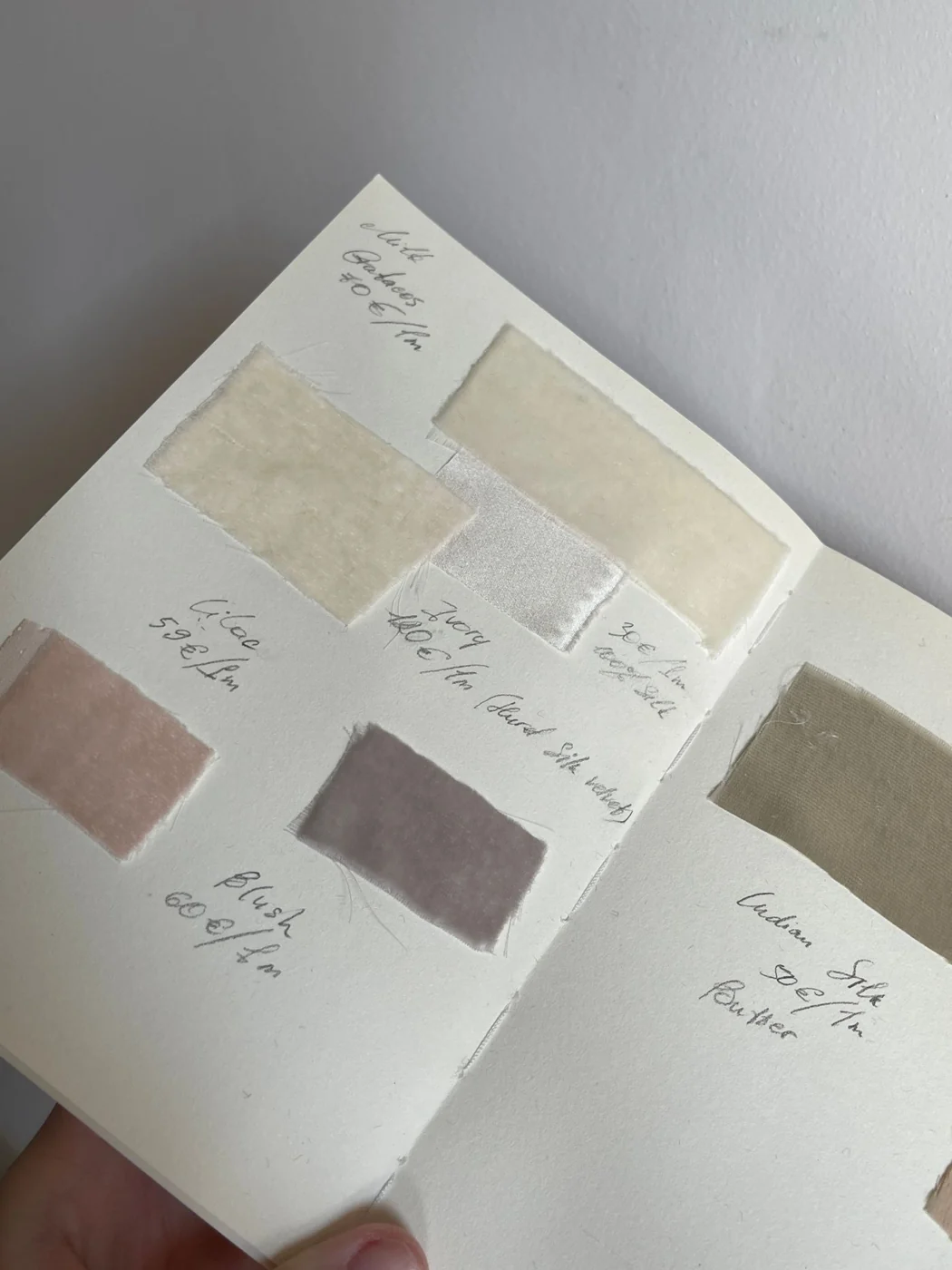
A fabric sample often looks different after it leaves the store. The warm gray becomes lavender beside a wall, a subtle weave catches the afternoon light, or a texture that felt soft in the hand seems much rougher against bare skin. Bringing samples home is less about finding a perfect color match than discovering those changes before they cover a whole piece of furniture.
Ask for the largest sample reasonably available and label it clearly. Several similar swatches can become surprisingly hard to identify after a few days. Keep the fabric name, color, composition and care information together. If a retailer offers different grades or treatments under similar names, confirm exactly which one belongs to the order.
Look at it where the furniture will stand
Hold the sample vertically against a cushion or chair back and lay it horizontally on a seat. Light falls differently on those surfaces. A fabric with a directional pile may also look lighter or darker as its orientation changes. View it in daylight, under the room's lamps and from the main doorway.
Place it beside the materials that will remain: the rug, curtain, wall and neighboring upholstery. Avoid testing every sample against a collection of other undecided samples. That creates a moving target. Choose a few fixed references so you can understand what the new fabric must relate to.
Small patterned swatches can be misleading if they do not show a full repeat. Ask to see a larger image or a finished piece when pattern placement matters. A stripe that looks narrow on a hand-sized sample may dominate a broad sofa. Seams and cushions can interrupt a motif in ways that a flat photograph does not reveal.
Read beyond the durability adjective
Words such as performance, family-friendly and easy-care are not a complete care specification. Ask what cleaning method is allowed for the particular fabric, what the warranty covers and whether any treatment changes its feel or appearance. Do not perform your own stain experiment on a borrowed sample without permission, and do not assume one successful test proves resistance to every spill.
Think about the household's actual habits. A texture that catches lint visibly may involve more routine attention. A loose-looking weave may be unsuitable for how the piece will be used, even if its color is ideal. Ask the supplier about the intended use rather than trying to infer technical durability from touch alone.
Finally, leave the preferred sample in the room for a few days. Notice it when you are not actively comparing. If its appeal depends on one particular hour of sunlight, that is useful information. You are choosing a surface that will be seen through ordinary mornings, evenings and cloudy days, not just under the most flattering light.