Storage Worth Leaving in View
Choose a container around its contents and retrieval routine. Its appearance comes after you know what it needs to hold.
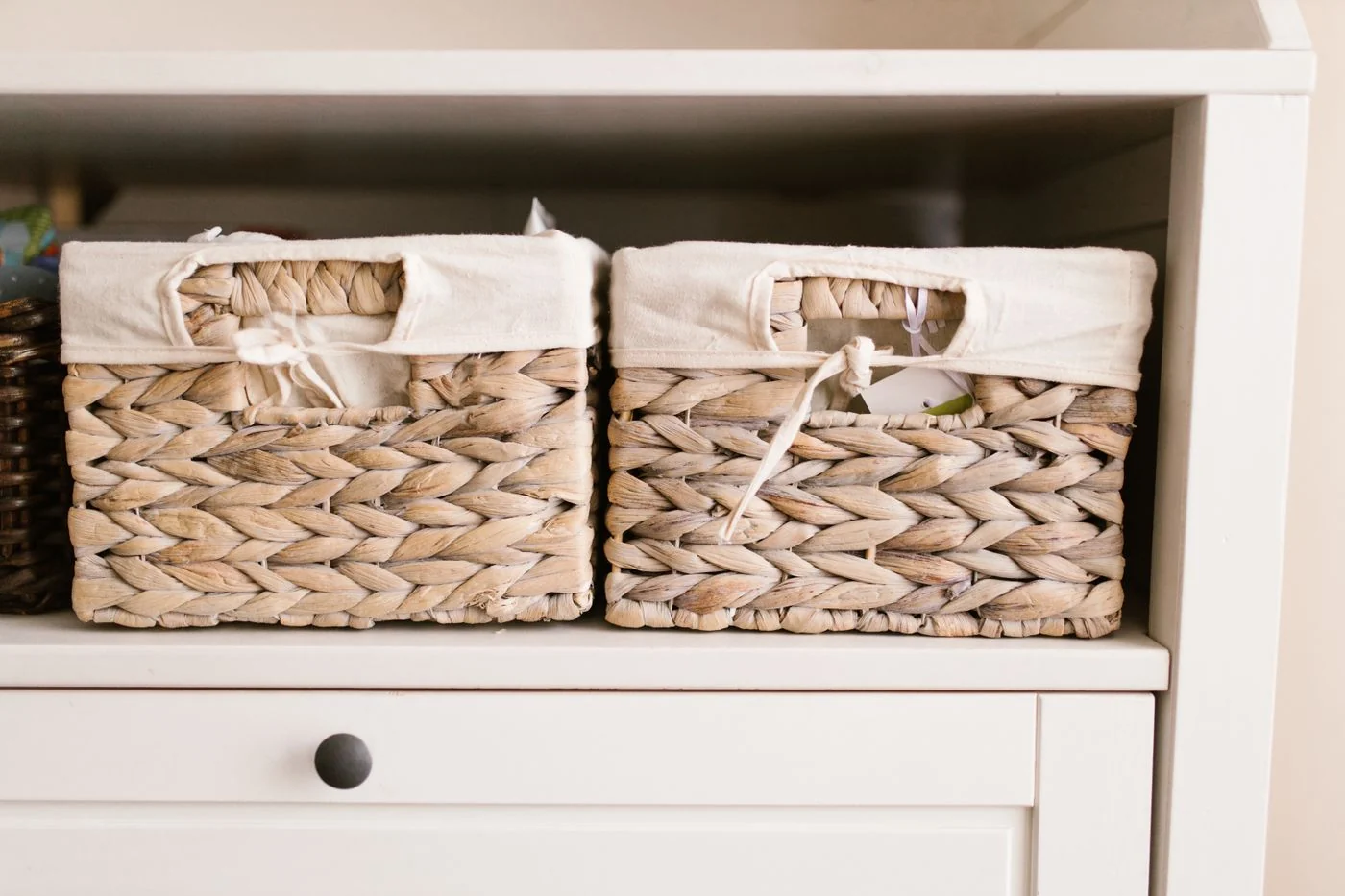
A beautiful basket can become an untidy place surprisingly fast when it has no defined contents. Small items sink to the bottom, papers bend, and the lid stays off because closing it takes too much rearranging. Visible storage works better when the object is selected for a particular job.
Gather the items that need a home before choosing the container. Their size, weight, and frequency of use tell you more than the empty shelf does. A broad opening may suit a blanket, while small everyday objects may need a shallower tray or divided space. A deep decorative bin is not a universal solution.
Decide whether you want to see the contents. Open storage gives quick access but leaves the arrangement visible. Closed storage can make a room quieter, provided the lid or door is easy to use. If someone has to move three objects to reach a frequently used item, the system is likely to spill back onto the nearest surface.
Try a container you already own as a temporary test. It does not have to be attractive enough for the final arrangement. Use it for several days and notice whether its capacity and opening work. That experiment can prevent buying a set of matching pieces that all repeat the same practical mistake.
Let storage become part of the furniture
A visible container should sit comfortably in its location. Check its depth on a shelf and whether handles or lids extend into the route beside a chair. Keep heavy contents within the furniture's intended loading and follow any anchoring instructions. A tidy appearance does not make an unsuitable placement sound.
Choose a finish that relates to the room without requiring every container to match. A wooden box and a fabric-covered bin can coexist if their shapes are simple and each has a clear purpose. Repeating identical baskets across every shelf can look orderly while concealing a confusing mix of contents.
Leave a little capacity for ordinary variation. A container filled perfectly to its limit on the first day has no room for the item that returns tomorrow. The best visible storage can accept that small change without looking abandoned. Its success is measured by how easily things go back, not how neatly they were arranged when the container was empty.