A gentler daily routine for a wood table
Begin with the finish and the maker’s instructions, then keep the everyday routine modest.
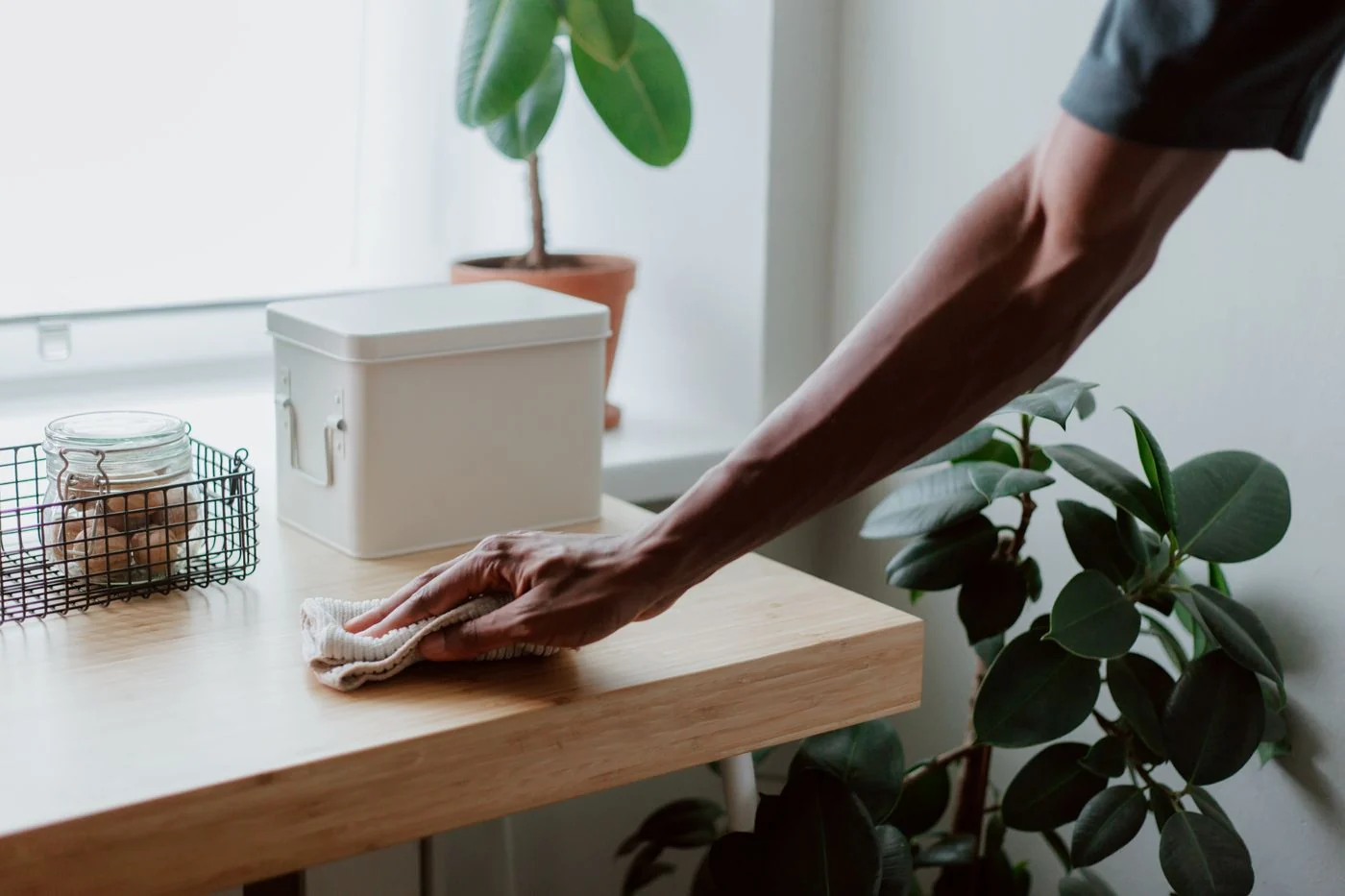
A wood table does not need a different treatment for every passing trend in furniture care. It needs a routine that suits its particular finish. Oil, wax, lacquer and other coatings do not all respond in the same way, so the word wood is not enough to choose a cleaning product.
Find the manufacturer's care instructions if the table is identifiable. For an older piece with an unknown finish, seek informed advice before applying a treatment. A homemade mixture that worked on another table is not evidence that it is suitable for this one. Strong cleaning methods can change sheen or color even when the underlying wood remains intact.
Remove loose crumbs and dust gently with an appropriate soft cloth. When the care instructions allow damp wiping, keep moisture controlled and dry the surface as directed. Do not leave puddles, wet cloths or damp place mats sitting against the finish. Address spills promptly using the recommended method instead of rubbing harder with an unsuitable cleaner.
Use protection chosen for the task. A coaster handles a glass; a heat-resistant trivet handles a hot serving dish. A thin decorative cloth is not automatically sufficient protection from heat. Check that the underside of any mat or accessory is compatible with the surface, especially if it will remain in place for long periods.
Move heavy objects by lifting rather than dragging when it is safe to do so. Inspect the underside of decorative bowls, trays and lamps for rough points that may scratch the table. Suitable protective pads can help, but they also need occasional checking for trapped grit or deterioration.
Do not interpret a dull patch as an automatic request for polish. It may reflect wear, residue or a finish problem that needs a different response. Adding products repeatedly can make later assessment more difficult. Ask for advice when the cause is uncertain, particularly if the table has veneer, inlay or an unfamiliar coating.
Keep the instructions and the name of any approved product with the furniture records. That small note is useful when someone else cleans the table or when a spill occurs months later. The everyday routine should be simple enough to repeat without improvisation: use the table, protect it appropriately and follow the care method that actually belongs to it.
Further information: IKEA: caring for wood furniture.