Find the Best Wall for Your Bed
Choose the bed’s position by walking through the bedroom’s daily routines, then consider how the wall looks.
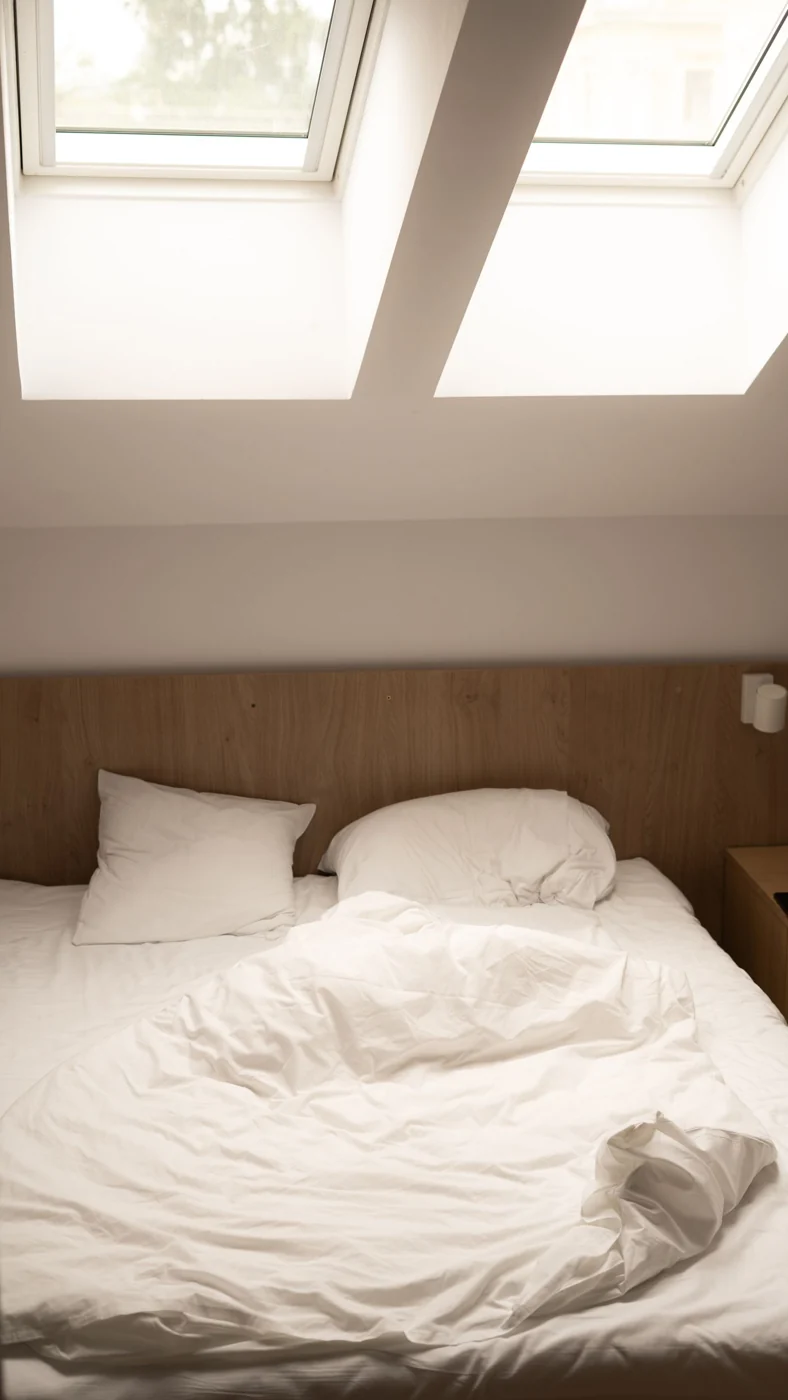
The most symmetrical wall is not always the best place for a bed. It may leave one person squeezing past a dresser, put the headboard in an awkward relationship with a window, or make the door feel as though it opens directly into the mattress. A bedroom layout has to support movement before it becomes a composition.
Draw the room with the door swings, closet openings, windows, and fixed equipment. Add the bed's actual outside dimensions, including the frame and headboard. Mattress dimensions alone can underestimate how much space the furniture occupies.
Test both sides of the bed
Think through getting in and out, making the bed, opening storage, and reaching a light. A layout that works for one person may be inconvenient for two. There is no benefit in creating a perfectly centered bed if one side becomes unusable in ordinary life.
Mark the proposed outline on the floor and walk around it. Include any footboard or projecting corners. If the bed has drawers, test the space they need when fully open. If a dresser faces it, account for that furniture's drawers too. The empty gap between closed pieces is not the whole clearance question.
A window behind or beside the bed can be workable in some rooms, but inspect what the placement does to access, curtains, airflow, and the window's intended use. Do not block required access or interfere with equipment clearances for the sake of a headboard photograph. The room's actual constraints decide the options.
Give the surrounding furniture a fair chance
Nightstands do not have to be identical, and they may not both need to be large. A smaller piece on one side can preserve a useful route. However, it still needs to provide the functions that person relies on. Replacing a useful table with a tiny decorative stool solely for symmetry can make the bedroom less comfortable.
Consider the view from the door after the practical choices are narrowed. A bed against a plain wall may create a clear focal point. A slightly off-center position can also feel settled when the nearby furniture and lighting respond to it. Do not force the bed to align with a ceiling fixture if doing so compromises the floor plan.
Check the room at night as well as during the day. Existing outlets, lamp positions, and access to switches affect the routine. Avoid a layout that depends on cords crossing a walking path. Electrical changes require the appropriate professional work rather than a decorating workaround.
Compare the compromises
For example, one wall might give the bed equal space on both sides but leave the dresser opposite it with limited drawer room. Another wall might make the bedside areas unequal while giving the dresser and closet comfortable access. The second arrangement may be better if the smaller bedside area can still hold the essentials. Symmetry is a visual benefit; full access to everyday storage is a repeated practical benefit.
Write down what each arrangement gives up. This prevents a favorite view from quietly outweighing several inconvenient details. A simple note such as better closet access, smaller right nightstand, and window still opens is enough. You are comparing usable rooms rather than searching for a layout with no compromises at all.
Consider future changes only when they are plausible. A planned larger bed or a shared bedroom may justify preserving more space now. A hypothetical piece of furniture you might buy someday should not make the current room unnecessarily awkward.
If two positions seem equally good, live with the less complicated arrangement first. You may discover that an extra few inches beside the closet matters more than a preferred sightline. A bedroom is used while tired, in low light, and during hurried mornings. Its best layout should remain understandable in those ordinary conditions.