A Cafe Curtain with a Clean Outline
Covering part of a window changes its proportions. Judge the treatment from both sides and through an ordinary day.
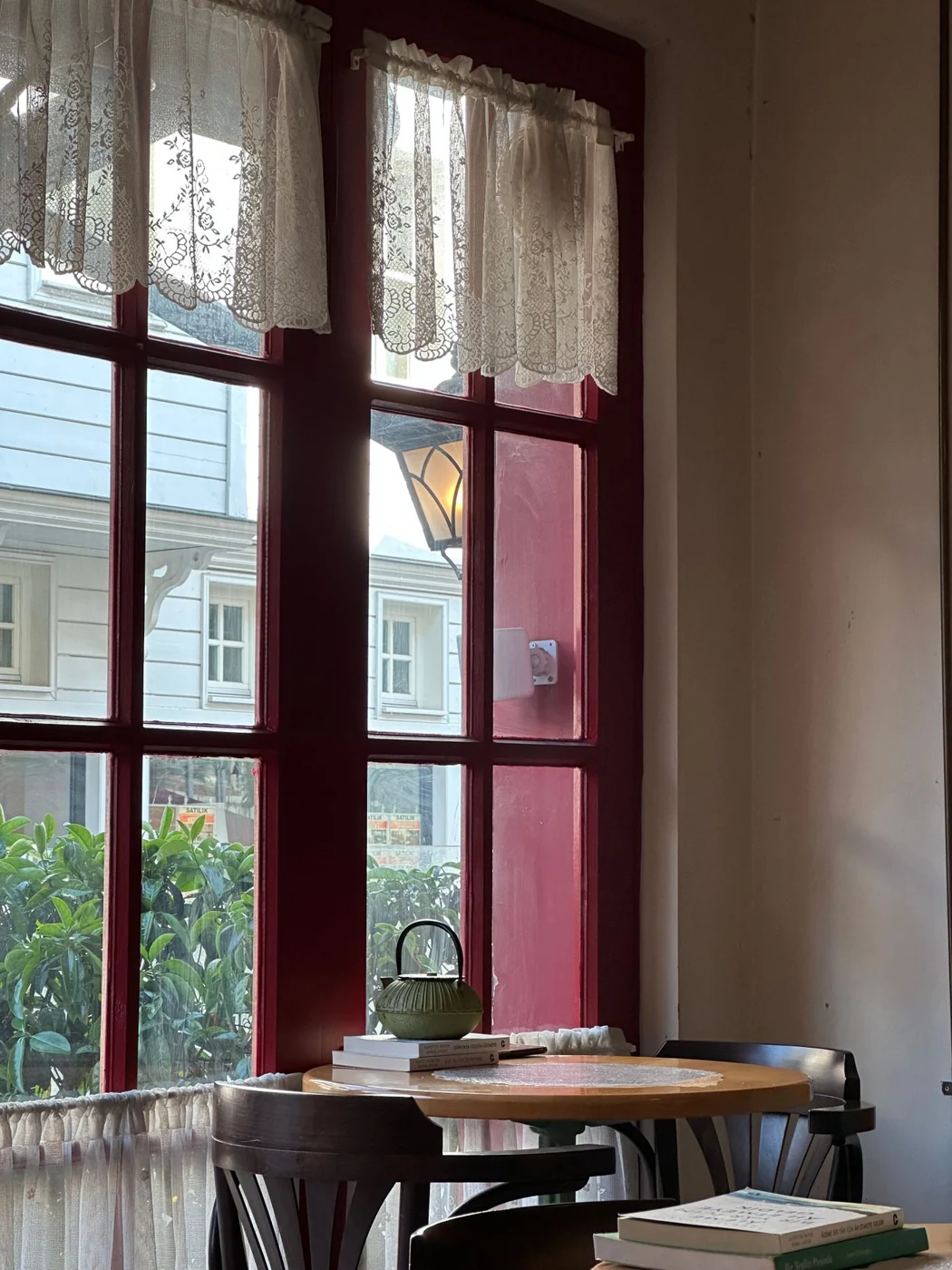
A cafe curtain leaves part of the window uncovered, creating a soft lower area and an open upper view. That partial coverage is the point of the treatment. It can feel lighter than a full curtain, but it also leaves privacy and light control incomplete in ways that matter in some rooms.
Start with the real sightline. From outside, what can someone see over or around the fabric? From inside, what part of the view do you want to keep? Do not assume that a certain curtain height will provide privacy in every setting. Window height, neighboring buildings, and the position of the viewer all affect the result.
Use the window's divisions
A natural horizontal line in the window can be a helpful place to consider the curtain's upper edge. It is a starting point rather than a rule. A treatment positioned without regard to the panes may create an awkward extra line, while one that follows the existing divisions can look more settled.
Fabric fullness changes the appearance. A generous gathered panel introduces many folds. A flatter panel makes a simpler shape. If the window is small or its frame already has considerable detail, the less gathered version may provide enough softness.
For a window with two clearly stacked sections, a curtain aligned with the lower section can create a tidy relationship. For a tall uninterrupted pane, the same position may look arbitrary. In that case, compare a slightly higher and lower line in the mock-up rather than forcing a conventional halfway point. Also notice the view while seated. A line that seems unobtrusive when standing may cut directly across the scene from the kitchen table.
Look at the hem as well. A plain edge keeps attention on the cloth and light. A scallop, lace border, or contrasting band adds another decorative element. One of those details may be welcome, but several together can make a modest window feel overdesigned.
Keep the working parts accessible
The curtain and its fittings must allow the window to operate as intended. Check handles, opening direction, cleaning access, and the suitability of the mounting method. Near cooking or heating equipment, follow the equipment's clearance requirements and choose a different location if fabric cannot be used appropriately.
If privacy is essential after dark, check the treatment with the indoor lights on and someone observing from an appropriate outside position. A fabric can appear quite opaque in daytime and behave differently when the room is brighter than its surroundings. You may need another suitable treatment rather than a denser decorative fabric. It is better to separate the desire for a partial-window look from the actual privacy requirement than to expect one choice to solve both automatically.
Color is easier to judge with a sample held against the actual glass. Backlighting can change how opaque and how warm a fabric appears. Check it in the evening as well as daylight, especially if privacy is one of its purposes.
A cafe curtain does not have to carry a tiny floral print. Plain fabric, a restrained stripe, or a simple checked weave can work with country furniture while allowing the window to remain the main feature. The partial height already gives the treatment character.
Before ordering, sketch the proposed line on a photo of the window and compare two or three positions. Then take physical measurements. The photograph helps with proportion; the measurements and product requirements determine whether the idea can actually work.