Let Exposed Beams Do Some of the Decorating
Strong overhead lines give a room character before any accessories arrive. The furniture below can be quieter.
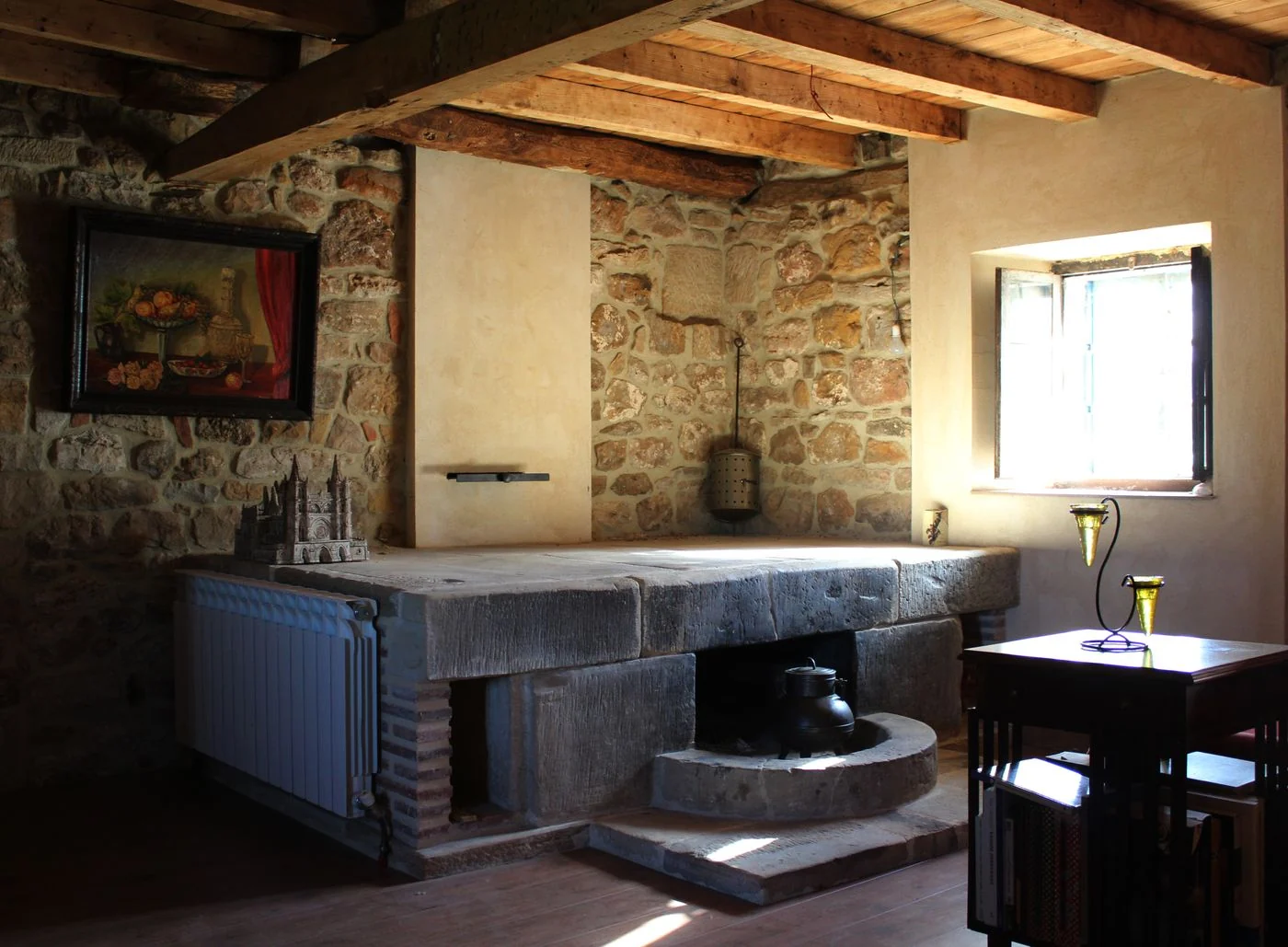
Exposed beams are difficult to ignore. They repeat across the ceiling, establish a sense of scale, and often introduce a strong wood tone above everything else. In a country-inspired room, that may already be the dominant rustic element. Adding more heavy timber at every level can make the space feel unnecessarily dense.
Begin by looking upward from the usual seating position. Are the beams broad and dark, narrow and pale, evenly spaced, or irregular? Their character affects the room more than the generic idea of a beamed ceiling. A light set of narrow beams asks for a different response from a few deep dark ones.
Let the lower half offer relief
If the ceiling feels visually heavy, furniture with some open space beneath it can help balance the impression. A simple chair outline, a table with relatively slender legs, or a less crowded arrangement gives the eye a place to rest below the overhead structure.
That does not mean all the furniture must be delicate. One substantial table may sit comfortably with the beams. The question is whether every large piece needs the same weight. Repeating thick wood in the table, cabinet, mirror frame, and lamps can turn a useful architectural feature into a demand that the whole room imitate it.
Color relationships matter more than exact matching. You do not need to stain furniture to the beam color. A visibly different wood can work if the room contains enough plain surface between the two. Consider the warmth and contrast of the pairing rather than trying to make unrelated materials look identical.
Keep decorative attachments out of the plan
There is no need to hang objects from the beams to acknowledge them. Garlands, baskets, signs, and other additions can make the ceiling look lower or busier. Any proposed attachment also raises questions about the structure and appropriate fixings that a decorating photograph cannot answer.
Instead, let the beams remain visible as lines. Choose where the strongest furniture grouping sits beneath them, then observe whether the room feels centered or pulled to one side. The beam pattern may help organize a seating area, but it does not have to dictate every piece's position.
A softer fabric or a gently curved object can provide an effective counterpoint. The contrast is particularly useful when the beams are rough or strongly grained. Their texture becomes easier to appreciate when it is not repeated on every nearby surface.
The goal is not to disguise the ceiling. It is to stop decorating as though the room still needs character added from scratch.