Browse a Flea Market with a Room in Mind
A loose visual brief can make a market visit enjoyable without turning every charming object into something you need to bring home.
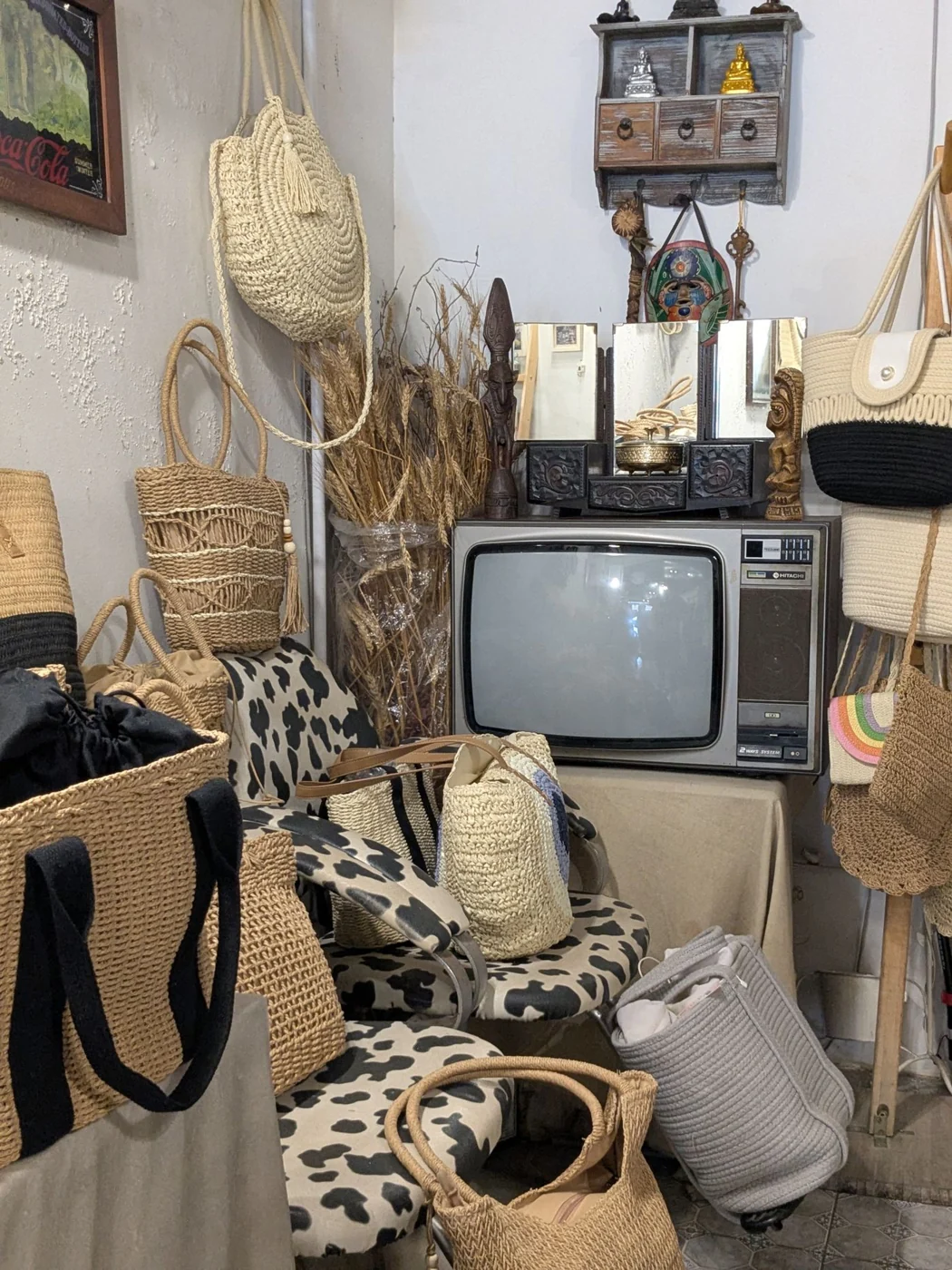
A flea market offers more possibilities than most rooms can comfortably absorb. A little chair, an unusual plate, and a painted frame may each be appealing on their own. The difficulty comes later, when all three need a place and none relates to the actual room you meant to improve.
Before you go, choose one small decorating problem to keep in mind. Perhaps a shelf needs a taller shape, a plain wall needs one picture, or a corner needs a useful side table. This is not a rigid shopping list. It is a way to recognize an object that could do something specific at home.
Bring the room with you
Price and size can pull in different directions. A small inexpensive object may feel easy to justify, but ten such objects still need ten places. A larger piece that solves a genuine need may be more useful than several charming extras. Set a spending limit before browsing, and include transport or any required assessment in that decision. A bargain is less helpful when it brings a second set of costs or a storage problem you did not intend to take on.
A few ordinary photographs are more useful than a folder of ideal interiors. Include the wall or surface in question, nearby furniture, and the room's main light. Record the available dimensions, including the width of any route the object must pass through. For furniture, practical fit and condition require their own careful assessment beyond the visual brief.
Describe the missing quality in plain language. Tall but narrow. A smooth surface beside rough wood. A curved outline among rectangles. This gives you more freedom than deciding you must find a particular fashionable object. It also makes it easier to reject an attractive piece that does not solve the problem.
Keep a short color reference if it helps, but do not expect a phone photograph to reproduce color perfectly. For an important match, a physical fabric or paint sample is more dependable. You may not need a match at all; you may be looking for a clear contrast.
Ask what you actually know about the object
An old-looking surface is not proof of age, origin, or value. If those things affect the price you are willing to pay, ask the seller for the basis of the claim. It is fine to buy a decorative object simply because you like it, provided you are not paying for an unsupported story.
For plates, pitchers, and other vessels, decorative use and food use are different questions. Do not assume an unmarked older object is suitable for serving food. For lamps or electrical items, appearance tells you very little about safe operation; obtain appropriate assessment rather than treating a plug as reassurance.
You do not need to solve every uncertainty at the stall. Leaving an item behind is a reasonable outcome. The pleasure of browsing does not depend on buying something at each visit.
Imagine the object without its market neighbors
A busy stall can make an ordinary object seem more special because it sits among interesting textures. Picture the piece alone against your wall. Does its shape still appeal? Is it large enough to do the job you identified? Would you enjoy it after the excitement of finding it has passed?
If the object requires several more purchases to make sense, it may be the start of a different project. That is not necessarily wrong, but recognize the larger commitment before bringing it home.
Once an item arrives, give it a fair trial without immediately building a display around it. Move one existing thing out of the way and let the new shape be visible. A useful find should earn its place through the room it helps create, not through the story of how crowded the market was.