Give a Formal Room a Less Formal Rhythm
A room with symmetrical architecture can feel less ceremonial without losing the order that makes it attractive.
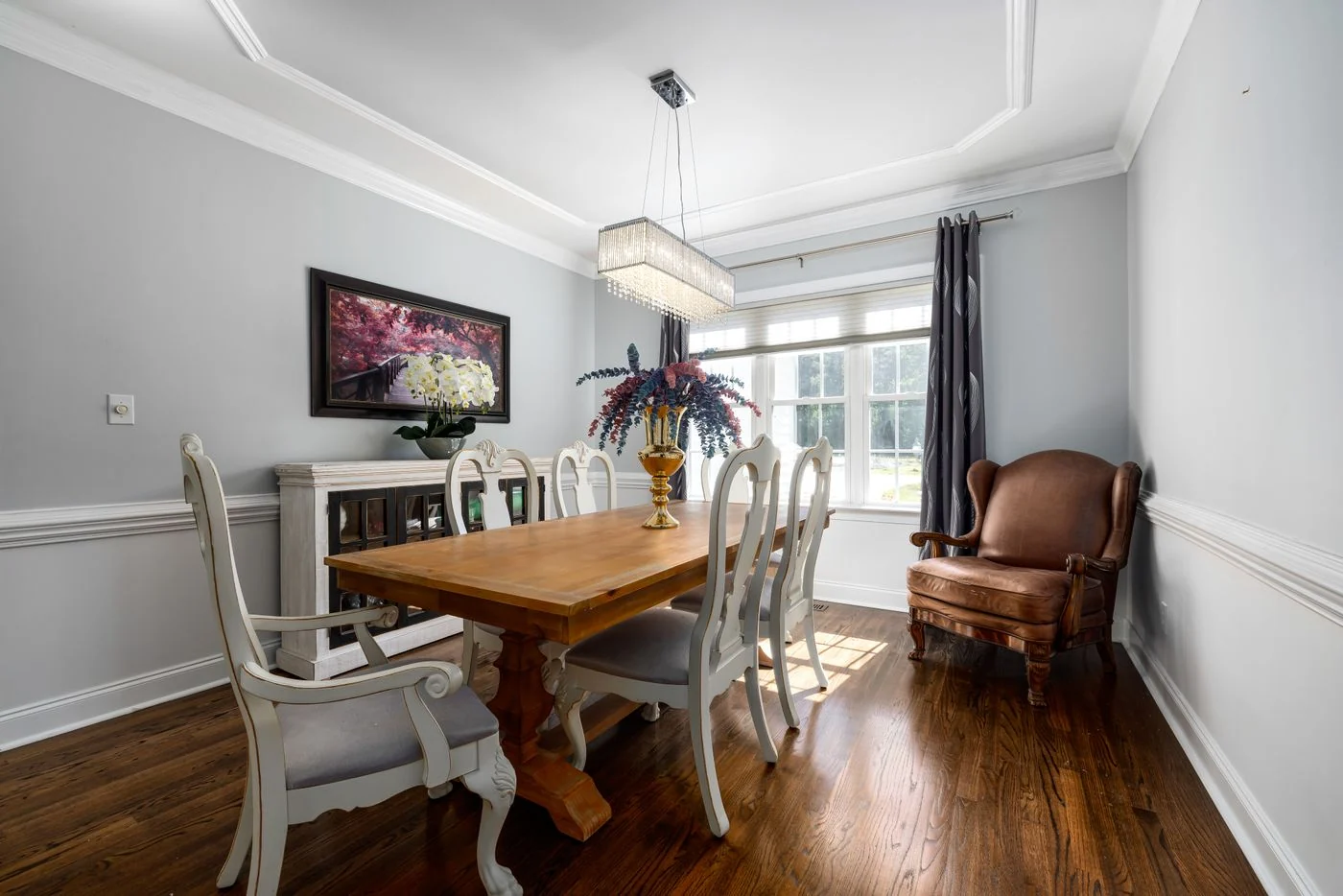
A formal room may have paired windows, a centered fireplace, tall trim, or furniture arranged on a strong axis. Those features can be beautiful. The challenge is often not that the room is too elegant, but that every added object repeats its ceremony until nobody knows where to sit comfortably.
You do not have to erase the symmetry. Instead, decide which part of the room should remain ordered and where a softer rhythm would help. The architecture can provide the structure while the furnishings introduce ordinary life.
Keep one strong center
If the fireplace or a central window is the natural focus, let it remain clear. A centered main seating piece may still make sense. The room becomes less rigid when the smaller elements are allowed to differ: a useful table on one side, a chair with a softer outline on the other, or books within reach rather than matching ornaments at equal distances.
This is not an instruction to make the room deliberately lopsided. Visual balance can come from different things. A broad low table may balance a narrower tall object without resembling it. A dark chair may have as much visual weight as a larger pale one. Judge the whole scene from the usual entrance rather than comparing isolated pairs.
Change the degree of polish
Consider a room with a pair of windows and matching chairs. You might keep those chairs because their scale suits the architecture, then place a small shared table between them rather than separate identical tables at each end. The useful arrangement introduces a different rhythm without fighting the windows. In another room, the paired lamps may be the element worth preserving while the chairs differ. Change one layer at a time so you can see which part of the symmetry was helping and which part was merely repeating it.
Fabric can soften a formal outline without changing the furniture. A plain woven cushion on an elaborate chair introduces a different surface. A less tightly arranged throw can make a seat seem available for use. Keep those additions useful; a chair covered in decorative layers can become even more ceremonial because sitting down requires dismantling it.
Avoid making every object look aged to counteract the formality. A room does not need artificial distressing to feel comfortable. A smooth everyday bowl or an unpretentious reading lamp may be a better contrast to elaborate trim than another ornate object with a worn finish.
Arrange for the activity that happens there
A formal arrangement can be surprisingly inconvenient if small tables are too far from seats or the only clear route runs through a conversation. Place the useful pieces first. The resulting irregularity often makes the room feel more natural without any deliberate styling trick.
If the room is used for reading, let a current book have a place. If guests gather there, make sure a seat is easy to approach and has somewhere nearby for an ordinary drink. These small decisions show that the room belongs to daily life rather than being preserved for an unspecified occasion.
You may still want matching lamps or a balanced pair of pictures. Keep the pairs you enjoy. The aim is not to prohibit symmetry but to stop it from controlling every object. A formal room becomes more welcoming when its order leaves enough room for a different chair, an unfinished book, and a person settling in without asking permission.