The Scale of a Large Glass Bottle
A large glass bottle can bring generous scale without the visual solidity of a cabinet or ceramic urn.
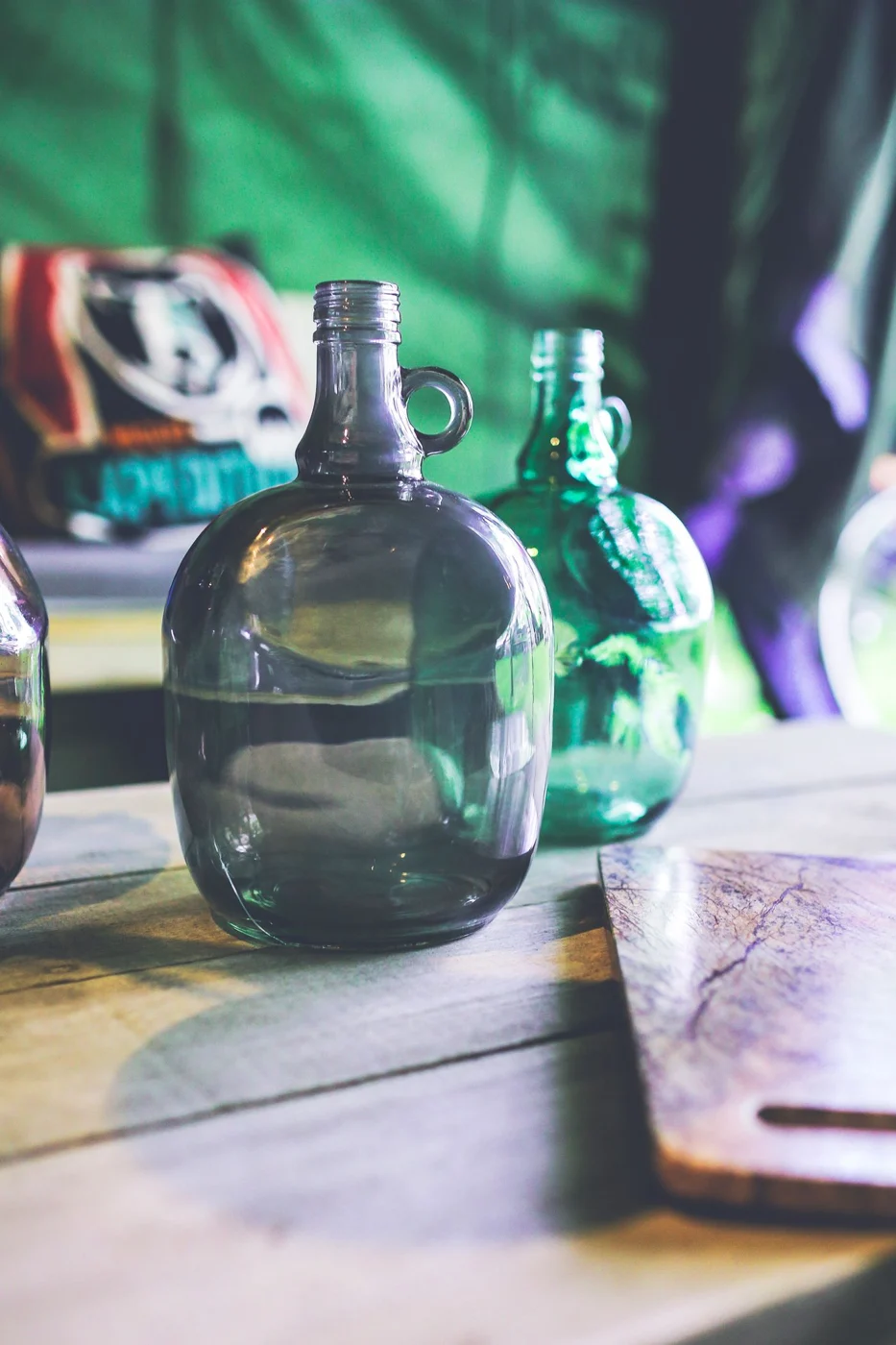
Large rounded glass bottles, often sold as demijohn-style vessels, have a useful contradiction: their outline can be substantial while the material lets light and background remain visible. That makes them different from a solid object of the same size. The room can still feel open around their shape.
The name or appearance does not establish age. A new decorative bottle may be exactly right for the room. If a seller claims an antique origin, ask for the information behind that claim rather than treating bubbles, green color, or an uneven-looking surface as proof.
Find a position that makes sense at full size
A large bottle needs a stable location where it will not be easily knocked. Check the footprint, nearby traffic, and the surface's suitability before deciding it belongs on a table. The floor is not automatically safer if the vessel sits where people, pets, or children move through the room.
Photographs can make these bottles look smaller than they are. Measure both the widest point and the height. A vessel that fits on a console may still crowd the lamp or block an important view through the room.
Translucent color changes with its background. Green glass against a pale wall can look brighter than the same bottle in a shadowed corner. Clear glass may almost disappear until its outline catches the light. Try the location in daytime and evening before adding more objects to make the bottle noticeable.
Leave the neck alone if the shape is enough
Tall branches are not a requirement. They can turn a manageable object into a much larger arrangement and introduce additional questions about stability. An empty bottle often shows its shoulders and neck more clearly.
If the vessel will hold anything, follow its intended use. A decorative bottle should not be assumed suitable for drinking water, food, or a heavy arrangement. Its visual resemblance to a traditional container does not tell you how it was made.
Nearby objects can remain modest. A flat book, a small plain bowl, or simply an empty stretch of surface may give the bottle enough context. Several other large vessels can make the scene feel like a shop display rather than part of a room.
The best placement allows the bottle to contribute a rounded volume without becoming an obstacle. Its lightness is visual, not permission to treat the actual glass as weightless or indestructible.