A Plate Display That Feels Collected
A group of plates can work as a wall composition when their shapes have room to relate to one another.
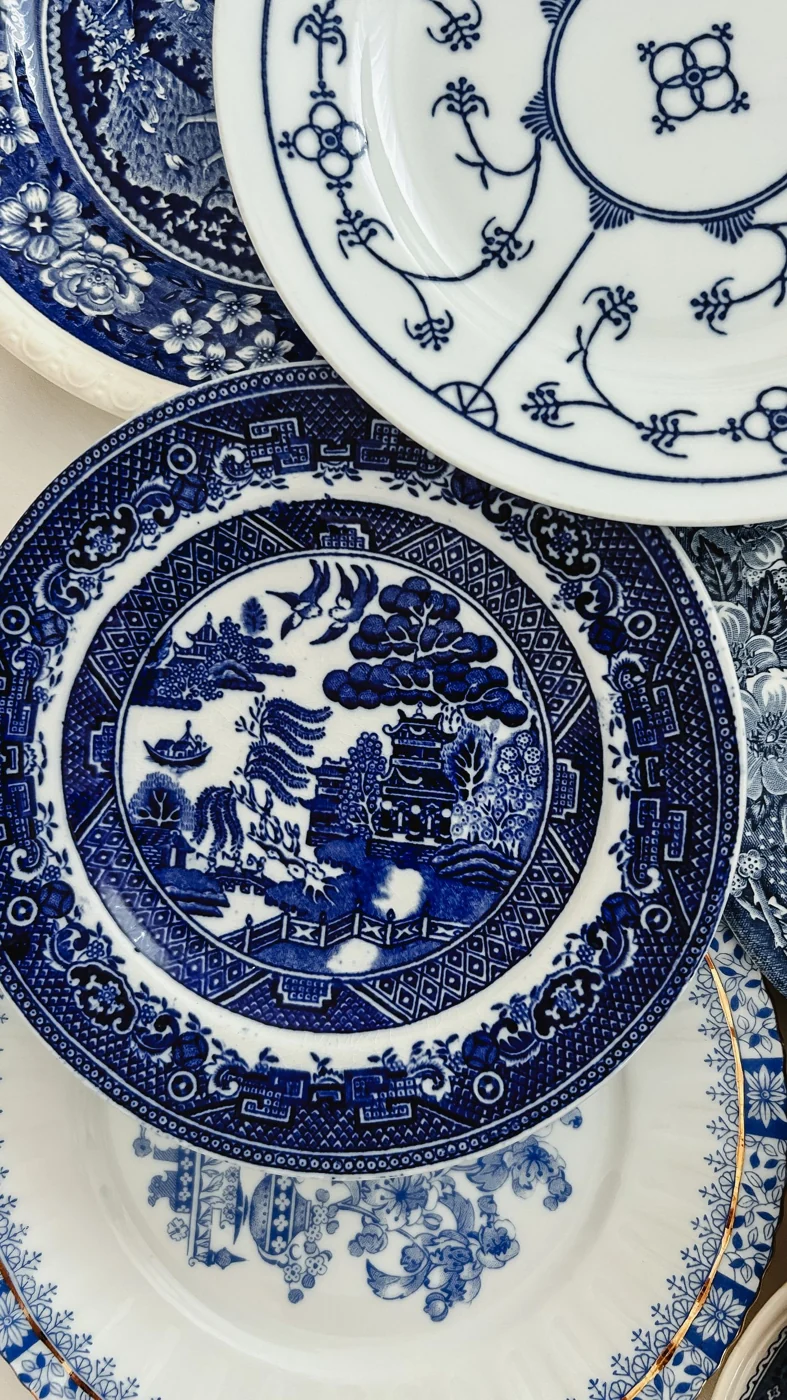
Plates make an unusual wall display because their edges remain part of the image. A scalloped rim, a plain round border, and a shallow oval shape each contribute an outline before you even notice the decoration inside. Start with those outlines rather than trying to assemble a perfectly matched set.
Lay the plates on a protected flat surface and look at the group from above. Put the largest or most visually assertive piece where you want the eye to begin. It does not have to sit in the exact center, but the rest of the group should give it a reason to be there.
Plan the gaps as carefully as the objects
Closely packed plates form a single busy shape. More generous spaces make each plate feel individual. Neither spacing is automatically correct, but changing it can transform the whole display without adding another object.
Make paper outlines before committing to wall placement. Include the actual outer edge, not just the diameter of the central image. Try the arrangement beside the furniture that will sit below it, then step back to the normal doorway view. A layout that looks balanced on the floor may feel crowded above a narrow cabinet.
Color can connect unrelated pieces. A faint blue line in one plate may relate to a stronger blue scene in another. You do not need every plate to repeat the same motif. A plain plate can be useful because it gives the patterned ones a little visual space.
Check whether each piece belongs on the wall
Use mounting hardware specifically suitable for the plate's size, weight, material, and the wall surface, and follow its instructions. A cherished or fragile plate may be better displayed on a stable shelf with appropriate support. An attractive arrangement is not a reason to improvise a questionable fixing.
Avoid buying several filler plates just to complete a shape. A small group that you like is more convincing than a larger one assembled to satisfy an imaginary quota. Leave the composition open to change if you expect to add pieces later.
The display should also relate to the room's other round shapes. A large round mirror nearby may compete with it; a simpler neighboring object may let the plates stand out. View the wall as a whole rather than evaluating the arrangement in isolation.
Once the plates are up, resist placing a dense collection directly underneath. The wall already contains detail. A quieter surface below allows the different rims, drawings, and small variations to remain the reason you look.