One Scalloped Edge in an Otherwise Simple Room
A curved edge can supply all the decorative detail a plain object needs. Give that outline a clear background.
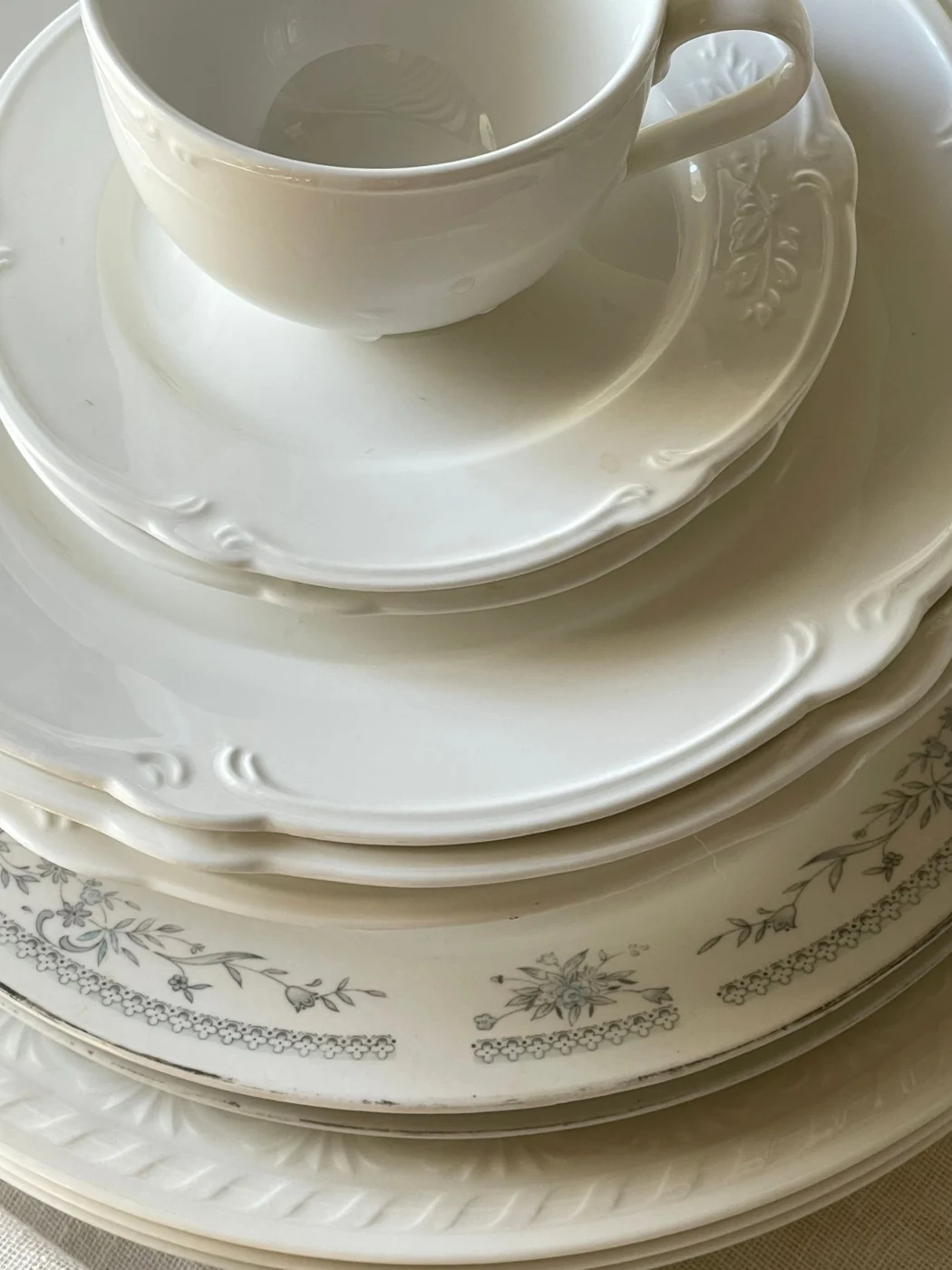
A scalloped edge is a small detail with a strong personality. On a shelf, tray, shade, or textile, the repeated curves change an otherwise ordinary outline. Because the shape is so recognizable, it usually does not need much company.
Begin with one object rather than a collection. A scalloped tray on a simple table can be enough to soften the area. If the tray also carries a busy floral pattern and sits beside a ruffled cushion, the curve may become one detail among too many.
The size of the scallop affects its mood. Small tight curves can feel delicate or decorative. Broad shallow curves are often quieter and more graphic. Look at the actual edge from across the room; a detail that seems charming in a close-up photograph may be barely visible or unexpectedly strong at normal distance.
A plain background helps the outline show. A pale scalloped object against a similarly pale textured surface may disappear, leaving only its contents visible. Slight contrast can reveal the shape without introducing a new bright color. The aim is not maximum contrast, just enough separation to see what appealed to you.
Consider the direction of the edge. Along the bottom of a lampshade it forms a horizontal rhythm. Around a tray it creates a complete border. On a fabric valance it may become a much longer repeated line. The same detail has a different effect when it stretches across a whole window.
There is no requirement to pair scallops with romantic or vintage-looking objects. A straightforward lamp base, a clean-lined cabinet, or a plain upholstered chair can make the edge feel less expected. In a country-inspired room, that simple neighbor prevents the detail from tipping into an overly coordinated theme.
Function still matters. A decorative tray must be suitable for whatever you plan to carry, and a fabric edge should not make an everyday item awkward to use or care for. Read the product information rather than assuming the attractive shape is its only important feature.
If you are unsure, introduce the curve in a small movable item. Live with it for a while before choosing a larger permanent application. You may find that one scalloped edge is exactly enough, especially in a room where chair backs, handles, and picture frames already provide other soft lines.