Decorate Around a Stone-Look Floor
A floor with visible variation is already a palette. Use its quieter tones to guide the room above it.
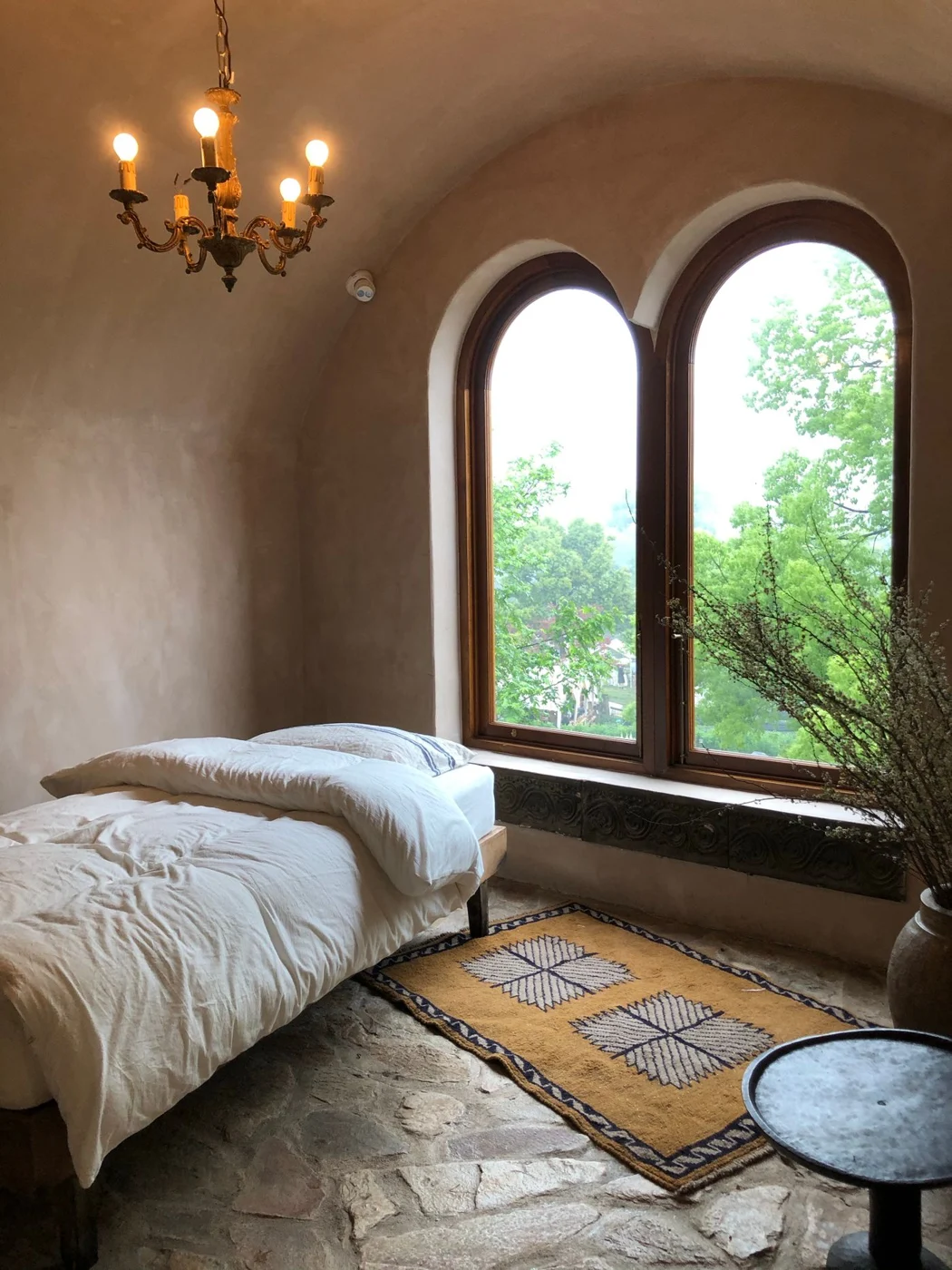
Stone and stone-look floors rarely read as a single flat color. A tile may contain cream, gray, rust, or soft brown, and the joints introduce another line across the surface. If a room built around that floor feels unsettled, the problem may be that the furnishings are responding to an imagined neutral rather than the colors actually underfoot.
This is a visual exercise, not a guide to identifying or treating the material. Natural stone, ceramic, porcelain, and other products need different care. Use the manufacturer's information for that. For decorating, start by looking at the floor in the room's normal light.
Find the background, not the most unusual mark
The strongest vein or darkest fleck can be tempting to copy, but it may occupy only a tiny part of the floor. Look for the tone that forms the largest continuous impression. A pale warm ground with occasional gray lines will behave differently from a gray floor with scattered beige patches.
Place fabric samples directly near the floor, then look from standing height. A cream that seems gentle on a desk may turn yellow beside a cooler tile. A gray textile may make warm stone appear more pink. You are not trying to find an exact match; you are checking whether the combination makes both surfaces look intentional.
If the floor contains several colors, choose one or two to carry into larger furnishings. Let the remaining variation stay in the floor. Repeating every shade in cushions, art, and curtains can make the room more complicated than it needs to be.
Account for the joints and scale
A small tile pattern creates a much busier base than large plain slabs. In the busier room, furniture with simple outlines may feel more comfortable. Open chair legs, heavily patterned upholstery, and many small accessories can multiply the visual activity near the floor.
The color of the joints matters as well. Dark lines across pale tiles create a visible grid that remains present even when the tiles themselves are quiet. A rug can soften part of that grid, but its size and position should follow the furniture and walking routes rather than cover an inconvenient pattern at random.
Country character can come from the relationship between the hard floor and softer forms above it. A gently shaped upholstered chair or a plain fabric-covered bench provides contrast without requiring distressed finishes. If the floor already looks rugged, smoother furniture may be the more interesting partner.
Before choosing a new large item, photograph the proposed sample beside the floor and also inspect it without the camera. Photos can shift color, but they may help reveal a contrast you overlooked. Keep the physical sample for the final decision. The floor will remain a substantial part of the room long after a small decorative accent has moved elsewhere.