Different Dining Chairs Around One Table
Different chairs can look collected, but their relationship to the table and to the people sitting in them comes first.
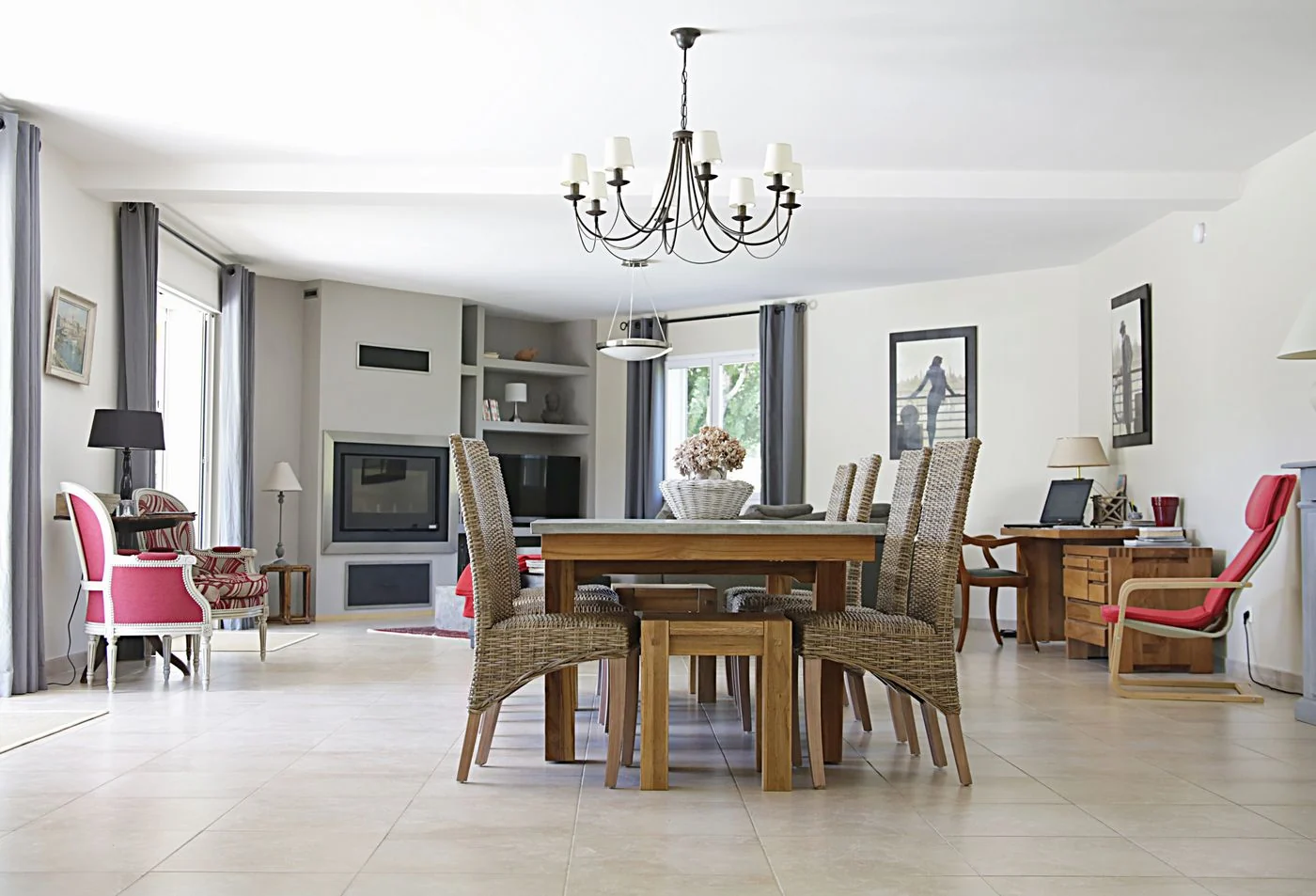
Mixed dining chairs can make a room feel less like a furniture showroom. They can also create a table where some people sit too low, armrests refuse to slide underneath, and one chair is far more comfortable than the rest. The visual mix should come after the physical fit.
Measure the table's usable underside, including any apron or support structure. Compare that with the chairs' seat and arm dimensions. The top's listed height does not tell you everything about the space available beneath it. If possible, try the actual combination before committing.
Choose a clear relationship
The chairs can share a material, a similar outline, or a general level of visual weight. They do not have to share all three. A group of simple wooden chairs with different backs may feel coherent; an upholstered pair at the ends can also work if its dimensions suit the table and room.
One difference is often enough to make the arrangement interesting. If every chair varies in color, height, material, and shape, the group may become difficult to read. That can be enjoyable in a particular room, but it should be intentional rather than the result of collecting every attractive chair without testing it together.
Consider the view when the chairs are pushed in. Backs create a repeated line around the table, and a single very tall chair may dominate that line. Then pull them out and check the space needed for someone to sit and stand. The room must accommodate the arrangement in use, not only in its compact state.
Give every guest a reasonable seat
Avoid creating one obviously inferior place simply to complete the count. A decorative chair that is uncomfortable or unsuitable for the user does not become a good dining chair because its finish matches. Inspect condition and follow the furniture's intended use and loading guidance, especially with older pieces.
Seat cushions can change comfort, but they do not solve every mismatch. A thick cushion may raise the seated position into an awkward relationship with the table. Ties, covers, and maintenance also become part of the routine. Test the whole combination rather than adding cushions as a universal remedy.
Look at the room with a simple table setting. A heavily patterned cloth and elaborate centerpiece can obscure the chair mix, making the whole area seem busy. Let the furniture provide some of the interest before adding more decorative layers.
Try a smaller mix first
Suppose you already have four straightforward wooden chairs and need two more places. Before replacing the set, test two suitable additions at the table's ends. Their different backs may create a useful distinction, while the four existing chairs keep the sides visually consistent. Check that the end positions offer enough room and that the chairs are equally usable; they should not be chosen only as decorative bookends.
If the table is round, there are no natural end positions. A contrasting pair placed together may look like a separate group, while distributing them can create a more even rhythm. Move the chairs around the actual table and assess both the seated experience and the view from the room's entrance. The arrangement that works for a rectangular table is not automatically transferable.
This trial also helps identify which quality needs repeating. Perhaps the finishes can differ because all the chairs have open backs. Perhaps the shapes can vary because their wood tones are close. One clear connection usually gives you more freedom elsewhere.
There is no need to collect the final arrangement in one shopping trip. A useful existing set with one suitable addition may be enough. If a new chair changes the balance awkwardly, consider another location for it instead of buying several more pieces to justify the first. Mixed chairs feel natural when their differences remain compatible with a comfortable meal.