Give a Sideboard a Useful Job
Assign the sideboard a real storage role, then leave enough surface for serving or setting things down.
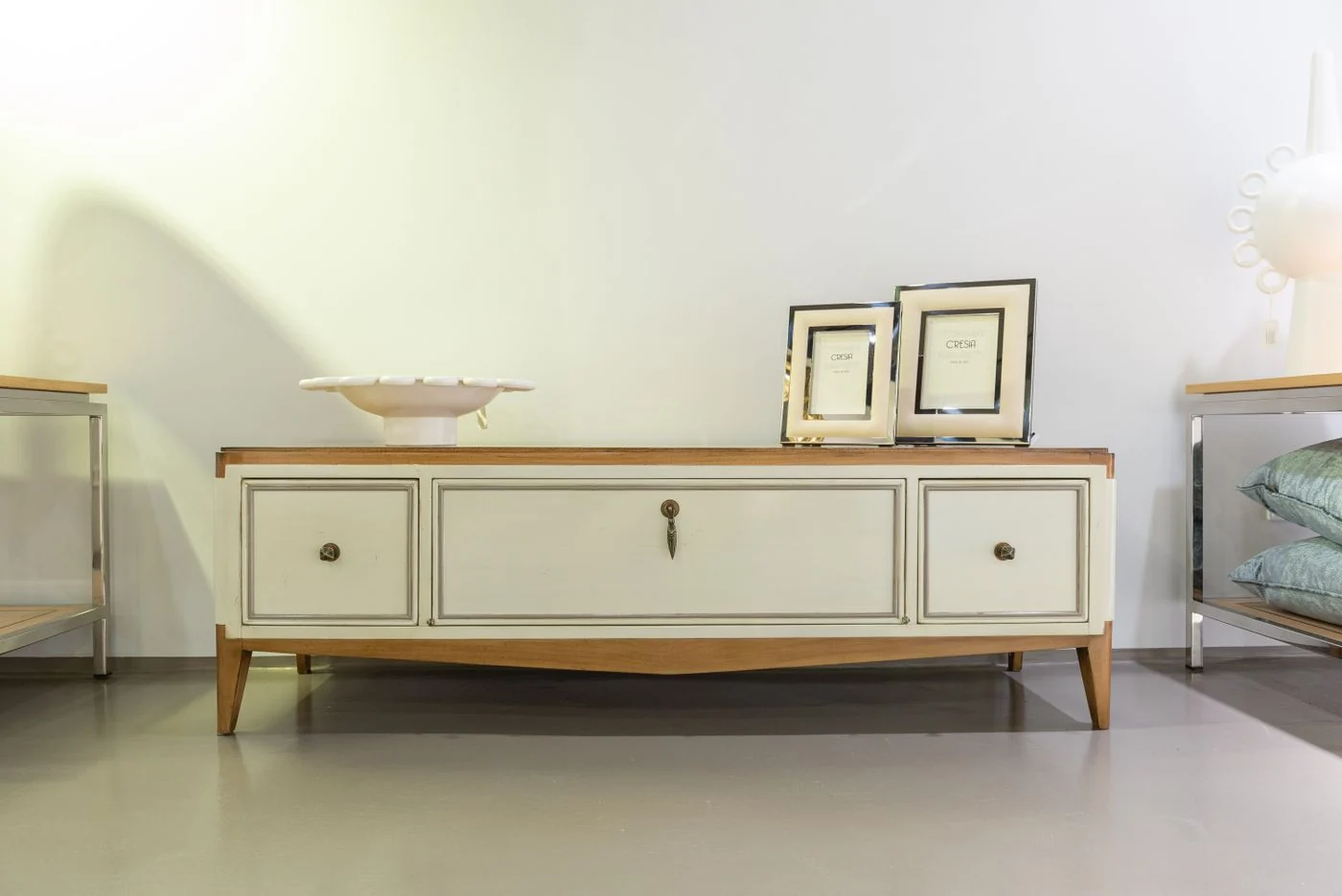
A sideboard can be one of the most useful pieces in a dining room, yet its storage is often filled with things that have drifted there from elsewhere. The top then becomes a display so dense that there is no place to set down a serving dish. Defining its job can change both problems at once.
Empty one section at a time and group the contents by how they are used. Table linens, serving pieces, and occasional dishes may belong nearby, while unrelated paperwork or spare cables may not. Keep the pieces you actually reach for easiest to retrieve.
Check the internal dimensions before buying storage accessories. A stack of linens needs different space from a tall pitcher or a broad platter. Dividers and boxes are useful only if they improve access; adding containers can reduce usable space when the cabinet is already appropriately divided.
Store heavy items within the furniture's instructions, and follow assembly and anchoring guidance. An attractive arrangement of dishes is not a substitute for checking shelf capacity. Avoid making a frequently used heavy piece difficult to lift out from behind several smaller objects.
Keep the top ready for a second job
Decide whether the surface is used for serving, pouring drinks, or setting down dishes during a meal. Reserve an area for that activity and protect the finish appropriately. A lamp and one picture may provide enough permanent character while leaving useful room.
If the top is mainly decorative, it can still benefit from restraint. The furniture itself has a strong horizontal shape. A few distinct objects make that shape visible, whereas a continuous row of small accessories can obscure it. Check the arrangement from the seated dining position as well as the doorway.
A mirror or artwork above the sideboard should relate to the whole wall, including doors and nearby furniture. It does not need to match the width exactly. Use suitable installation and consider what a mirror will reflect during a meal, not only when the room is empty.
Try the sideboard during the next ordinary dinner. Notice what you reach for and what gets moved. The most useful final arrangement may be less elaborate than the first one you imagined. Storage that is easy to open and a clear patch of surface can make the whole dining room feel more prepared.