Improve the First View Through the Door
Improve what the door reveals by clarifying one useful focal area and removing the objects that interrupt the route.
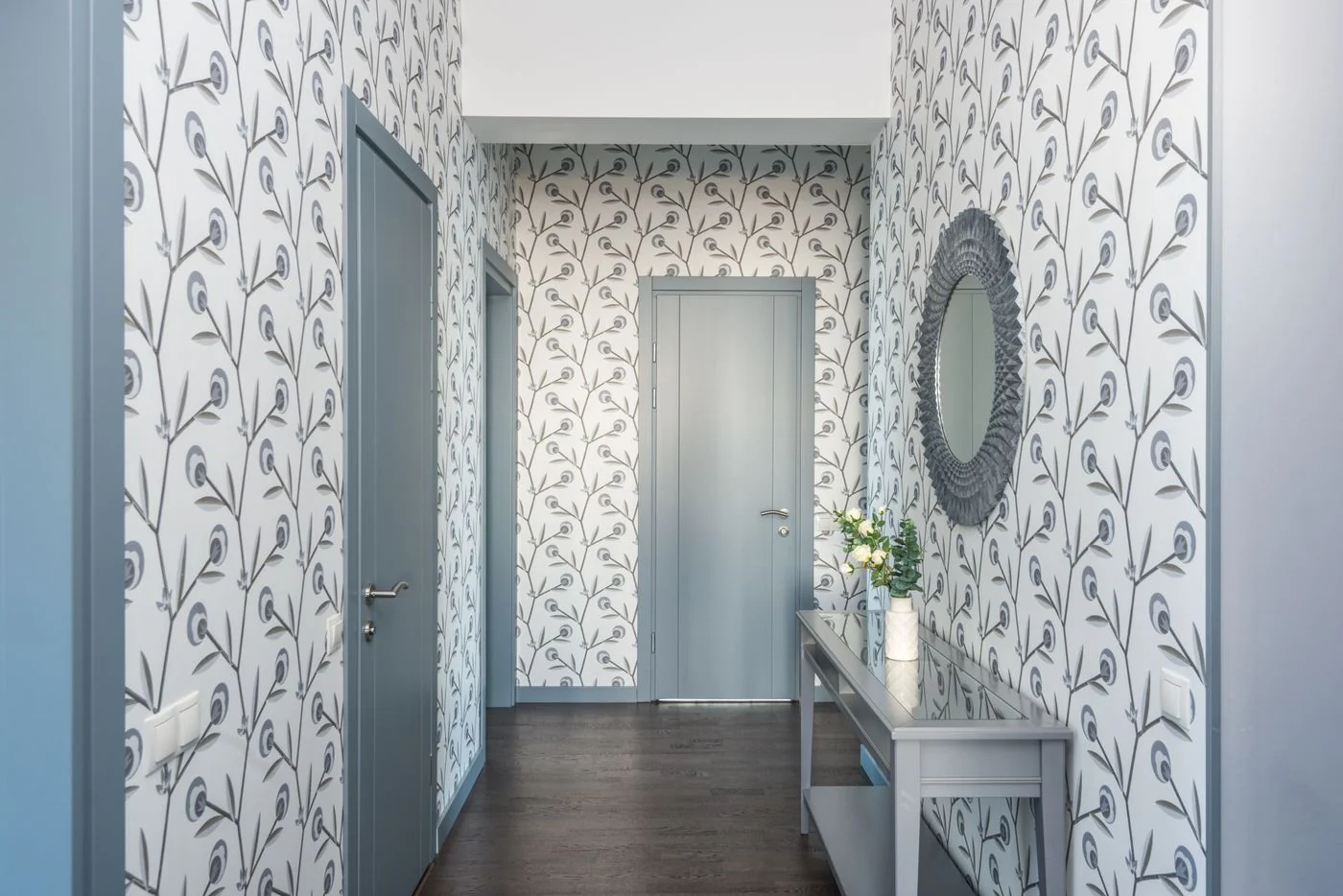
The first view into a home is often a mixture of several rooms: the edge of a sofa, part of a hallway, a cabinet, and a glimpse of the kitchen. Trying to style every visible surface can make that view busier. A clearer arrival usually comes from choosing what should lead and letting the rest settle behind it.
Stand just inside the open door and look at the normal sightline. Notice the object that attracts attention first. It may be a pleasing picture, but it may also be a coat pile or the side of an oversized cabinet. Describe the actual view before deciding what decorative piece it needs.
Remove the interruptions that have no reason to be there. A delivery box, a chair used as temporary storage, or several small items along a narrow ledge can make the whole house appear more crowded. These are routing and storage problems, not necessarily decorating problems.
Choose one area to give a clear identity. A picture above an existing console, a well-placed lamp, or a view toward a comfortable seat may be enough. The focal point does not have to sit directly opposite the door; it simply needs to make sense within the wider arrangement.
The entrance must remain easy to use. Do not add a tall vase, plant, or piece of furniture where it narrows the route or interferes with the door. Follow the relevant guidance for any mounted or heavy objects. The attractive view should survive people carrying bags and moving through the space.
Consider the evening arrival. Existing appropriate lighting can help the room feel legible, but avoid a setup that requires searching behind furniture for a switch. The first useful action should be straightforward. A beautiful lamp that is rarely switched on contributes only its daytime shape.
Finally, let the view contain ordinary life. The goal is not to remove every sign that someone lives there. A book, a useful basket, or a favorite chair can make the entrance feel more personal than a perfectly symmetrical display. The strongest first impression is often simply a clear route into a room that appears ready to be used.