An Entryway Without a Foyer
Create a small arrival routine at the edge of the room without building a pretend hallway from extra furniture.
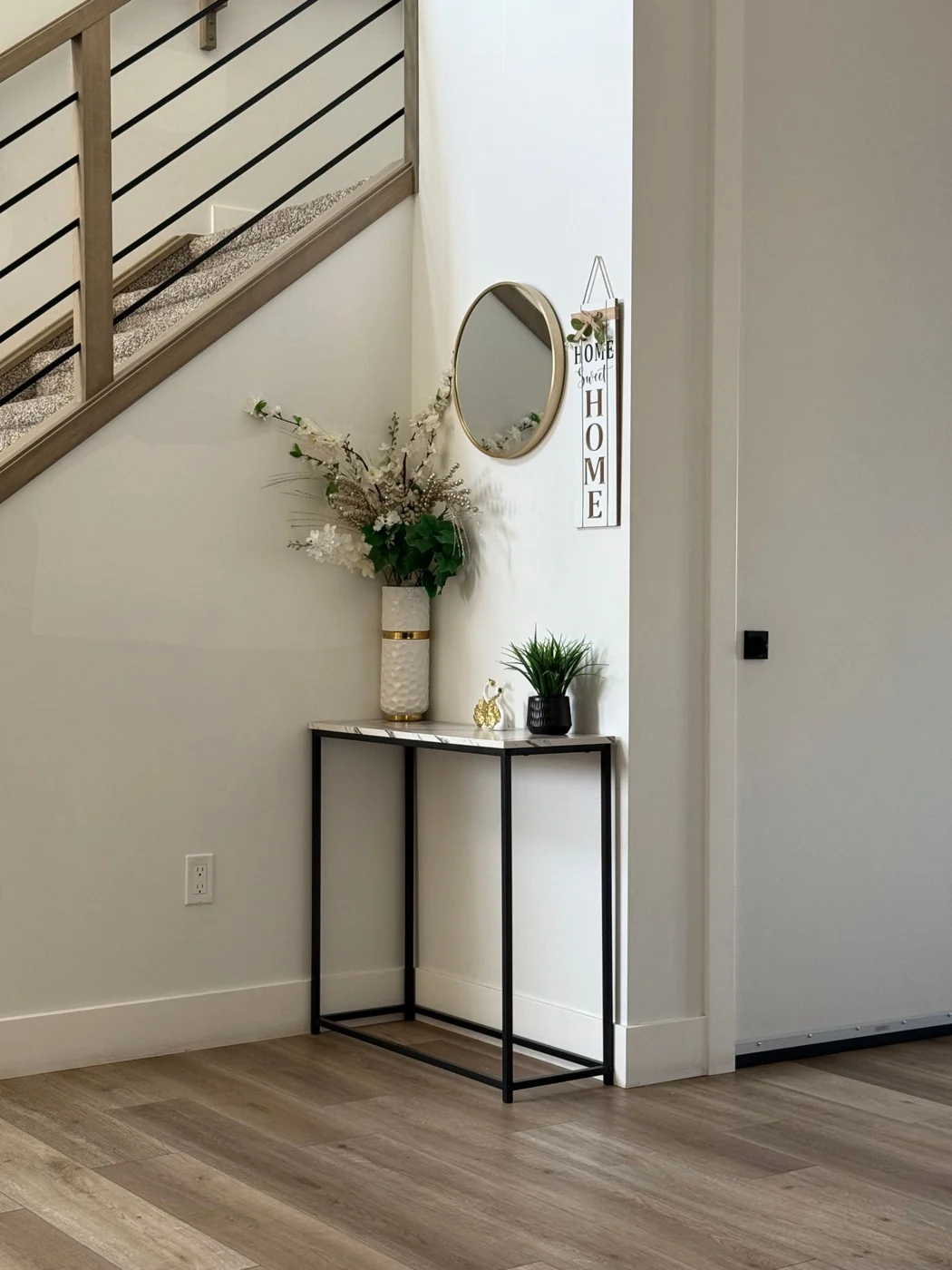
When the front door opens directly into a living room, belongings tend to land on the first available seat. A jacket goes over a chair, keys sit on the coffee table, and shoes collect near the door. The room may not need a formal entryway, but it does need somewhere for those actions to happen.
List what arrives most often. The answer might be a bag, a coat, keys, and shoes, rather than the full collection shown in a mudroom photograph. Each item needs a suitable destination, but those destinations do not have to form one large furniture unit.
Keep the door's movement and the walking route clear. A narrow console that blocks the door is not a good entry solution, however well it fits the wall. A small landing surface elsewhere along the natural route may be more useful than forcing everything immediately beside the threshold.
Give the area a quiet boundary
A suitable mat, a small wall area, or the side of an existing cabinet can suggest the arrival zone without dividing the room physically. A freestanding screen or large shelf may consume more space than the problem warrants. Let the routine create the zone before adding architecture to describe it.
Choose storage according to the items. A bag may need a stable place to rest rather than a hook that does not suit its weight. Shoes need an appropriate location that the household will actually use. Follow installation and loading guidance for any fixtures instead of treating them as decorative objects only.
The visible part can remain simple. A bowl or small tray may hold keys, while closed storage nearby handles less attractive necessities. There is no need to display a complete collection of entry accessories just because the area has been given a name.
Watch the first few arrivals after the change. If bags still land on the sofa, the new location may be less convenient than expected. Adjust it to the route rather than assuming the household needs more discipline. In a room without a foyer, the successful solution often looks modest: one clear surface, one obvious storage place, and a door that opens without negotiation.