A Home Office Background That Belongs to the Room
A video-call background can be composed from the room you already have, without turning the wall behind you into a permanent set.
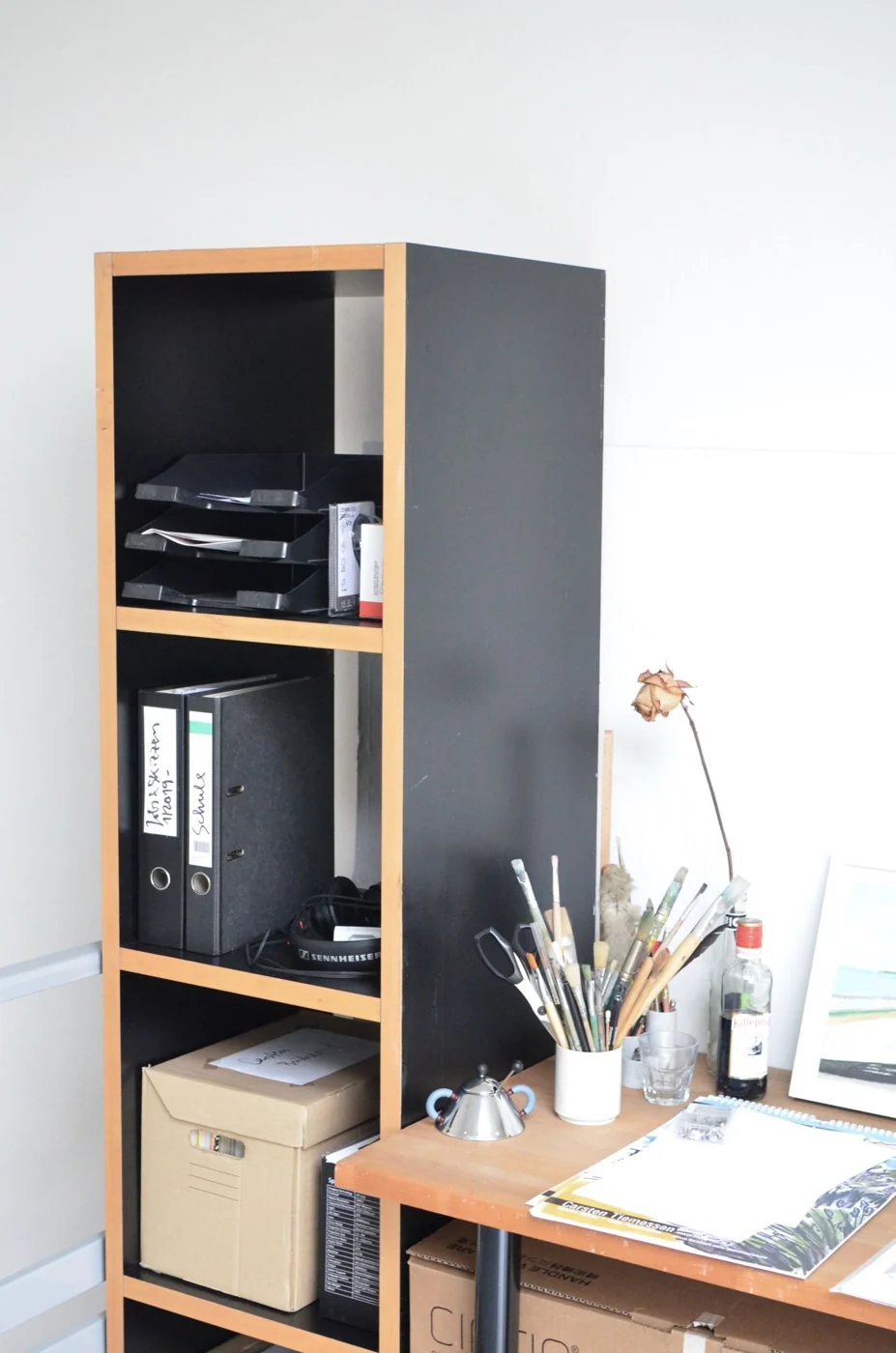
A home-office background is a view through a camera, not the entire room. A shelf that looks balanced from the doorway may appear as a distracting cluster behind your head. Before buying art or repainting, look at the actual frame created by the equipment you use.
Open the camera preview in the position used for calls and inspect what is visible. Check the edges as well as the center. A doorway, bright window, or partial pile of papers may draw more attention than the carefully chosen objects on the main shelf. Adjust the desk or camera position only in ways that preserve a comfortable, appropriate working setup.
Clear private or distracting information from the view. Documents, readable personal details, and household items may not belong in a professional call. This does not require making the room anonymous. It means choosing deliberately what is visible rather than discovering it during the meeting.
Keep the background simple enough to read
A few larger shapes often work better than many small accessories. A plain area of wall, one picture, or a modest section of books can give the frame definition. Objects directly behind the head may appear to merge with the person on screen, so test their position in the preview.
Avoid building a background that makes the room inconvenient. Shelves should still store things usefully, and the door should remain accessible. If a decorative arrangement must be dismantled every time someone uses the space, it is probably too dependent on the camera view.
Check ordinary daylight and the room's normal evening lighting. The background may change considerably, especially near a window. Use the equipment's settings and appropriate lighting arrangements rather than assuming a particular wall color will solve every exposure issue.
When the call ends, the room should still feel like a place you want to use. A favorite picture or readable books can provide personality without a display of generic office props. The most convincing background usually comes from editing the visible part of a functional room, not from purchasing a collection designed only to look like work is happening.