A Small Eating Corner in the Kitchen
A compact table needs enough room for the chairs in use and for the kitchen to keep working around them.
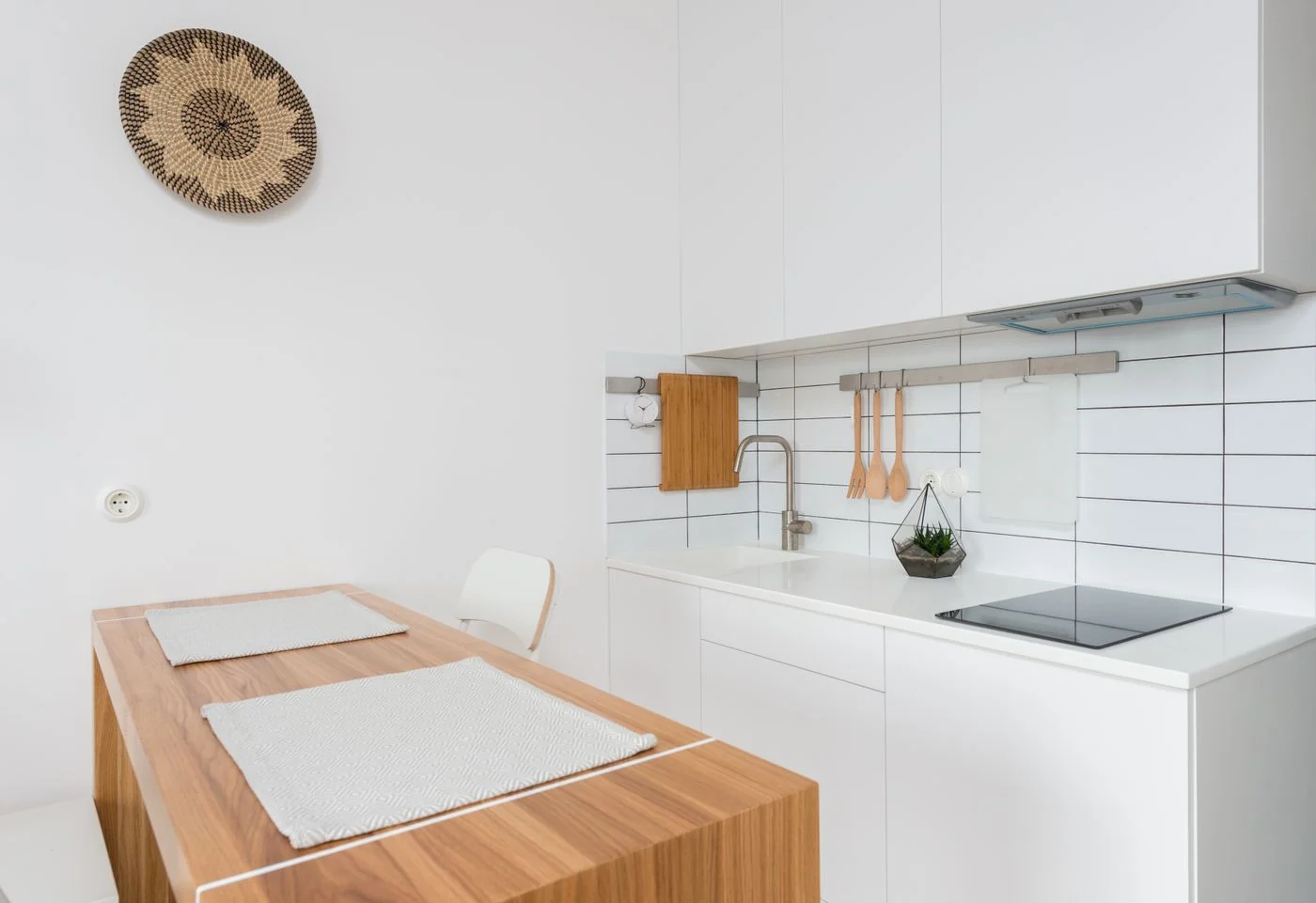
A kitchen eating corner can seem possible when the chairs are tucked tightly beneath the table. Pull them out and the calculation changes. Someone preparing food may have to wait for a seated person to move, or a refrigerator door may no longer open comfortably. The useful layout includes both dining and cooking at the same time.
Mark the table's full outline in the proposed spot, then place the actual chairs or suitable stand-ins around it. Sit down, stand up, and walk past. Include the routes to the sink, refrigerator, storage, and any doors. A small table is only helpful if its position respects those movements.
Choose the shape for the corner
A round table can make movement around its perimeter feel easier in some layouts, but its widest point still needs space. A narrow rectangular table may sit more efficiently beside a wall, yet access to the inner seats can be awkward. Judge the shape with chairs occupied rather than relying on its reputation as a space-saving solution.
A bench can reduce the visual clutter of several chair backs, but it introduces its own tradeoffs. People may have to slide along it or stand to let someone out. A fixed or heavy bench also makes cleaning and rearranging less flexible. Choose it because the household finds it comfortable, not because it appears in every small-nook photograph.
Consider the table base as well as the top. Legs and supports can interfere with knees or prevent chairs from tucking where expected. Check the actual furniture dimensions and test the combination when possible. Matching table and chair styles do not guarantee a comfortable fit.
Keep the everyday tabletop usable
If the corner handles breakfast, homework, or a quick lunch, leave most of the surface available. A large centerpiece may look inviting but become another object moved twice a day. A small useful bowl or nothing at all can suit the routine better.
Choose seating materials and care requirements you can live with in a kitchen. Read the specific product guidance rather than assuming every fabric cover is easy to clean. Removable cushions should fit securely and not turn each meal into a rearranging exercise.
Imagine breakfast in motion
For a concrete test, set a place at the proposed table while someone else opens the refrigerator and carries a plate toward the sink. Pull the chair out to stand, then return it naturally rather than pushing it as tightly as possible beneath the top. This reveals how much space the arrangement uses during an ordinary meal.
If the table doubles as a preparation surface, consider its height, finish, and suitability for that task separately. A dining surface is not automatically appropriate for every kitchen activity. Follow the furniture's care guidance, and do not let the extra function justify a table that blocks the main work area.
A fold-down or extending table may help some rooms, but evaluate the mechanism in both states and follow its installation instructions. If expanding it requires moving several chairs and clearing another surface, decide whether you will actually do that. The compact form should be useful on its own, rather than an inconvenient waiting position for the larger table.
If the full plan does not fit, reduce the ambition before reducing the clearances. A two-person table used comfortably may be better than four cramped places that interfere with the kitchen. Occasional larger meals can happen elsewhere. The corner earns its space by being easy to use on an ordinary morning.