Open Kitchen Shelves You Can Maintain
Open shelves work best when the visible contents are useful, reachable, and realistic to maintain.
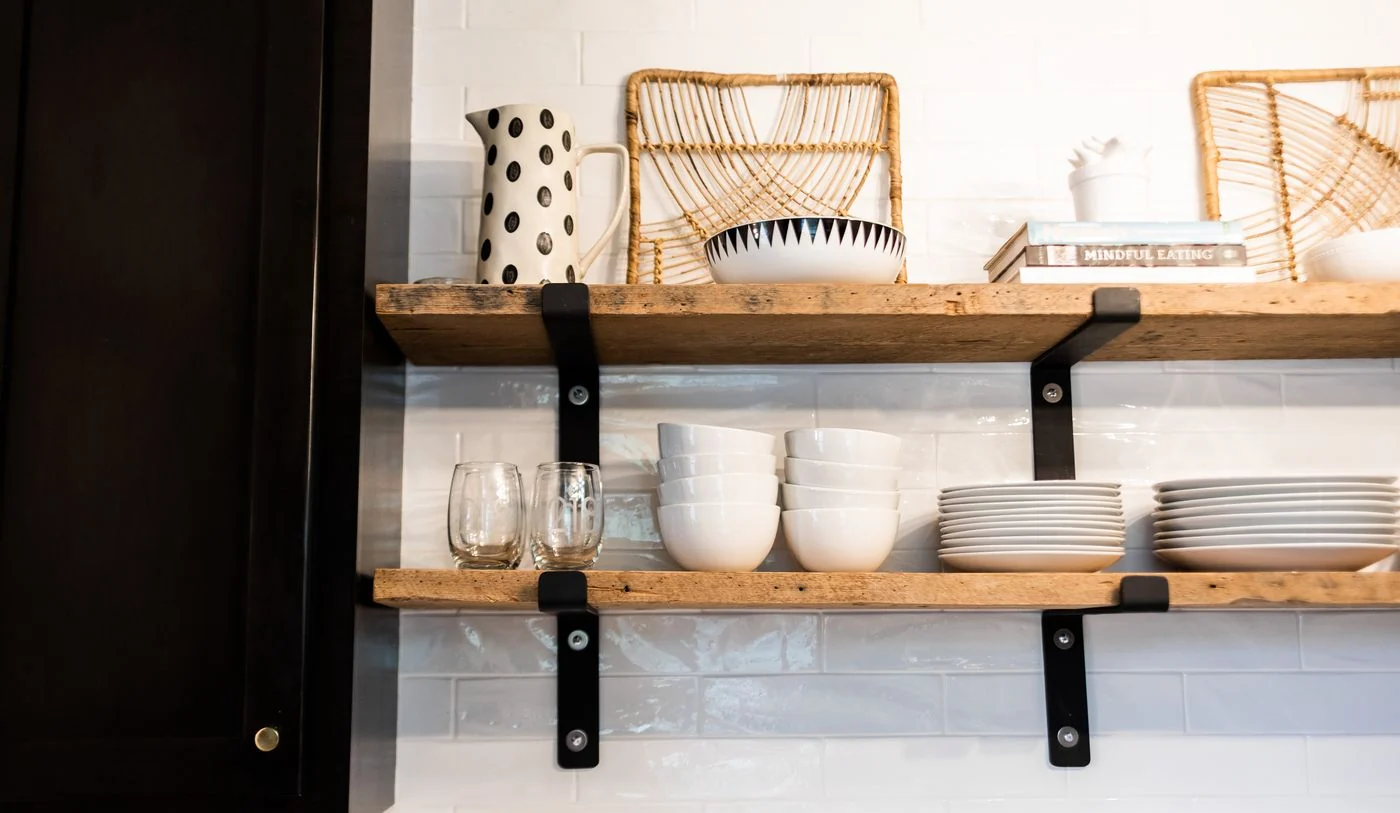
Open kitchen shelves often look effortless because the photograph shows only a few well-chosen dishes. A working kitchen has a less coordinated inventory: mugs of different sizes, everyday bowls, and pieces used only occasionally. The shelves need to accommodate that reality rather than demand an entirely new collection.
Begin with the items used frequently enough to earn accessible space. Everyday plates or mugs may make sense, provided the shelf is suitable for their weight and location. Keep heavier items and loading within the manufacturer's guidance, and use appropriate installation. A decorative arrangement cannot establish whether a shelf is safely supported.
Try grouping by use instead of appearance. Plates that are often retrieved together can stay together; a serving piece used rarely does not need the easiest spot simply because it looks attractive. Reachability matters, especially when carrying dishes or working in a busy kitchen.
Be honest about upkeep
Exposed shelves and contents need the care appropriate to their position in the kitchen. Consider nearby cooking activity and the household's cleaning routine before replacing closed storage. If the idea depends on having spotless display dishes that are never used, a smaller decorative shelf may suit the room better.
Leave enough room to retrieve one item without disturbing several others. Tall stacks can look orderly while making the lower pieces inconvenient. A mix of lower stacks and individual useful objects may be easier to manage. Do not fill every horizontal inch just because the shelf can hold it visually.
A modest amount of variation can make the display feel natural. Different mugs can coexist without being hidden in matching containers. If the arrangement looks busy, simplify the number of groups or move rarely used pieces elsewhere before buying a coordinated set.
Check the shelves after an ordinary week. Which items return easily, and which sit on the counter because putting them away is awkward? Adjust the arrangement around that evidence. Open storage is successful when its visible order survives normal use, not when it requires the household to handle every cup like a prop in a styled kitchen.