A Calmer Laundry Room With Existing Storage
Arrange the laundry room around the sequence of a load, using the storage already there before adding another organizer.
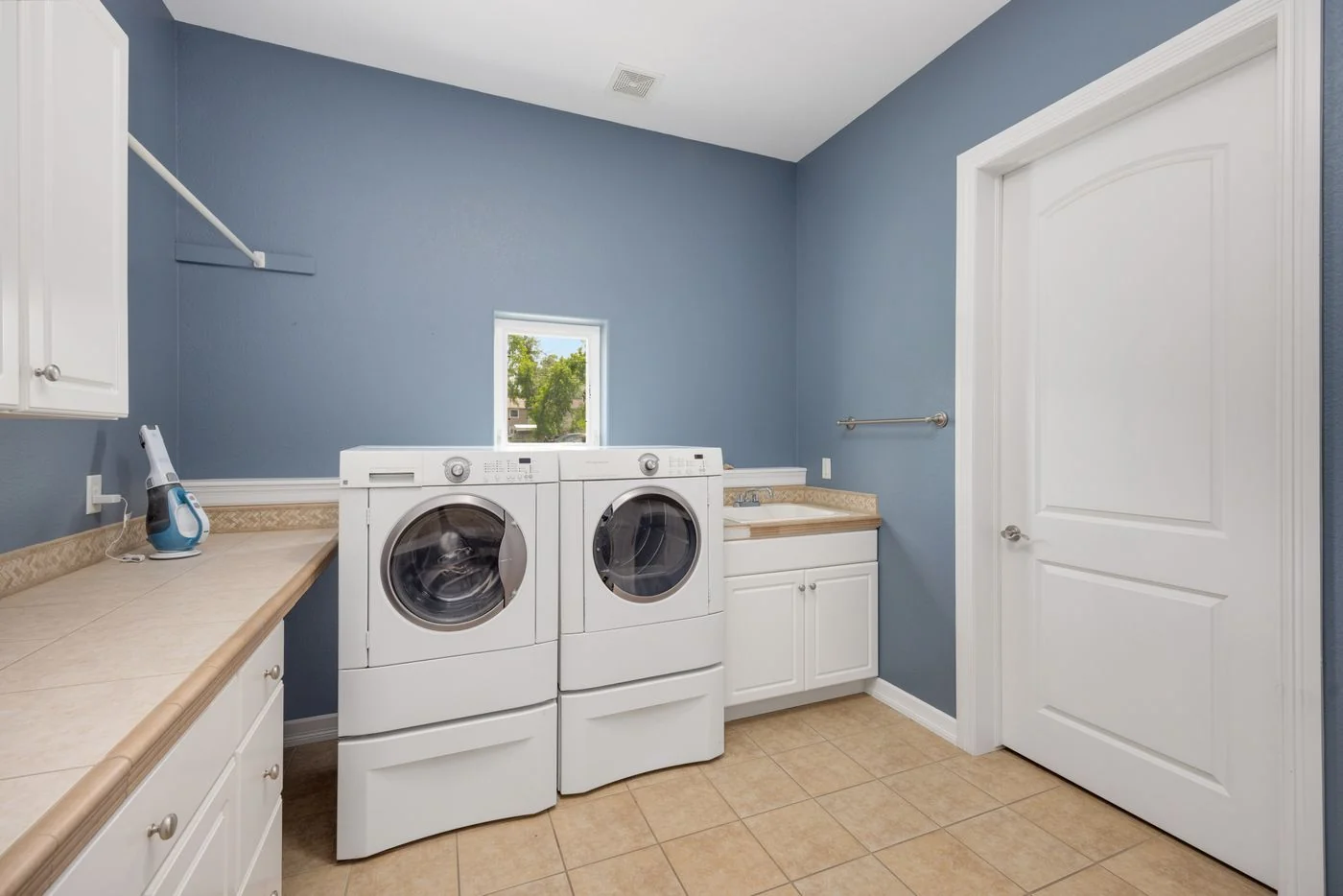
Laundry rooms tend to hold a mixture of active supplies and things that have nowhere else to go. A shelf may contain detergent, old paint, spare towels, and several empty baskets. The room can look full while still offering no clear place for the next load of laundry.
Follow the sequence of a normal load. Where does it arrive, where are products retrieved, and where does clean laundry go afterward? Note the point where the process becomes awkward. That point may need a clear surface or a different storage location rather than another set of containers.
Give the current supplies the best access
Keep products in appropriate original or clearly suitable storage, following their labels and household safety needs. Do not decant simply to create matching bottles if doing so removes important instructions or makes identification less clear. Store cleaning products securely as required for the people and animals in the home.
Separate active supplies from backups. A large reserve can occupy the easiest shelf while the bottle used every day sits on top of the machine. Move the backup to a suitable location and give the current items an obvious home. Avoid crowding controls, equipment clearances, or areas the appliance instructions require to remain accessible.
Baskets should have defined roles. One may receive incoming laundry, another may carry clean items, but several empty baskets stacked in the way do not create a system. Choose a quantity and size that fit the household's actual routine and available space.
Protect one working surface
If there is a counter or table, clear enough of it for the task it serves. Folding becomes harder when decorative jars and unrelated storage occupy the entire top. Where no separate surface exists, consider whether the task is better completed elsewhere rather than adding furniture that blocks the appliances.
Use existing cupboards more deliberately before buying organizers. Group items by use, check shelf dimensions, and remove things that do not belong in the laundry area. A small bin may help contain a specific category, but filling every shelf with matching boxes can make retrieval slower.
Keep the room's appearance modestly consistent if that helps it feel calmer. A simple wall color or a coordinated pair of useful baskets can provide enough visual order. There is little reason to add themed signs or decorative objects to a room already short on working space.
Handle the interrupted load
Laundry rarely proceeds in one uninterrupted sequence. Someone starts a wash before leaving, another person needs the room, and clean items wait while a different task takes priority. Provide a sensible temporary place for each stage within the appliance and household guidance. Without one, the nearest surface becomes a mixed pile whose status is difficult to read.
A small household might need only one basket that travels with the load. A larger one may need separate, clearly understood places for incoming and clean items. The number of baskets should follow the overlap in the routine, not a decorative scheme. If everything is regularly mixed together, changing the labels will not help unless the locations also make sense.
Leave room for maintenance access and the tasks specified in the appliance instructions. Storage added around machines can seem efficient until it makes required care difficult. A room that is slightly less packed but easier to maintain is usually a better use of the same square footage.
After several loads, look at where items have migrated. A bottle that never returns to its shelf may be stored too far from the task. Clean laundry left on a machine may lack a clear destination. Adjust those specific transitions. The room is organized when its next step is easy to understand, not when every container faces the same direction.