Give the Television a Quieter Place
Let the screen have a sensible place, then use the surrounding furniture to keep it from becoming the room’s only subject.
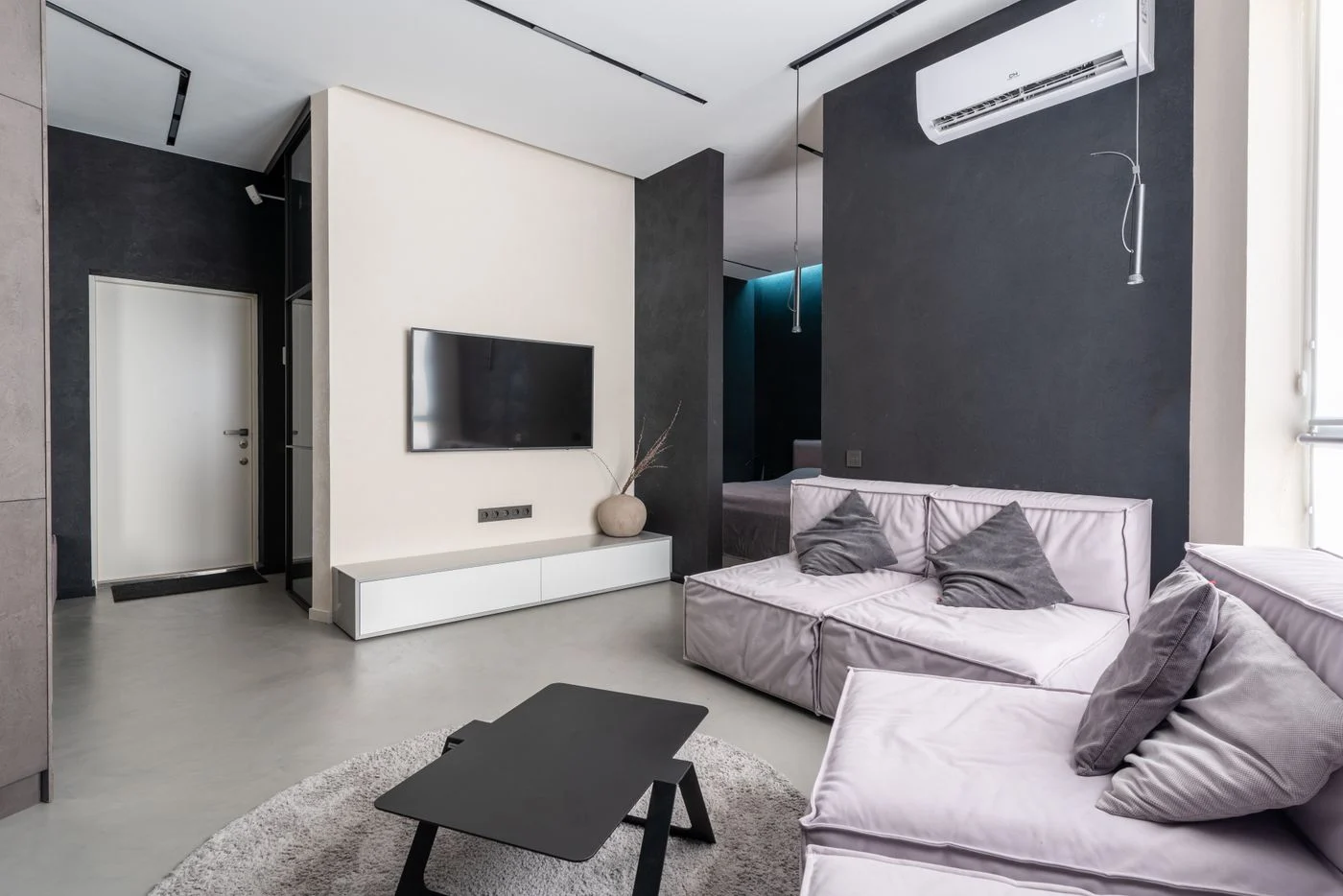
A television is often treated as a decorating problem to conceal. Elaborate frames, crowded gallery walls, and cabinets that are awkward to open can make the room more complicated without improving viewing. It is usually better to acknowledge the screen and give it a calm setting.
Start with comfortable viewing from the seats used most often. Check the television manufacturer's placement and ventilation guidance, along with suitable support or mounting requirements. Decorative balance comes after safe, appropriate installation and ordinary usability.
Notice reflections during the times the room is used. A window or lamp may appear in the screen even when the location looks perfect in daylight photographs. Adjust movable furniture and lighting where possible before committing to a more elaborate surround. Do not solve glare by making the rest of the room unpleasant to use.
Give the wall another scale
A low cabinet can relate the screen to the seating area and provide useful storage, but it should suit the equipment rather than simply look substantial. Leave required ventilation and access clear. A tangle of decorative objects around the electronics can make the wall appear busier, not quieter.
If you want art nearby, choose it for the wall as a whole. Several tiny frames clustered tightly around the screen may emphasize its dark rectangle. A simpler arrangement with more separation can allow the art to remain independent. There is no need to pretend the television is one more picture.
Use the rest of the room to create another point of interest. A comfortable chair beside a window, a bookcase, or a clear view toward a dining area can give the eye somewhere else to go. This is often more effective than concentrating every decorative effort on the television wall itself.
Keep everyday controls and accessories easy to retrieve. A small dedicated place for remotes is more useful than hiding them in an inconvenient container. If a cabinet door must remain open whenever the television is used, judge the room with that door open. The arrangement should look acceptable in its normal working state, not only when everything has been closed for a photograph.